
White dwarf pollution may be far more common than astronomers thought
A new model suggests magnetic fields may concentrate debris on white dwarfs, meaning dead stars could be swallowing more planetary material than thought.
By Lucas Ferreira · Science & Environment Writer
3 min read
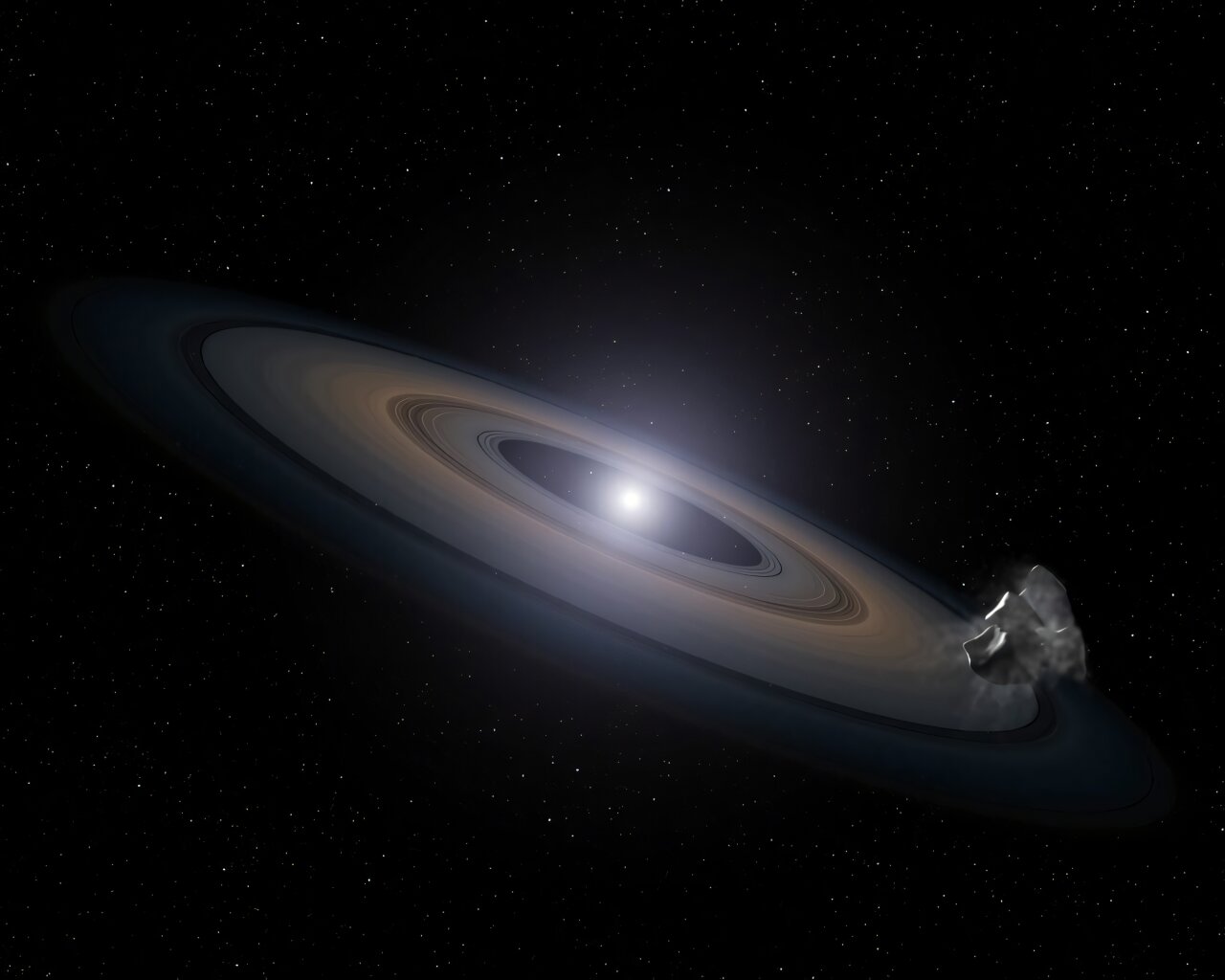
White dwarf pollution may be occurring at a higher rate than astronomers have measured, according to research from the University of Michigan and the University of Colorado Boulder. The finding matters because material falling onto these dead stars can preserve chemical clues about old planetary systems, including systems that may resemble our own.
The study, led by Aster Taylor of the University of Michigan and Dang Pham of CU Boulder, has been accepted by The Astrophysical Journal and is available on the arXiv preprint server. The researchers argue that magnetic fields on white dwarfs could hide some of the incoming debris by steering it into small regions near the stars’ magnetic poles.
What is white dwarf pollution?
White dwarf pollution is the term astronomers use when elements from asteroids, comets or planets show up in the atmosphere of a white dwarf. Because white dwarfs are the compact remnants of stars, that debris gives researchers a way to study the composition of planetary material that would otherwise be difficult to examine.
White dwarfs form after stars like the sun run out of nuclear fuel and shed their outer layers, according to the University of Michigan. The cores left behind contain roughly stellar-scale mass packed into a body about Earth’s size, and they remain hot enough for astronomers to study with telescopes and spectrometers.
Pham said pollution has been detected in about half of known white dwarfs, even though heavy elements should sink quickly in such dense stars. That observation implies the stars must keep taking in fresh material fast enough to replace what disappears below the visible atmosphere.
How magnetic fields change the estimate
Taylor, Pham and Tim Cunningham, a NASA Hubble Fellow at the Harvard & Smithsonian Center for Astrophysics, modeled how a white dwarf’s magnetic field would affect infalling planetary debris. Their work indicates the material may not spread evenly over the whole star.
Instead, the team found that magnetic fields can channel the pollution into compact spots near the magnetic poles. Pham compared the process to auroras on Earth, where charged particles follow magnetic field lines and create bright regions in the atmosphere; in the white dwarf case, the particles come from the remains of a planetary system rather than the sun.
If the same amount of observed pollution is confined to small spots, the total flow of debris onto the star must be larger than estimates that assume the material covers the full surface. Taylor said current observing methods make those spots hard to confirm, though two known white dwarfs appear consistent with the idea.
Why the result creates a new debris problem
The model points to a second question: where all that material would come from. According to the researchers, the higher feeding rate would require about 100 times more planetary debris around white dwarfs than earlier expectations suggested.
Taylor said there is uncertainty in those earlier estimates, but a factor of 100 is difficult to absorb without rethinking assumptions about how many leftover objects surround white dwarfs and how they move. She described the issue as unresolved, with the model opening possible explanations rather than settling the matter.
The study adds to evidence that planetary systems can remain active after their host stars have died. If the model is borne out by future observations, white dwarfs could offer astronomers a larger archive of planetary material than current measurements indicate.
Publication details: Dang Pham, Aster Taylor and colleagues, “The Effects of Magnetic Accretion on the Spatial Extent of White Dwarf Pollution,” arXiv, 2026. DOI: 10.48550/arxiv.2607.20747.
This story draws on original reporting from Phys.org.