
DNA Typewriter maps cell lineage in a developing mouse embryo
Researchers reconstructed the lineage of 1.28 million cells in one mouse embryo, showing when several cell types took separate paths.
By Priya Raghavan · Science Reporter
3 min read
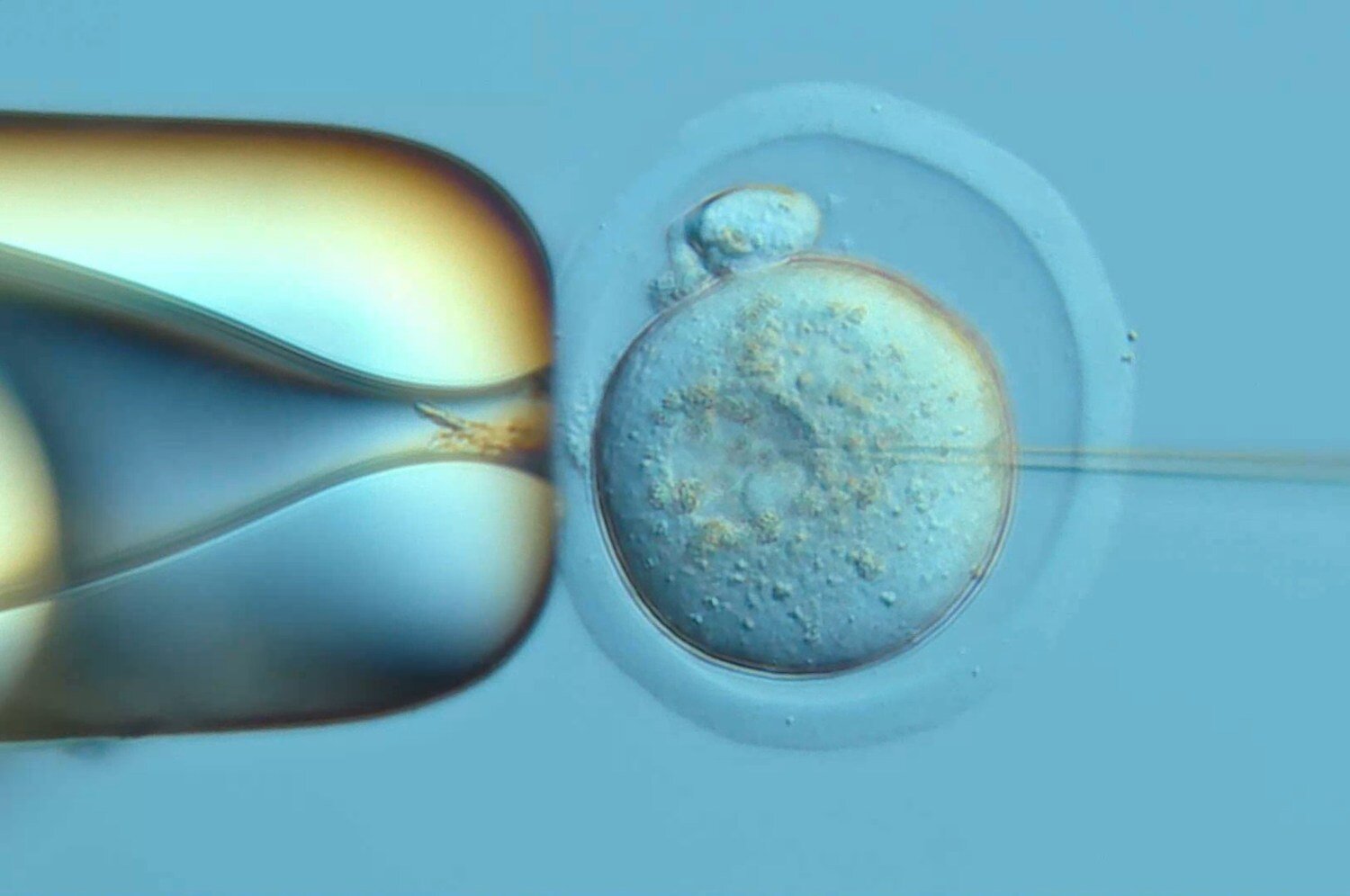
A DNA Typewriter mouse embryo study has reconstructed the lineage of 1.28 million transcriptionally profiled cells from the first division of a fertilized egg through late organ development. The work, published in Science on Oct. 8, gives researchers a way to examine when cell families split during development, although the fullest analysis came from one mouse embryo.
The team, led by co-senior authors Jay Shendure of the University of Washington School of Medicine and Chengxiang Qiu of Dartmouth College, followed development for 13.5 days, according to the University of Washington and the paper’s PubMed abstract. The study was conducted in mice, not people.
How does DNA Typewriter trace a mouse embryo’s cells?
Researchers placed a redesigned recording sequence, or “tape,” into the genome of a fertilized mouse egg. As cells divided, the system added ordered genetic edits to the tape; daughter cells inherited marks written earlier and accumulated later ones of their own, the University of Washington said.
Scientists can read those sequences from descendant cells. Cells with shared marks point to a common ancestor, while the sequence of marks supplies timing information about the branches in the developmental tree. The redesign was intended to make the record easier to retrieve from individual cells, according to the university.
The study’s abstract describes the resulting tree as time-calibrated and rooted in the fertilized egg. The researchers profiled 1.28 million cells in the embryo; the University of Washington rounded that total to 1.3 million in its release.
What did the lineage record show?
A burst of editing at the embryo’s first split permanently distinguished the two daughter cells, the researchers reported. They were able to trace nearly every profiled cell back to one or the other. One founding cell produced more descendants, but the two branches made diverse cell types in nearly equal proportions, according to the University of Washington.
The record also let the team estimate when several cell types began following distinct developmental paths. Blood and retinal cells committed relatively early, while cells that form the outer skin layer committed later, the university said. The results were consistent with earlier developmental findings but were measured in a single mouse.
What are the limits of the result?
The researchers tried the recording approach in 100 fertilized eggs and examined 10 embryos. They concentrated their full analysis on Embryo No. 3 because it contained the richest record, according to the University of Washington. The work therefore demonstrates a large retrospective lineage reconstruction in one deeply analyzed embryo rather than a map of typical development across a population of mice.
Earlier lineage-tracing systems produced a more partial picture in mice, the university said. The researchers characterized older DNA-cutting approaches as potentially damaging to cells, limited in how much they can record and harder to put in chronological order. DNA Typewriter records sequentially without fully severing DNA, co-first author Haedong Kim said.
Shendure said lineage studies could eventually add to research on congenital malformations, neurodevelopmental conditions, genetic disorders and cancer. Those are prospective research uses, not clinical applications established by this experiment. Qi Yu, Kim and Sophie Seidel were co-first authors.
This story draws on original reporting from Phys.org.