
Boeing targets 52 monthly 737 Max jets in late 2027
Boeing says it aims to lift 737 Max output to 52 jets a month in the second half of 2027 as wing production slows its ramp.
By Sofia Marchetti · World Affairs Correspondent
2 min read
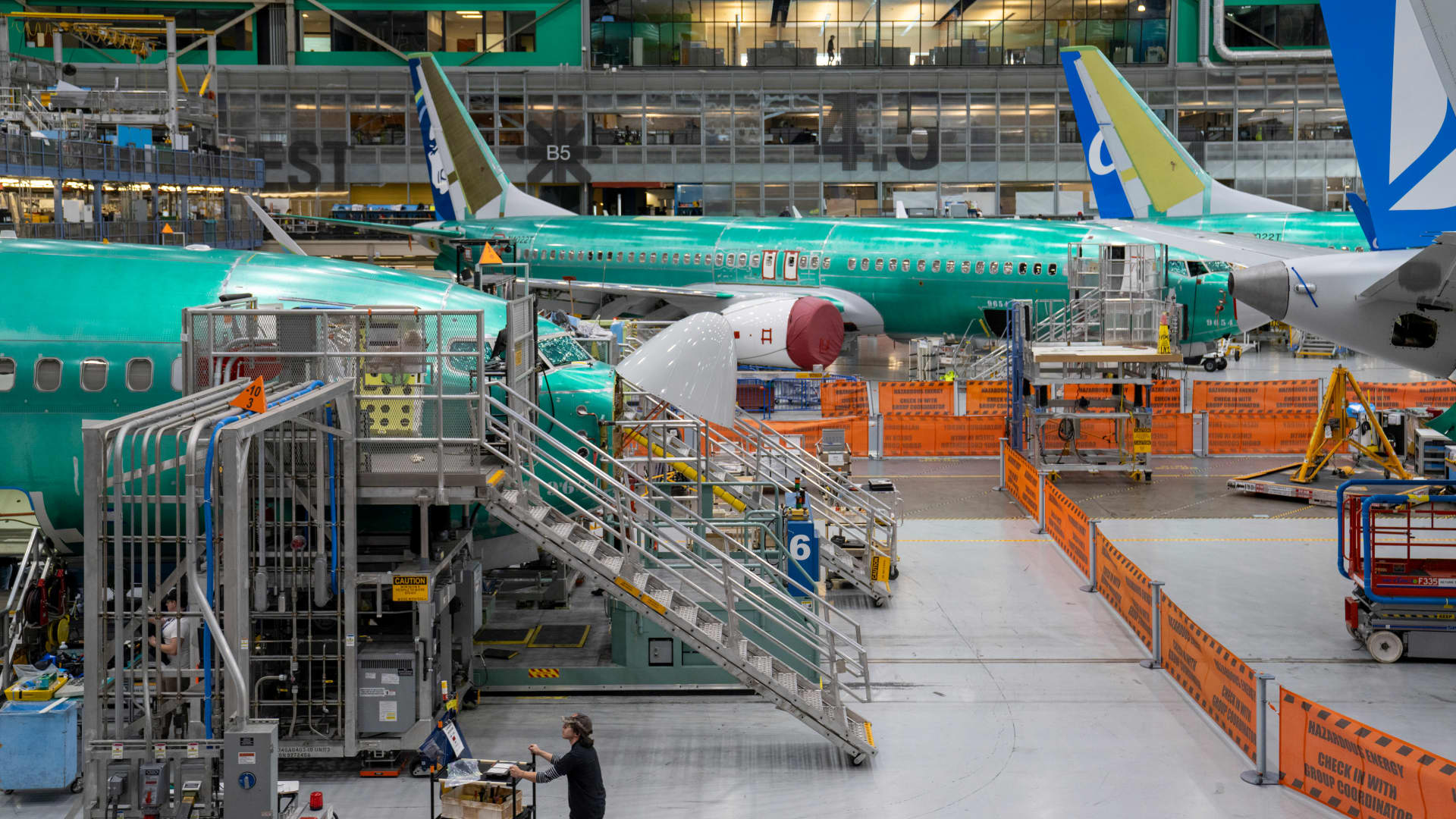
Boeing 737 Max production is not expected to rise substantially until the second half of 2027, when the company is targeting output of 52 aircraft a month, CNBC reported. The timetable extends the wait for a meaningful increase from Boeing's reported current pace of about 47 Max jets a month.
Chief Executive Kelly Ortberg gave the target during Boeing's quarterly earnings call, according to CNBC. He said the slower-than-expected pace of wing production has delayed efforts to stabilize output.
When will Boeing increase 737 Max production?
Boeing is aiming for a rate of 52 737 Max aircraft a month in the second half of 2027, CNBC reported. That would be about five jets more per month than the company's reported recent production pace of roughly 47, an increase of about 11% if that pace is used as the comparison.
The 52-aircraft figure is a target rather than current output. Ortberg said Boeing would prioritize getting the production increase right, CNBC reported, and told employees that the company was seeking productivity and efficiency improvements while maintaining safety and quality.
The timetable matters to Boeing because the bulk of an aircraft's price is paid on delivery, CNBC reported. Aircraft production and deliveries are therefore central to the company's recovery.
What did Boeing report for the quarter?
For the three months ended Sept. 30, Boeing reported a net loss of $116 million, or 26 cents a share, compared with a $5.34 billion loss a year earlier, CNBC reported. Revenue rose 4% from a year earlier to $24.19 billion, while free cash flow was $464 million, up from $238 million in the third quarter of 2025.
Boeing delivered 161 commercial airplanes during the quarter, one more than a year earlier, according to CNBC. Its commercial-airplanes division recorded revenue of $10.72 billion, down 3% from a year earlier, and a negative operating margin of 6.5%.
Boeing attributed the margin result to a less favorable mix of deliveries, expected costs tied to future production-rate changes and estimated supply-chain costs, CNBC reported. Boeing shares fell 10% in Tuesday trading, CNBC reported.
This story draws on original reporting from CNBC.