
Whale shark cameras reveal krill chases and seafloor feeding
Camera tags on whale sharks recorded 36 behaviors, showing the endangered fish feed far beyond the ocean surface.
By Lucas Ferreira · Science & Environment Writer
3 min read
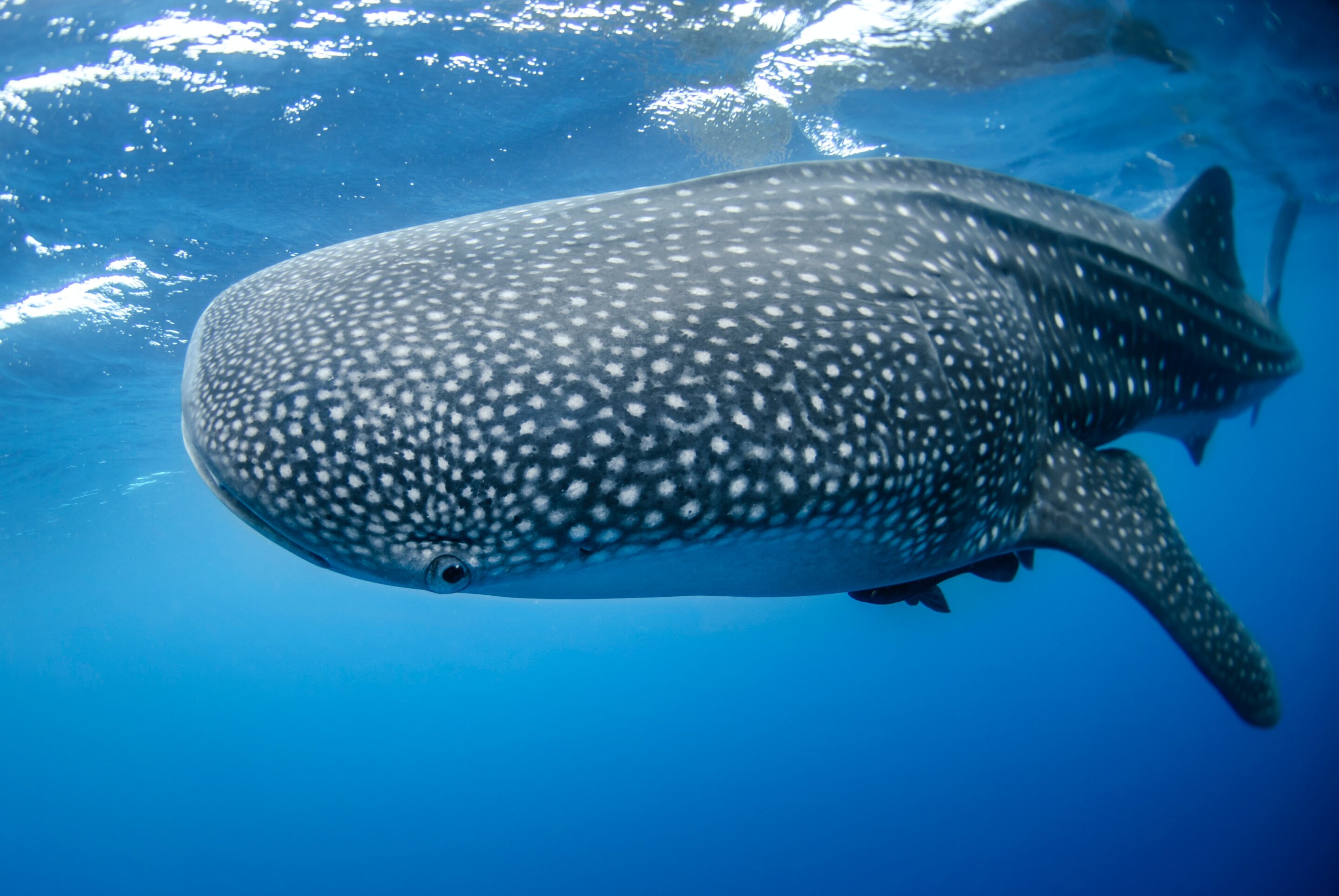
Whale shark cameras attached to animals near Ningaloo Reef in Western Australia recorded feeding behavior researchers had not seen from boats or snorkels, including chases after krill swarms. The findings matter because whale sharks, the world’s largest fish, are endangered and rely on food that can be scattered across tropical oceans.
The study, published in Marine Biology, used camera-equipped tags to follow juvenile whale sharks below the surface at a coastal gathering site. Researchers Christine Barry and colleagues reported that the footage, paired with movement data, showed how the animals forage from the surface down to the seabed.
What did whale shark cameras show?
The cameras showed whale sharks using a broad set of feeding tactics across the water column, including at depths of up to 70 meters, or 230 feet, at the study site. A whale shark is the world’s biggest fish and a filter feeder, meaning it strains small prey such as krill from seawater rather than hunting large animals.
Researchers had often studied whale shark behavior by watching them at the surface, where people can snorkel beside them or observe from boats. That approach can miss what happens after the animals dive out of view, and the study says earlier observations offered only a limited look at their daily behavior.
Electronic tags have helped scientists track marine animals beyond human sight, but movement data alone cannot show exactly what an animal is doing. In this study, the tags combined high-resolution movement records with video from a small camera aimed to show both the front portion of the shark and the animal’s view through the water.
How the study tracked the sharks
The research team attached tags to the sharks’ dorsal fins while snorkeling beside them. According to the study, the animals continued swimming after the tags were fitted.
Each tag was set to detach after 24 hours, leaving nothing on the shark and allowing the researchers to recover the device and data. The team then combined the new video with a review of more than 100 scientific publications on whale shark behavior.
That work produced what the researchers described as the largest behavior catalog for whale sharks to date, with 36 distinct behaviors. The catalog includes multiple feeding behaviors, not just the surface feeding most familiar to observers.
- The study recorded low-effort feeding, including slow gliding with an open mouth near the seafloor.
- It also recorded active surface feeding, with sharks swimming vigorously after krill swarms.
- The sharks spent much of their recorded time using six lower-effort feeding behaviors.
Why the findings change how scientists view whale shark feeding
The researchers said the results challenge the idea that whale sharks feed mainly at the surface. Instead, the animals appear to adjust their behavior depending on prey availability, feeding at low effort when prey is sparse and switching to more active feeding when they encounter denser patches such as krill swarms.
The study also found that whale sharks use a wider range of foraging strategies than other filter-feeding large marine animals cited by the researchers, including basking sharks and whales. The authors said that flexibility may help explain how whale sharks survive in tropical waters where food can be limited and unevenly distributed.
The results come from one gathering of juvenile whale sharks near Ningaloo Reef, so the researchers said more camera studies at other aggregation sites are needed. As climate change affects oceans, understanding how whale sharks find food could help guide conservation work for the endangered species.
This story draws on original reporting from Phys.org.