
US population projections 2050 show slower growth and South’s rise
UVA’s Cooper Center projects 370 million U.S. residents by 2050, slower growth and a larger Southern share.
By Priya Raghavan · Science Reporter
3 min read
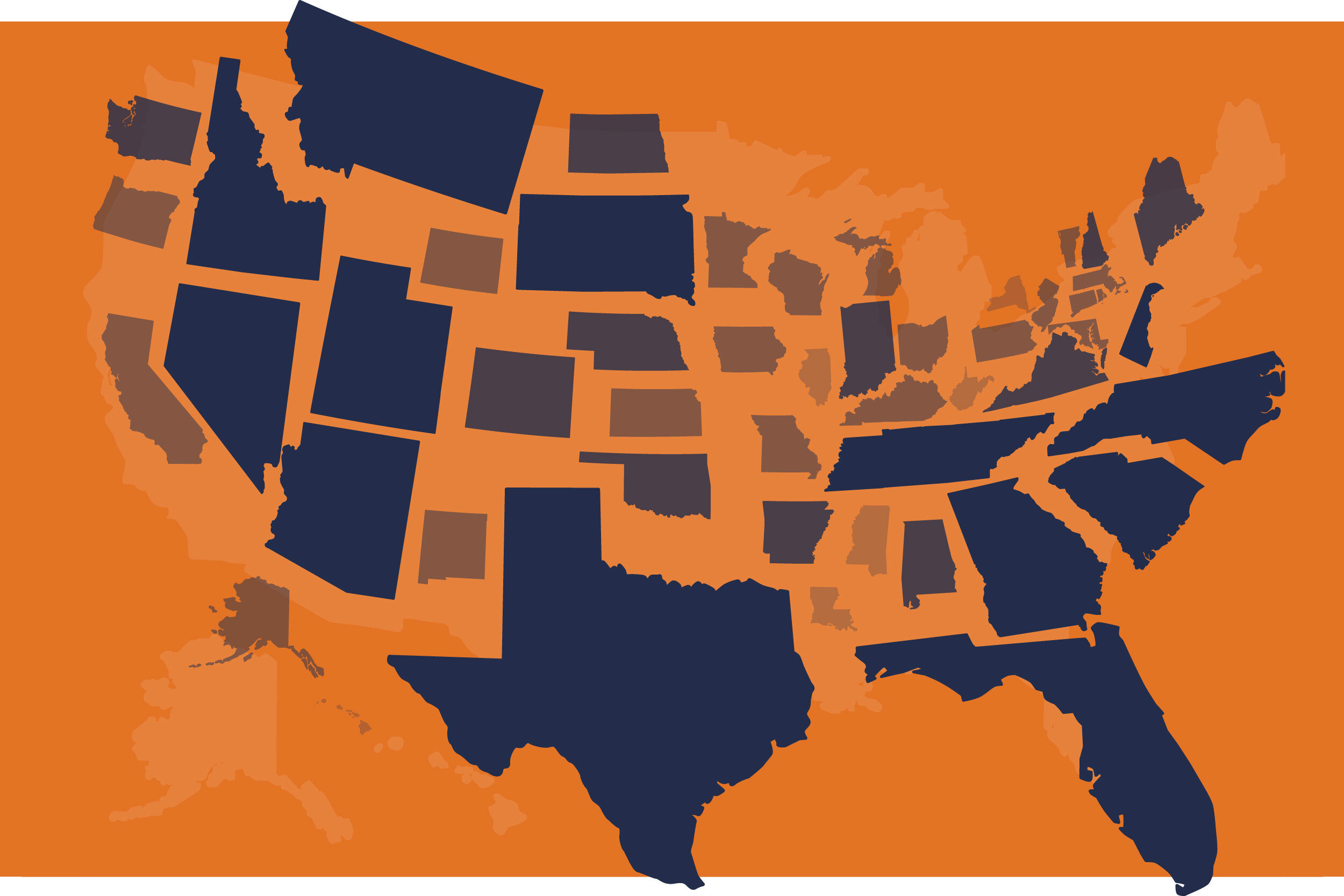
New US population projections for 2050 from the University of Virginia’s Weldon Cooper Center for Public Service point to continued growth, but at a slower pace than in past decades. The center projects the country will reach about 370 million residents by 2050, a change that would shift a larger share of the population to the South and leave older adults making up more of the nation.
The national and 50-state projections estimate the U.S. population will rise from 331 million in 2020 to 352 million in 2030 before reaching roughly 370 million by midcentury. UVA said the Cooper Center produces nonpartisan data and research used by local communities, state agencies and public-sector leaders.
How fast will the US population grow by 2050?
The report projects population growth will keep losing speed. The U.S. grew by just over 7% from 2010 to 2020, while the Cooper Center expects growth of 6.3% from 2020 to 2030 and about 1.8% from 2040 to 2050.
Sol Baik, senior researcher with the center’s Demographics Research Group and author of the report, said U.S. growth rates have broadly moved lower since the 1960s, aside from a temporary increase from 1990 to 2000. Baik said the projections assume recent demographic patterns continue, including low fertility, an aging population and current migration trends.
Qian Cai, director of the Demographics Research Group, said the mix of population growth has changed since the 2010s. Natural increase means births minus deaths; Cai said it accounted for about 60% of U.S. growth in the 2010s, with net international migration making up the remaining 40%.
Since 2020, Cai said, low birth rates and an aging population have reduced natural increase each year, making immigration the main driver of overall growth. She said that without a substantial rise in immigration over the next two decades, U.S. growth is expected to stay much slower than in the past and near historically low levels.
Where will population growth be strongest?
The South remains the country’s fastest-growing region in the Cooper Center projections, followed by the West. The report says the South’s share of the U.S. population is expected to increase from about 38% in 2020 to nearly 43% in 2050, with growth from 2020 to 2030 slightly faster than in the prior decade.
The Northeast and Midwest are expected to grow by around 2% from 2020 to 2030, then decline over the following 20 years, according to the report. By 2050, the Midwest’s share of the U.S. population is projected to fall to 18.4%, while the Northeast’s share is projected to drop to 15.4%.
- The West’s population share is projected to stay near 23%.
- Americans ages 65 and older are projected to reach 21.2% of the population by 2050.
- The national median age is projected to be 41.9 years in 2050.
- Maine is projected to have the oldest population, with a median age of 48.7 years.
- North Dakota is projected to have the youngest population, with a median age of 34.4 years.
Baik said the country is still expected to add residents through 2050, but at rates below those seen historically. The report ties the slowdown after 2030 to demographic trends already visible in the data.
This story draws on original reporting from Phys.org.