
Urban park cooling depends on streets and buildings, study says
Victoria University researchers found park cooling in extreme heat depends on nearby buildings, airflow and street links, not green space alone.
By Tom Brennan · Health & Medicine Correspondent
3 min read
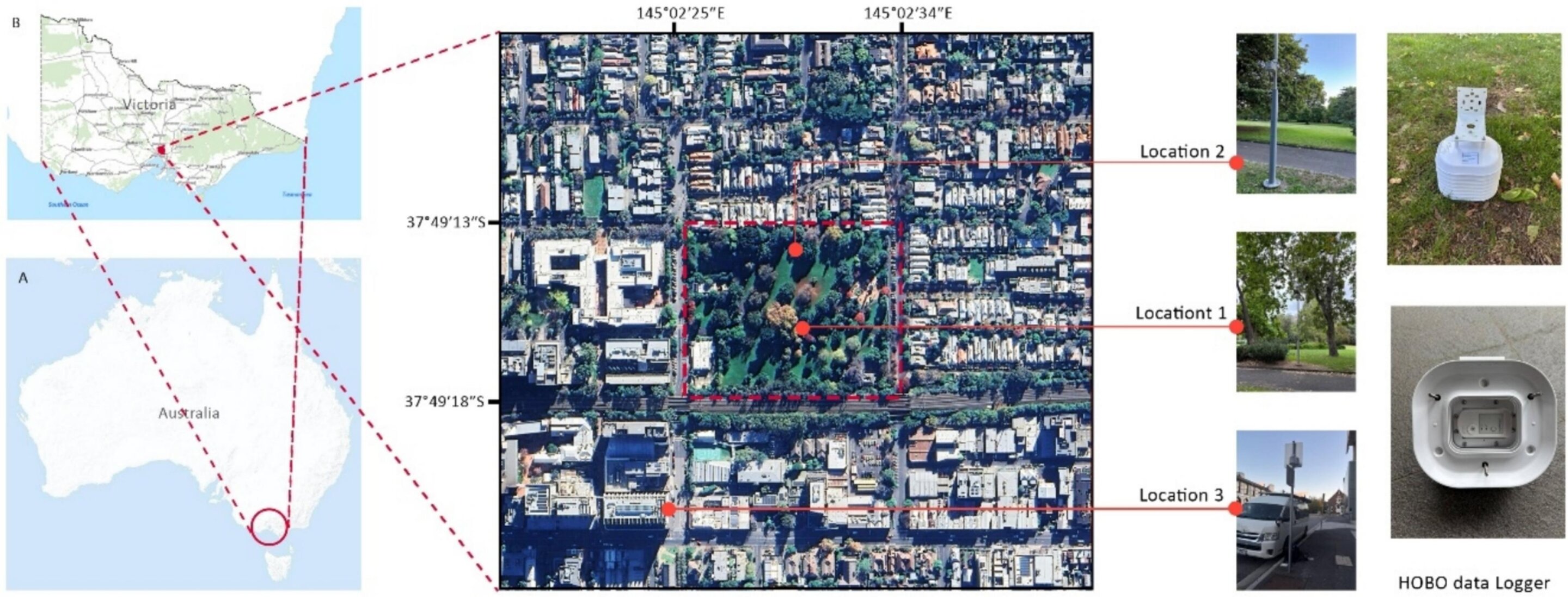
New Victoria University research on urban park cooling says cities cannot rely on adding green space alone to reduce dangerous heat. The study found that a park’s cooling effect during extreme heat depends heavily on nearby buildings, street layouts and whether cool air can move beyond the park.
The research, published in Energy and Buildings, examined Central Gardens in Hawthorn, Melbourne, during an extreme heat event that reached 42°C. Victoria University said the work was led by Ph.D. candidate Maryam Norouzi and Associate Professor Elmira Jamei.
The study confirmed that urban parks can provide substantial cooling during severe heat. It also found that the size and reach of those benefits change significantly between day and night and are shaped by the surrounding urban form.
How do urban parks cool cities during extreme heat?
During the day, parks can reduce heat exposure by providing shade and cooler surfaces when solar radiation and air temperatures are high. At night, cooling matters because it helps heat stored in the city during the day dissipate before the next day’s temperatures rise.
Victoria University said the findings show that park design has to fit its setting. A park surrounded by dense development may need strategies that preserve daytime shade while allowing better night-time airflow, according to Jamei.
In lower-rise areas, the study found that cooling from parks can reach farther into nearby neighborhoods. The researchers said planning in those areas should keep ventilation paths open between parks and adjoining streets, limit intensive development immediately around park edges and connect parks with green corridors, street trees and vegetated residential gardens.
Norouzi said the relationship between a park and its surrounding built environment affects how well the park cools the city during extreme heat. Victoria University said that means heat resilience depends on designing parks and nearby neighborhoods as linked systems rather than treating green space as a stand-alone fix.
The research points to different design priorities for different urban settings. In dense areas, buildings and other structures can influence airflow and heat release, while in suburban or lower-rise areas, street connections may help cooler air spread beyond the park itself.
Heat waves can persist for days and pose health risks, Victoria University said. For city residents, parks may serve as refuges, but the study indicates that some green spaces will offer less protection if their location or surrounding development limits cooling performance.
Jamei said policymakers can influence future city design by using climate-adapted planning to improve outdoor thermal comfort and support healthier urban environments. The researchers concluded that park placement and design should be tailored to surrounding urban structures to strengthen the cooling effects of urban parks.
The study, “Urban form and park cooling performance during extreme heat events: a case study in Melbourne,” was authored by Maryam Norouzi, Elmira Jamei and colleagues. Its DOI is 10.1016/j.enbuild.2026.117710.
This story draws on original reporting from Phys.org.