
Thermoelectric performance framework accounts for contacts and heat loss
A Saitama University theory models thermoelectric materials, electrodes and heat leakage together to improve how devices are evaluated.
By Tom Brennan · Health & Medicine Correspondent
3 min read
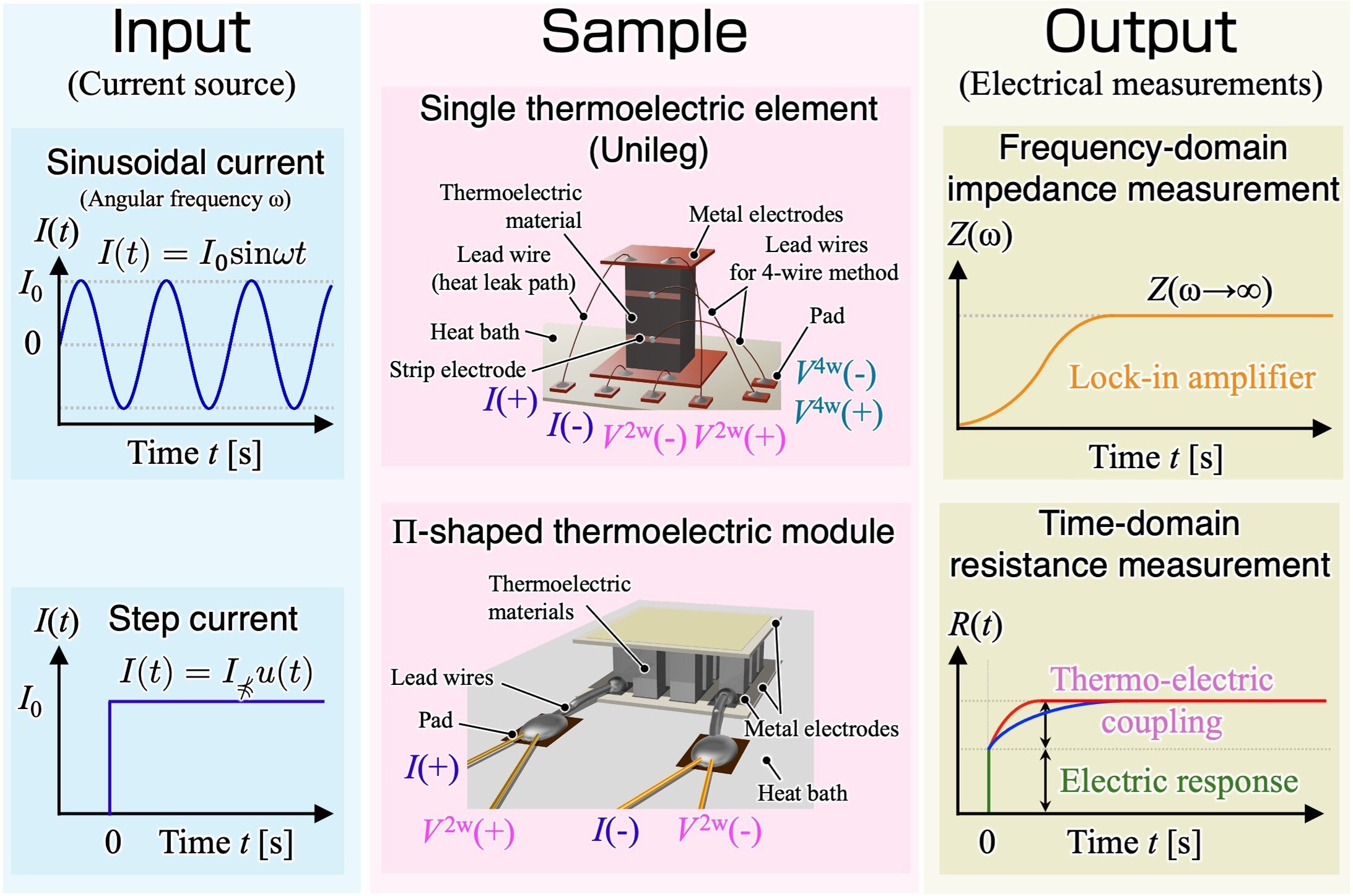
A new thermoelectric performance framework from Saitama University treats a device’s active material, electrical connections and heat loss as parts of one coupled system. The theoretical work matters because a material’s laboratory rating may not capture how a complete device responds once electrodes, lead wires and its thermal surroundings are involved.
Associate Professor Yasuhiro Hasegawa reported the approach in a 2026 Journal of Applied Physics paper, according to Saitama University’s account published by Phys.org. The study does not report a higher-performing device, a field test or an efficiency gain; it proposes a way to analyze device behavior over time.
How does the thermoelectric performance framework work?
Thermoelectric materials can generate electricity from heat. They can also move heat when electrical current passes through them, an effect known as the Peltier effect, according to Saitama University.
Hasegawa’s framework uses time-domain impedance spectroscopy, or TDIS. In the method described by Saitama University, researchers apply a step-like electrical current and track the material’s electrical resistance as it changes over time.
The first response is electrical. The applied current then carries heat through the Peltier effect, altering the temperature distribution in the material; that temperature change subsequently affects the electrical signal. Saitama University says the resulting measurement combines effects from the thermoelectric material, electrodes, lead wires and heat leaking into the surroundings.
Why is material zT not the whole device result?
Thermoelectric research has often used the dimensionless figure of merit, zT, to assess a material after electrical and thermal conditions have settled into a steady state, Saitama University said. Northwestern University’s thermoelectrics resource defines material zT using the Seebeck coefficient, electrical conductivity or resistivity, thermal conductivity and temperature.
That metric remains useful for comparing material potential. But a generator must operate across a temperature difference between its hot and cold sides, and Northwestern describes device ZT as a weighted average of material zT over that finite range. The new analysis focuses on another part of the problem: separating the time-dependent influence of a device’s components and thermal boundary conditions.
According to Saitama University, Hasegawa’s analysis can quantitatively distinguish those individual contributions within an otherwise mixed transient signal. It also reports a common scaling law for the time-dependent response across different materials and measurement conditions.
What could change for thermoelectric device testing?
Saitama University said the theory could help researchers anticipate how electrode designs and measurement settings affect results, reducing reliance on trial-and-error choices. It could also support designs that consider the material, contacts and thermal environment together.
The broader need for system-level assessment extends beyond this paper. A 2026 Energy and Buildings review found that thermoelectric performance in buildings and infrastructure is strongly shaped by available heat and system integration, while characterizing such applications as low power but capable of scaling across space. That review did not test Hasegawa’s framework.
Potential future uses cited by Saitama University include fast-response wearable cooling, thermal management for electronics and waste-heat conversion. Whether the framework improves those applications will require device-level testing beyond the theoretical study.
This story draws on original reporting from Phys.org.