
Syria archaeological sites looting widened after 2015, study finds
A Dartmouth satellite study found looting at 59% of 200 Syrian archaeological sites from 2015 to 2025, including bulldozer damage.
By Priya Raghavan · Science Reporter
3 min read
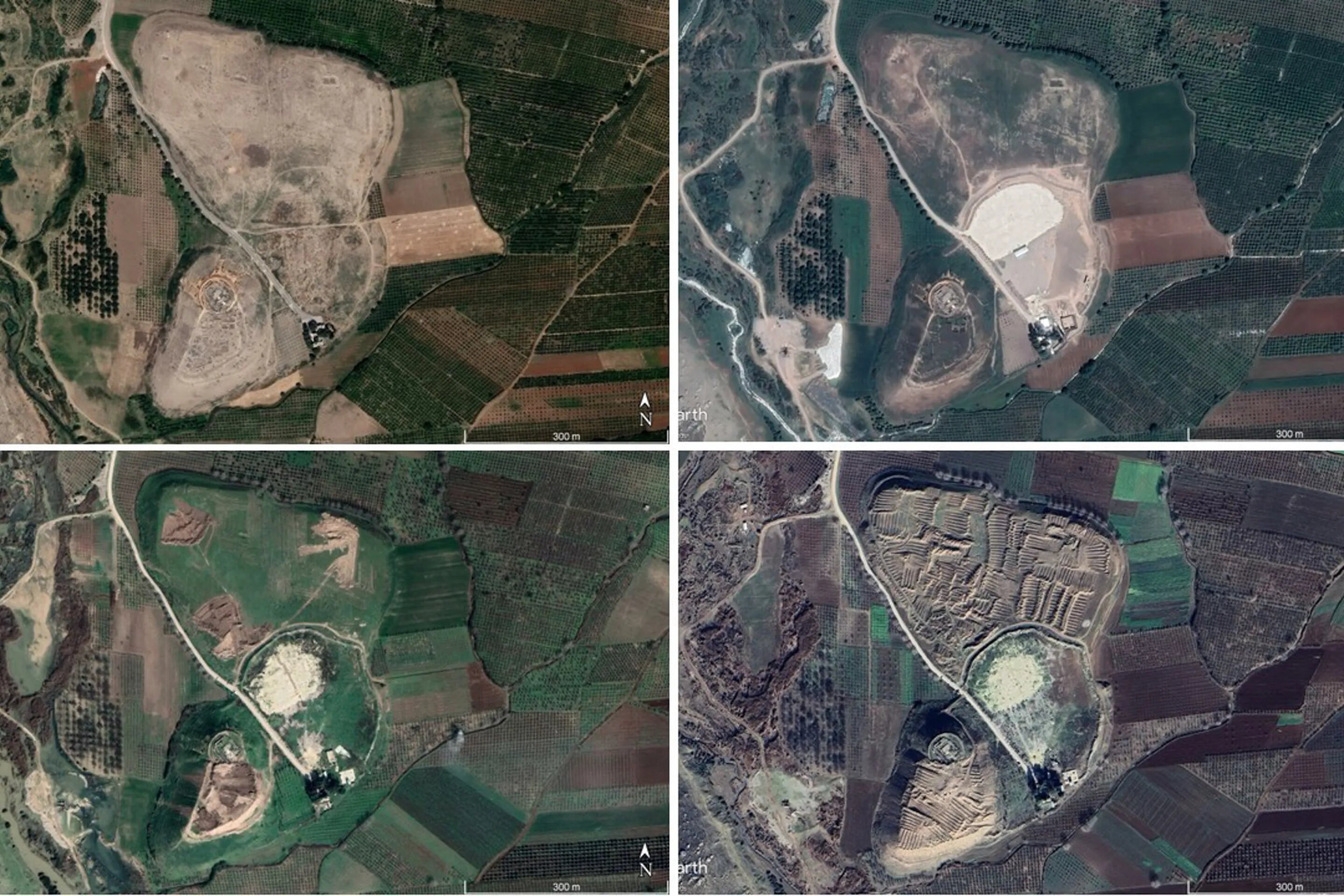
A new study on Syria archaeological sites looting finds damage spread widely in the later years of the country’s war and after, with researchers identifying looting at 59% of 200 examined sites from 2015 to 2025. Dartmouth College said the satellite-based research also found bulldozer damage at sites in areas held by the Turkish military, raising concerns for preservation work across Syria.
The study, published in the journal Heritage, examined archaeological locations across Syria using imagery from Google Earth and the European Space Agency’s Pleiades program. Researchers compared damage across time at sites that include internationally known places such as Palmyra, Mari and Apamea, according to Dartmouth.
Syria’s civil war began in 2011 and lasted until 2024. Dartmouth said the condition of many cultural heritage sites after 2016 had remained unclear because the last broad analysis was published in 2017.
How much damage did Syria archaeological sites suffer?
The researchers classified the visible damage into four groups: hand-dug looting pits, bulldozer-aided looting, military installations such as dugouts, and construction or camps, including temporary shelters. Dartmouth said the team found looting at 59% of the sites during 2015 to 2025, compared with 13% from 2011 to 2016.
Lead author Jesse Casana, the W.J. Bryant 1925 Professor of Archaeology in Dartmouth’s Department of Anthropology, said the connection between bulldozer looting and military activity was alarming. He said forces are expected to protect people and that destroying archaeological sites constitutes a war crime.
Mechanized looting refers to using heavy equipment to strip away layers of a site while people search for objects. Casana told Dartmouth that such activity can remove entire surfaces repeatedly, causing extensive damage for what is often little return.
The study also explains why military forces may use ancient sites. Many Middle Eastern archaeological sites are high mounds built up over centuries or millennia as people rebuilt on the same ground, leaving layers of architecture and artifacts beneath elevated terrain.
What happened at Ain Dara?
Ain Dara, in northwestern Syria, was one of the sites reviewed. Dartmouth said the site is known for an Iron Age temple and large lion statues.
According to the researchers, earlier analysis showed no war-related damage at Ain Dara as of 2014. Satellite images later showed a military compound being built by 2016, and by February 2019 the imagery showed bulldozing in four areas.
Dartmouth said local ground observations indicated that Turkish-backed military forces were likely involved in that activity. By January 2022, researchers found that a bulldozer had combed nearly the whole surface, except for a stone-built temple complex dated to the 8th to 12th centuries BCE.
Casana said the findings should help guide recovery and protection work. Before archaeologists excavate damaged areas, he said, teams need systematic checks to identify exposed architecture and artifacts and to decide which sites require urgent attention.
The study was written by Casana and colleagues under the title “Remote Sensing-Based Analysis of Archaeological Site Damage in Syria: Revisiting a Post-War Landscape.”
This story draws on original reporting from Phys.org.