
SpaceX Starship test flight deploys advanced Starlink satellites
SpaceX flew Starship from Texas and released 20 advanced Starlinks, while NASA watched progress toward a future moon-landing role.
By Tom Brennan · Health & Medicine Correspondent
3 min read
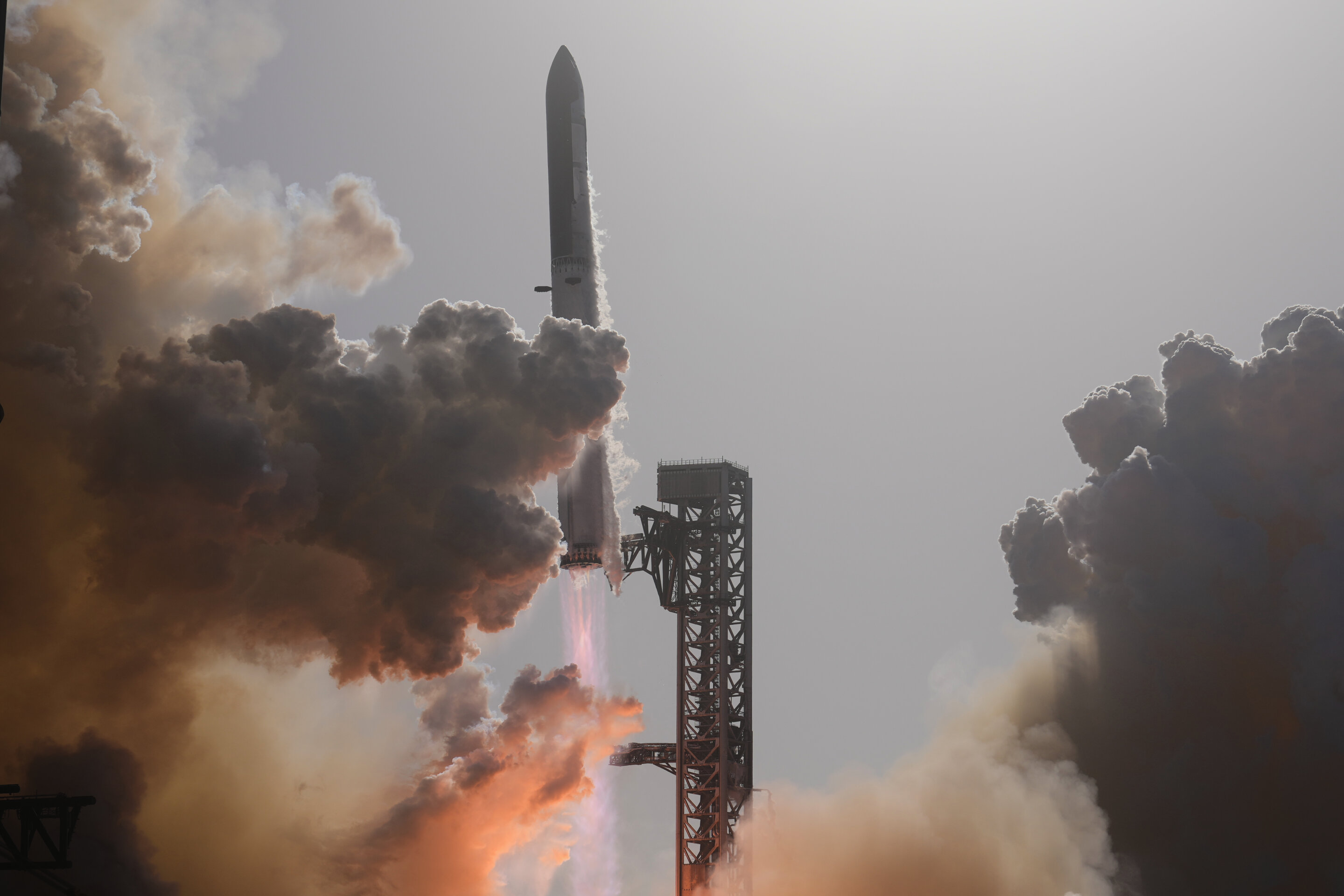
SpaceX launched another SpaceX Starship test flight from South Texas on Friday, sending the 407-foot rocket on an hourlong trip that released 20 advanced Starlink satellites, the Associated Press reported. NASA tracked the flight because Starship is central to the agency’s plan to land astronauts on the moon.
The rocket lifted off from SpaceX’s Starbase site near the Texas-Mexico border, according to the AP. The Starship spacecraft continued across more than 10,000 miles before making a gentle splashdown in the Indian Ocean, where it was still floating when SpaceX’s webcast ended.
What happened on the Starship test flight?
SpaceX had replaced six of the booster’s 33 engines after a launch attempt was stopped at the last moment the previous week when some engines did not ignite, the AP reported. On Friday, all engines started at liftoff, but the booster’s return burn did not relight enough engines, sending it down too quickly into the Gulf of Mexico.
The upper spacecraft continued east and released the satellites one at a time at an altitude of 124 miles, according to the AP. SpaceX said the Starlinks completed their assignments before reentering over the Indian Ocean.
The flight was the 13th for Starship, which the AP described as the world’s largest and most powerful rocket, and the second this year for the newer V3 version. SpaceX did not intend to recover either the booster or the spacecraft on this mission; both were planned to end in the ocean.
Why were the Starlink satellites on board?
The 20 satellites were carried as a test payload and were ejected from a dispenser that the AP likened to a Pez mechanism. SpaceX said its engineers contacted each satellite and downloaded data from all of them during about 20 minutes of laser and radio communication before reentry.
Six of the satellites carried cameras that photographed Starship’s heat shield near the end of the mission, according to the AP. Those cameras sent back clear images while the spacecraft floated in the ocean, and SpaceX also used sensors on the heat shield to measure pressure during launch.
SpaceX altered parts of the heat shield for the test, the AP reported. Most of the thermal tiles were black, while selected tiles were painted white to mimic missing tiles and help the company assess how much damage the shield can tolerate.
“We got all the heat shield data we needed and then some!” Elon Musk wrote on X. SpaceX engineer Kate Tice said during the company webcast that the team was “really pumped” and called the mission “lucky flight 13,” according to the AP.
Why does NASA care about Starship?
NASA plans to use Starship as the lunar lander for Artemis moon crews, the AP reported. NASA Administrator Jared Isaacman congratulated SpaceX on X and wrote that he was “Excited for what will be learned from this mission.”
Starship must complete more testing and reach orbit before astronauts can practice docking with it, according to the AP. The Artemis III crew is expected to include three Americans and one Italian, and NASA needs that docking practice next year.
SpaceX wants to prove the spacecraft’s heat shield can survive reentry before trying to bring Starship back to the Starbase launch site, the AP reported. The company has already used large mechanical arms at the pad to catch a Starship booster and aims to use the same approach for the fully reusable spacecraft.
The test had been delayed by the July 16 abort and then by thick clouds from Tropical Storm Bertha on Thursday, according to the AP. SpaceX also views Starship as the vehicle Musk wants to use for Mars settlement plans and private trips to the moon and Mars, the AP reported.
This story draws on original reporting from Phys.org.