
Shark spine swimming study links vertebrae to speed and maneuvering
FAU and NOAA researchers found shark vertebrae differ by species, matching fast cruising, flexible swimming and thresher tail strikes.
By Lucas Ferreira · Science & Environment Writer
3 min read
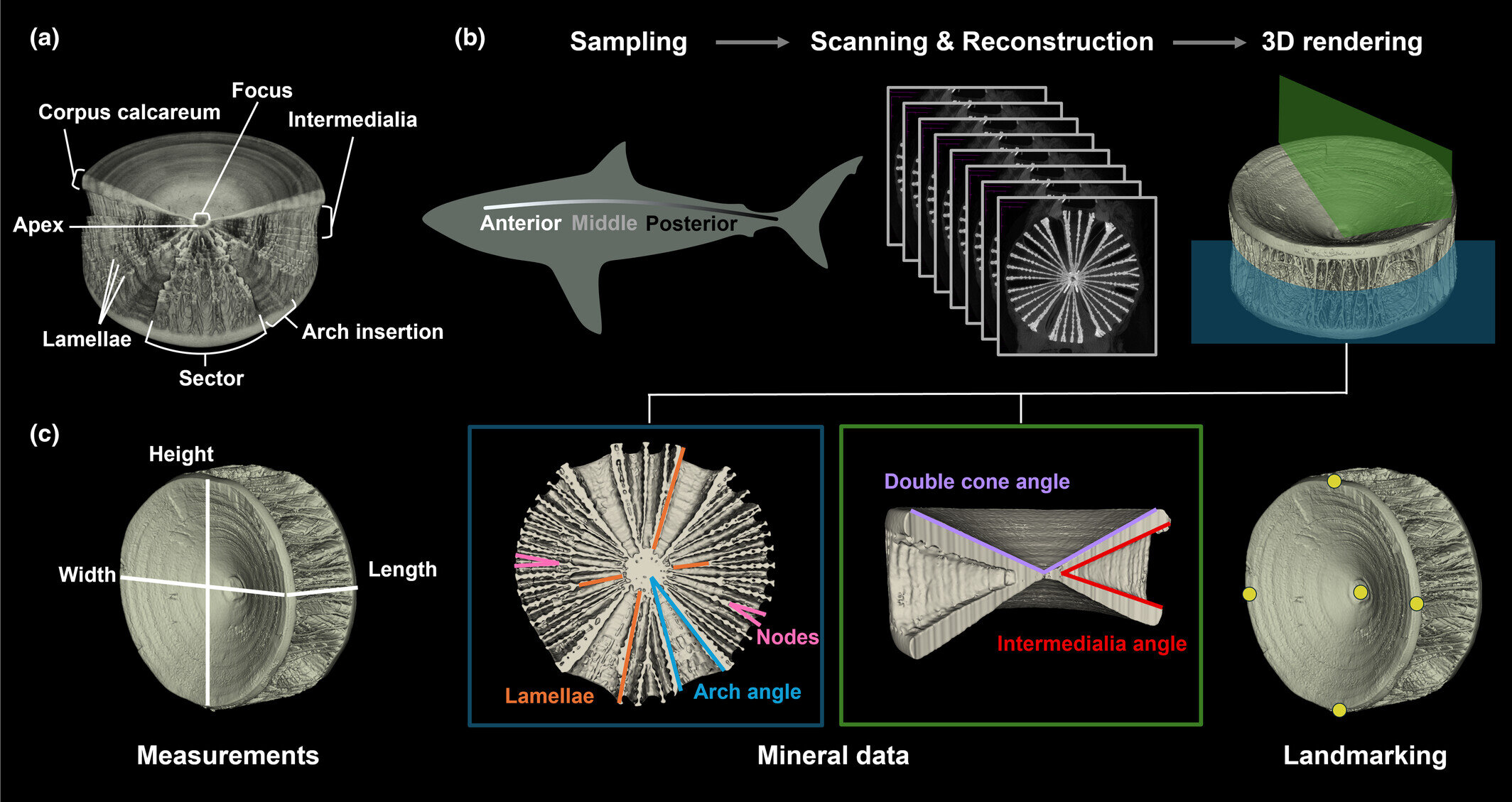
A new shark spine swimming study reports that the internal structure of shark vertebrae varies with how different species move through water. Researchers at Florida Atlantic University and NOAA Fisheries say the findings help explain how sharks combine speed, control and endurance with cartilage-based skeletons.
The study, published in the Journal of Anatomy, examined vertebrae from six shark species: great white, shortfin mako, porbeagle, common thresher, sand tiger and basking shark. The research team used high-resolution micro-computed tomography, or micro-CT, to build 3D views of the inside of the bones without cutting them apart.
How does the shark spine affect swimming?
Sharks have skeletons made mostly of cartilage, but their vertebrae include mineralized structures that add support. According to the researchers, those internal plates and branching features are arranged differently across species, creating spines suited to different swimming demands.
The team measured vertebrae from several points along each shark’s body and compared their shapes, sizes and internal mineral patterns. FAU said the middle region of the spine, where a bend may form during the swimming wave, tended to have the largest vertebrae.
Fast-moving sharks showed designs linked to stiffness and energy transfer. The great white, shortfin mako and porbeagle had mineralized vertebral structures arranged in ways the researchers associated with a firmer spine, which can help send power toward the tail during high-speed swimming.
The sand tiger shark showed a different pattern. FAU said the shape and inner structure of its vertebrae likely allow more flexibility, matching a slower swimming style that requires maneuvering through complex underwater spaces.
What the six species showed
The common thresher stood out because of the amount of mineralized plates and branching structures in its vertebrae. Researchers linked that anatomy to the mechanical demands of its hunting behavior, in which the shark uses its long tail for side-to-side and overhead strikes that can stun prey.
The basking shark, described by FAU as the world’s second-largest fish, had much less mineralization in its vertebrae. The study connects that reduced structure to its slow cruising as a filter feeder, a style that places different demands on the spine than rapid pursuit or sharp tail strikes.
The researchers also found that vertebral structure changes from the front of the body toward the tail. In the fast-swimming species, rear vertebrae carried more mineralized plates, a pattern FAU said would make the tail region stiffer where swimming forces are greatest.
FAU reported that closely related species, including the great white and shortfin mako, had notably similar vertebral designs. More distantly related sharks showed more distinct internal architecture.
Why engineers may care
The study adds detail to how shark anatomy supports movement, but the authors also point to possible uses outside biology. FAU said designs that combine light cartilage with targeted mineral support could inform materials or devices that need both flexibility and strength.
Potential applications named by the researchers include robotics and biomedical devices. Study authors included Jamie L. Knaub of FAU, Marianne E. Porter of FAU, Tricia L. Meredith of FAU, FAU undergraduate biological sciences students Madisan Biordi and Emma Pawlik, and NOAA Fisheries researchers Michelle Passerotti and Lisa J. Natanson.
This story draws on original reporting from Phys.org.