
Seawater reef health signals emerge in Virgin Islands study
WHOI researchers found reef water carries chemical and microbial patterns that may help detect ecosystem changes earlier.
By Priya Raghavan · Science Reporter
3 min read
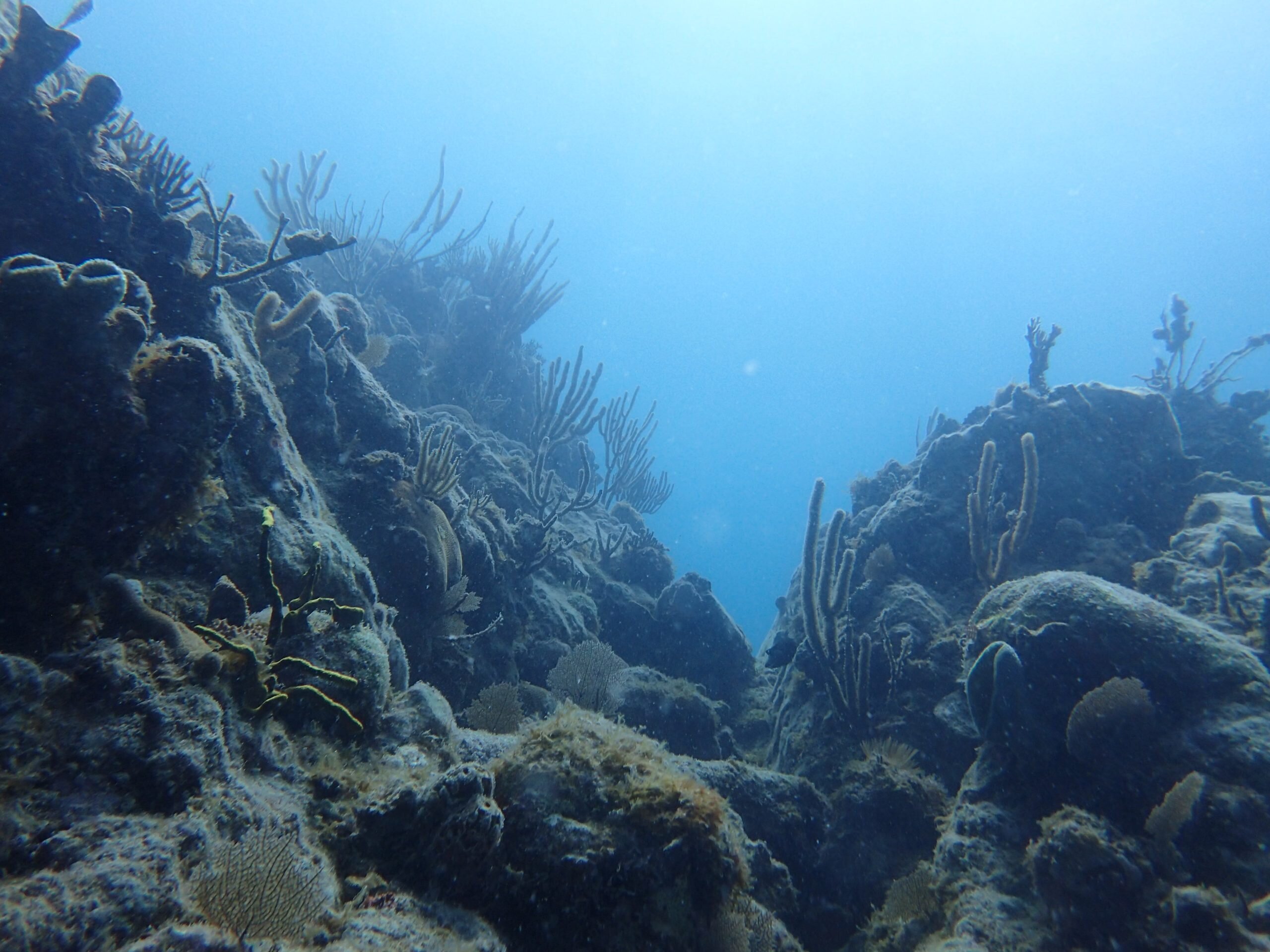
Seawater reef health clues may be detectable before damage is visible on corals, according to Woods Hole Oceanographic Institution researchers. In a study published in The ISME Journal, the team reported that water around reefs contains chemical and microbial patterns shaped partly by local currents.
WHOI said the work borrows an idea from medicine: test a surrounding fluid for early warning signs rather than wait for obvious symptoms. For reefs, that means examining the small molecules and microorganisms present in seawater near corals and other coastal habitats.
How can seawater samples show reef health?
The WHOI team studied dissolved compounds called metabolites, which are small molecules produced and used by marine organisms, along with microbial communities in the water. According to the researchers, those measurements can capture activity in the reef system that may not be apparent from visual surveys alone.
The study focused on two neighboring coral reefs and a nearby seagrass meadow in the U.S. Virgin Islands. Researchers collected water over four days, sampling at dawn and midday, and paired those results with a high-resolution computer model showing where the water had come from and how it moved among sites.
WHOI reported that each location had its own chemical and microbial profile, even though the sites were separated by less than a quarter mile, or less than 0.4 kilometer. The study found that water movement could change those profiles over short periods, including timescales of only a few hours.
Currents helped explain differences between nearby sites
According to the study, the sheltered seagrass meadow showed more stable water conditions and built up a distinct mix of dissolved compounds. One reef, by contrast, received a daily pulse of offshore water that altered both its chemistry and microbes.
Amy Apprill, a WHOI co-author in the Marine Chemistry and Geochemistry Department and inaugural director of the WHOI Schiller Center for Reef Solutions, said the project showed why reef studies need to include ocean physics as well as biology and chemistry. Elizabeth Kujawinski, a WHOI senior scientist and co-author, said circulation modeling helped connect seawater measurements with the processes occurring within the ecosystem.
The researchers used a chemical-tagging method developed at WHOI to measure biologically available small molecules released by marine microorganisms. WHOI said the method, first used to study ocean chemistry, is now being applied to search for possible indicators of reef condition and ecosystem change.
What comes next for reef monitoring?
Brianna Garcia, the study’s lead author and a postdoctoral investigator at WHOI, came to the project with experience in analytical chemistry and human health research, WHOI said. Garcia’s work applied the logic of minimally invasive medical testing to marine ecosystems by looking for signals in reef water.
The findings do not yet make seawater testing a routine reef monitoring tool. WHOI said more work is needed, but the repeated chemical and microbial patterns seen across several days suggest such measurements could help establish a baseline for future changes.
According to WHOI, that baseline could be useful for detecting disturbances such as coral disease outbreaks, pollution or heat stress. The institution said the study also reflects the approach planned for the Schiller Center for Reef Solutions, which aims to combine fields including analytical chemistry and ocean physics to study threatened coral reef ecosystems.
The paper, “Spatiotemporal and hydrodynamic influences on microbial and exometabolite dynamics in coral reef and seagrass ecosystems,” was authored by Brianna M. Garcia and colleagues and published in The ISME Journal.
This story draws on original reporting from Phys.org.