
Study finds some sauropods stood upright more easily when young
Digital bone models suggest two South American sauropods could rear on their hind legs, with the ability becoming harder as body mass increased.
By Lucas Ferreira · Science & Environment Writer
3 min read
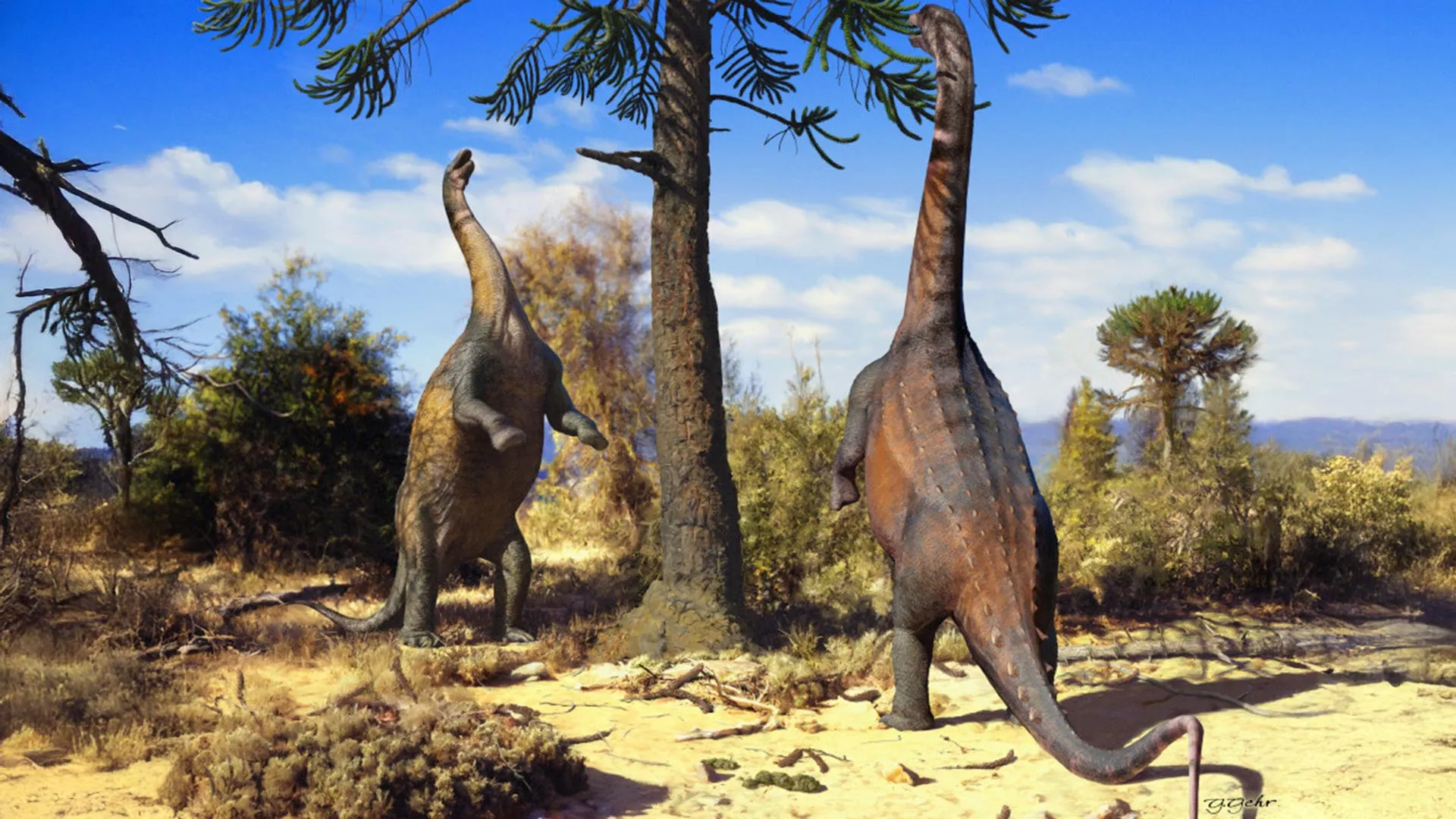
Some long-necked dinosaurs from South America may have been able to rise onto their hind legs and hold the pose, especially before reaching full size. The finding matters because it points to a wider range of feeding, display and defensive behavior among sauropods than their heavy bodies might suggest.
The conclusion comes from research supported by Fundação de Amparo à Pesquisa do Estado de São Paulo, or FAPESP, and published in the journal Palaeontology. The team studied Uberabatitan, known from Brazil, and Neuquensaurus, known from Argentina, along with other sauropods for comparison.
According to FAPESP, the two South American dinosaurs had femurs that were unusually good at handling the forces created when the animals shifted weight onto their back legs. The study found that younger animals were better suited to the posture, while larger adults likely faced much greater strain.
Engineering tests on fossil bones
Julian C. G. Silva Junior of São Paulo State University and colleagues used finite element analysis, a computational method also used in engineering, to test how dinosaur thigh bones responded to stress. The researchers built digital models of femurs from seven sauropod species, using fossils held in natural history museums.
FAPESP said the simulations examined two kinds of force. One test estimated stress from gravity and body weight pressing through the femur when the animal stood upright. The other estimated forces produced by the muscles acting on the same bone.
By combining those simulations, the researchers compared how much load each species’ femur could bear in a bipedal stance. The lowest stress levels appeared in a juvenile Uberabatitan ribeiroi and in Neuquensaurus australis, both from the Late Cretaceous, about 66 million years ago.
The study attributes that result to the shape and strength of the bones. FAPESP said the two species had thick, sturdy femurs that spread mechanical stress more effectively than the femurs of larger sauropods examined by the team.
Size changed the limits
The researchers found that bigger sauropods may also have been able to rise onto their hind legs, but probably for shorter periods and with more discomfort. According to FAPESP, large muscles and large bones did not fully offset the mechanical demands created by greater body mass.
Adult Uberabatitan may have reached about 26 meters in length, making it the largest dinosaur known from Brazil, FAPESP said. The juvenile Uberabatitan in the study was well suited to the posture, but the team found that full-grown individuals would likely have faced stress levels closer to those of other giant sauropods.
The researchers proposed several possible reasons for rearing. FAPESP said the posture could have helped plant-eating sauropods reach higher vegetation, appear larger to predators, display to potential mates or help during reproduction.
A sauropod standing with both hind feet and its tail on the ground would have formed a three-point stance, which could have helped stabilize the body, according to the study summary. The team did not model every part of that system, however.
Limits of the model
FAPESP said the simulations did not include cartilage, the flexible tissue that cushions joints, or the support provided by the tail in a tripodal posture. Because cartilage was not analyzed across the seven specimens, the researchers treated its role as broadly comparable among the species.
Silva Junior said, according to FAPESP, that the method is most useful for comparing species rather than producing exact stress values for each dinosaur. The team said those comparisons still offer evidence for how some sauropods may have behaved millions of years ago.
This story draws on original reporting from ScienceDaily.