
Rocky Mountain ranchers water hauling grows as record snow drought bites
A record-low Upper Colorado River Basin snowpack is forcing ranchers to haul water daily for cattle as ponds, springs and creeks dry up.
By Priya Raghavan · Science Reporter
3 min read
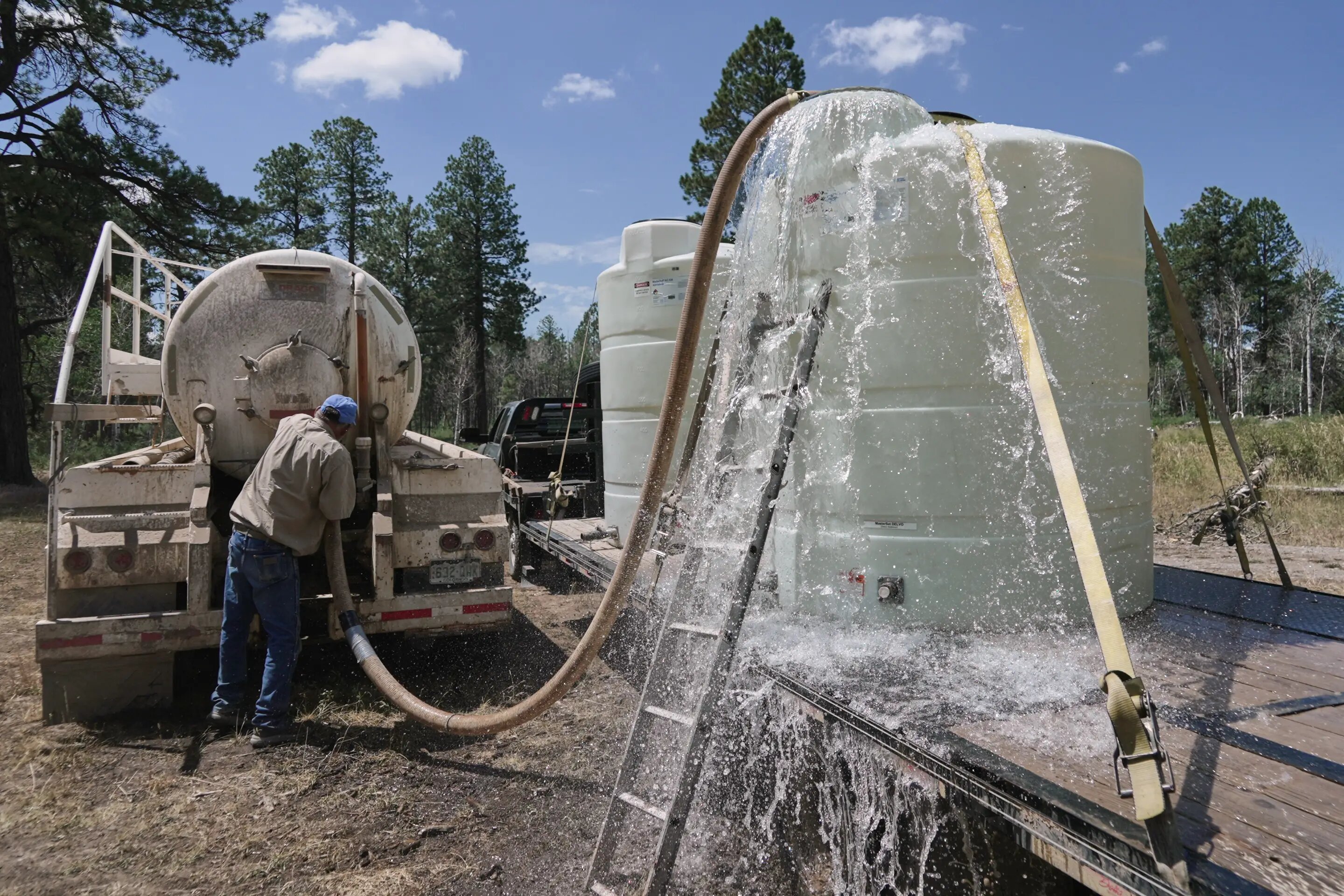
Rocky Mountain ranchers water hauling has become a daily reality after the Upper Colorado River Basin saw its lowest snowpack on record, the Associated Press reported. The shortage matters because many livestock operations depend on snowmelt to keep ponds, springs and creeks running through the summer.
Near Montrose, Colorado, rancher Scott Snyder used three vehicles over nine hours to bring enough water to 800 cow-calf pairs for a day or two, according to the AP. Snyder runs Mex and Sons Ranch with his family, and the work now includes guarding every gallon in hot, dry conditions.
Why are Rocky Mountain ranchers hauling water?
Ranchers are hauling water because the usual summer supply from melting mountain snow has not filled many stock ponds, springs and creeks. A snow drought means the region receives far less snowpack than normal, leaving less runoff to recharge surface water and groundwater when temperatures rise.
The basin covers parts of Wyoming, Colorado, Utah and New Mexico. A study in the Proceedings of the National Academy of Sciences led by Adrienne Marshall of the Colorado School of Mines linked the 2026 snow drought to human-caused climate change, according to the AP.
Marshall told the AP that a snow drought this severe is unlikely to repeat soon, but she said multiple smaller drought years can build on each other. She also said the risk of extreme snow drought rises as greenhouse gas emissions continue to increase.
Ranchers are cutting herds and buying feed
The water shortage is adding costs to ranchers already dealing with dry pasture and weak forage growth. The AP reported that Snyder and his brother Monte have reduced their herd, bought hay, moved cattle farther for grazing and kept watch for nearby wildfire threats.
The Snyders have access to a nearby reservoir where a landowner charges them to fill a 6,500-gallon tanker, the AP reported. Other ranchers are competing for the same scarce resource: one nearby truck was carrying a 3,000-gallon tank for sheep.
Mark Ragsdale, the state water commissioner for Norwood, Colorado, told the AP that neighbors keep asking where they can find water. Outside that job, he hauls water to 45 cow-calf pairs of his own and said his solar-powered well is still producing.
The Brays, who run 500 head, expanded their water-hauling fleet this year after the record low snow followed years of drought, according to the AP. Lance Bray bought a high-mileage flatbed truck to carry a 2,600-gallon tank, making it the operation’s third flatbed assigned to hauling water.
What help is available for drought costs?
Ranchers can seek reimbursement from the U.S. Department of Agriculture for above-normal costs of moving water and feed during drought, the AP reported. That assistance can cover some expenses, but it does not replace the hours spent driving rough roads and filling tanks.
In northern New Mexico, Stanford Salazar told the AP that hauling water has been part of his daily routine for five years. Few of his 14 ponds now hold water, and he said winters that once brought several feet of snow now bring far less.
In central Utah, Jeff Christensen is drilling two wells 500 feet deep to reduce hauling, according to the AP. Each well is close to $20,000, he said, with half the cost covered by a Utah Grazing Improvement Program grant, but the wells still must reach the water table.
The AP described a growing burden that is practical, financial and emotional. Zandon Bray said he and his brother are trying to keep ranching after restarting a cattle operation their father sold following the 2018 drought season.
This story draws on original reporting from Phys.org.