
Rice yield and drought tolerance improve after gene trim in tests
University of Chicago researchers report 20% to 25% rice harvest gains and better drought and heat tolerance after trimming plants’ own ALKBH genes.
By Priya Raghavan · Science Reporter
3 min read
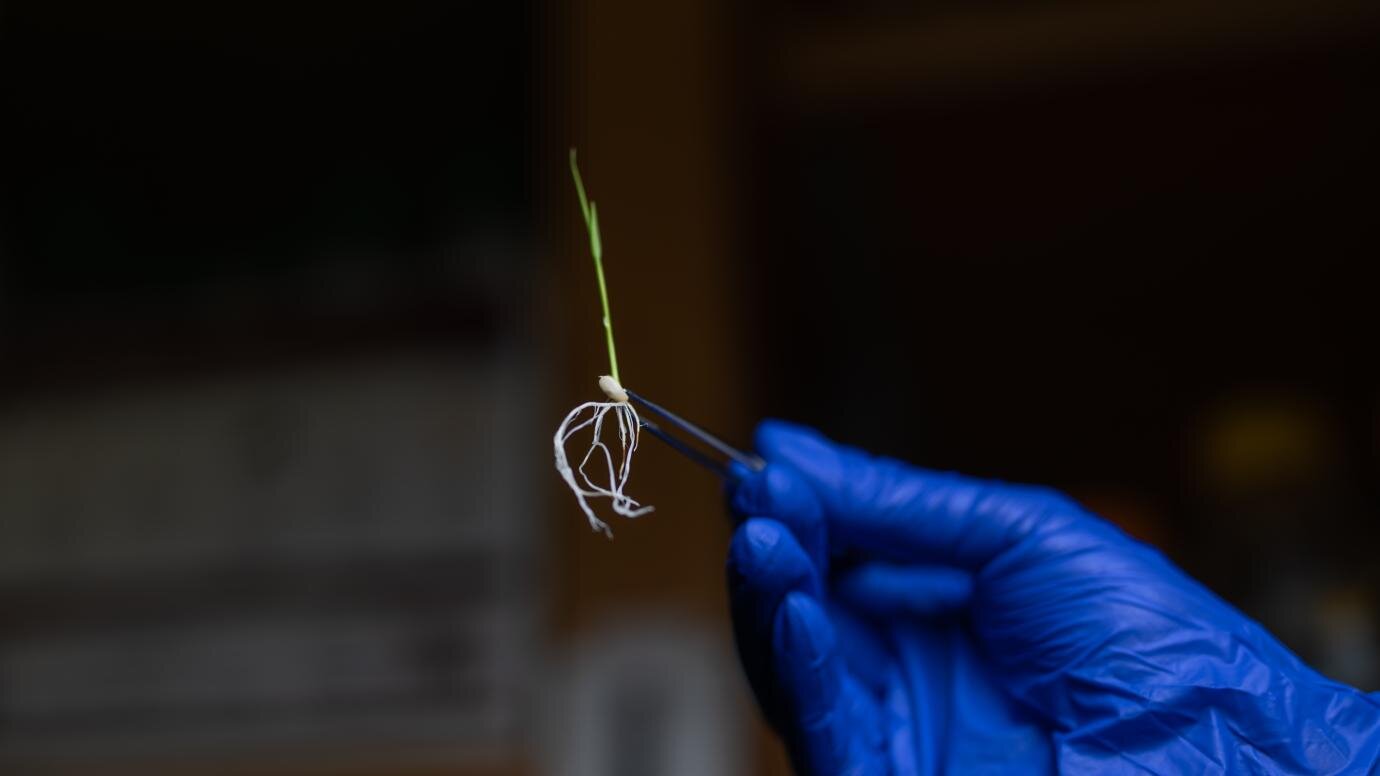
Rice yield drought tolerance improved in new tests after University of Chicago scientists removed a small section from plant genes involved in growth regulation. The team reported harvest increases of about 20% to 25% in rice, along with stronger tolerance of drought and heat.
The work, published July 23 in Nature Genetics, points to a way to raise crop productivity without adding an animal gene to a plant. The study was led by Chuan He, a University of Chicago professor in chemistry and biochemistry and molecular biology, with Liudan Jiang listed as first author.
How did scientists improve rice yield and drought tolerance?
The researchers focused on plant genes called ALKBH9 and ALKBH10. Those genes are plant variants related to ALKBH5, a gene with a similar role in mammals, according to the University of Chicago.
The team found that flexible protein segments at the end of ALKBH9 or ALKBH10 limited where the proteins could act inside the cell. When the researchers removed that end segment, known as the C-terminus, the altered plant proteins spread more broadly and affected chromatin, the packaged form of DNA inside cells.
That change appeared to ease restraints on growth. In rice plants, the edited versions of ALKBH9 or ALKBH10 were linked to higher yield and improved stress resistance, according to the study.
Why the gene trim matters
The finding builds on work from the same lab in 2021. In that earlier research, the group inserted an animal gene called FTO into crops including rice and potatoes and found that plants produced larger harvests and longer roots, which helped with drought resistance, according to the university.
He’s lab then looked for a plant-based route to a similar outcome. The new approach uses genes already present in plants rather than introducing a foreign gene, which the researchers said could address some concerns associated with genetically modified organisms.
The proposed edit is small. According to He, the same effect may be achievable by using base editing to remove the C-terminus from a plant’s own ALKBH9 or ALKBH10 genes, changing one or a few base pairs rather than inserting genes from another species.
What are intrinsically disordered regions?
Intrinsically disordered regions are flexible parts of proteins that do not fold into a fixed three-dimensional shape. Scientists once viewed many of these regions as passive connectors or tails, but the University of Chicago team said they can actively influence what happens inside cells.
In this study, those flexible regions restrained the plant ALKBH proteins from acting on chromatin. Removing the regions changed the proteins’ behavior and produced growth effects similar to those seen with the mammalian FTO gene, according to the researchers.
The scientists are still studying exactly how the edit increases growth and stress tolerance. The group is also testing the strategy in other crops because ALKBH9 and ALKBH10 appear across many plant species, according to the University of Chicago.
The paper is titled “Intrinsically disordered regions restrain genomic targeting of RNA and histone demethylases in mammals and plants.” It was published in Nature Genetics with the DOI 10.1038/s41588-026-02685-w.
This story draws on original reporting from Phys.org.