
Ribo-M engineered ribosome makes proteins from its own RNA
UIC scientists built a bacterial ribosome linked to its own protein code, a proof of concept for targeted protein production.
By Tom Brennan · Health & Medicine Correspondent
3 min read
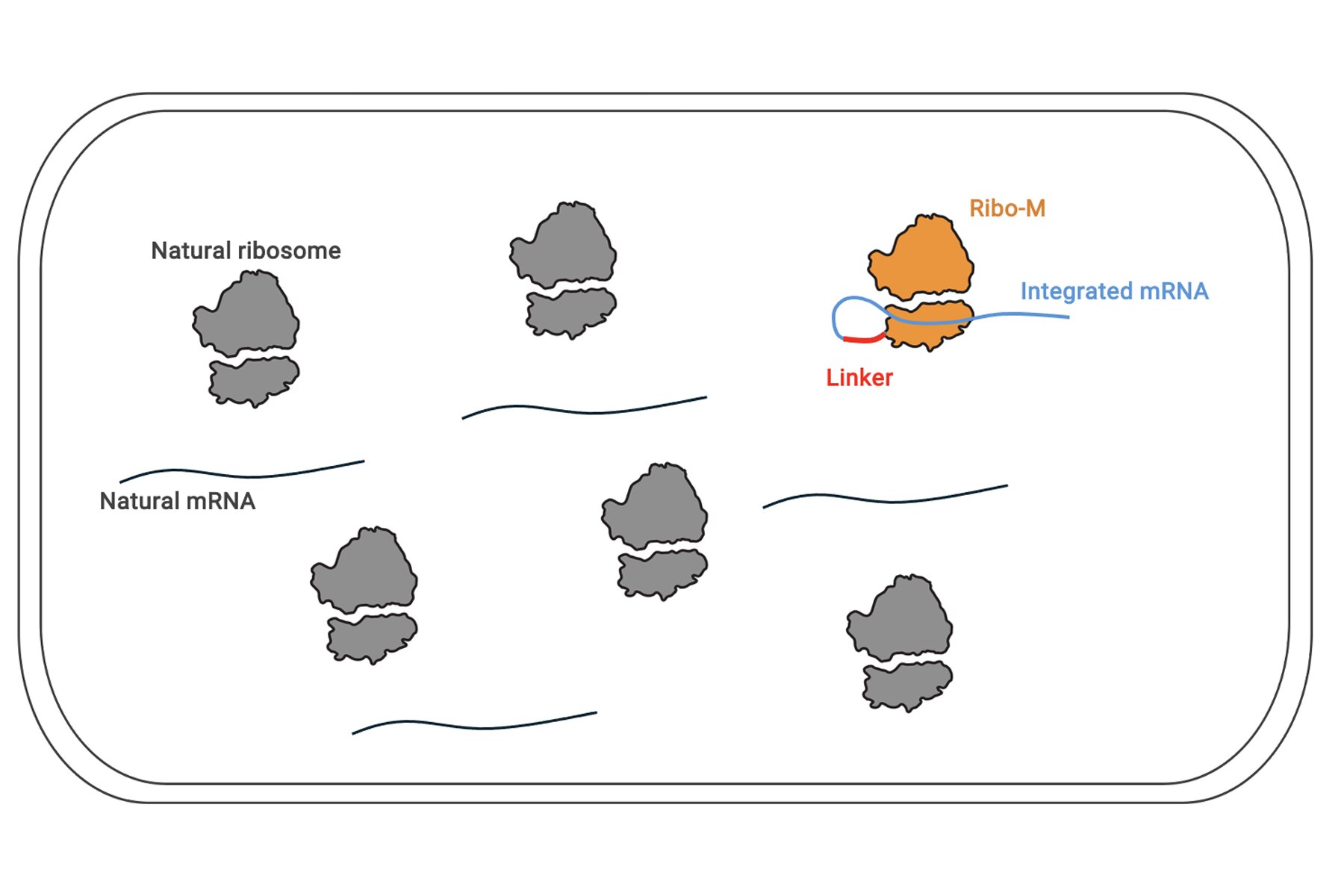
University of Illinois Chicago researchers have created an engineered bacterial ribosome that can make a protein encoded within its own RNA. The system, called Ribo-M, is an early Ribo-M engineered ribosome platform that could give synthetic biologists more control over protein production, although it has not been shown as a drug-making method.
The work appeared in Nature in 2026. Unlike ordinary ribosomes, which encounter separate messenger RNAs in cells and translate many different protein instructions, the engineered system joins the protein-coding message to part of the ribosome itself, according to the study abstract indexed by PubMed.
How does the Ribo-M engineered ribosome work?
Ribosomes are molecular machines that read messenger RNA, or mRNA, to assemble proteins. In the UIC design, researchers appended a protein-coding sequence to bacterial 16S ribosomal RNA, producing what they call chimeric messenger-ribosomal RNA, or mrRNA.
That hybrid RNA forms a small ribosomal subunit. When it joins a large subunit, it creates Ribo-M, which translates the protein sequence attached to its own RNA, the paper reports. The approach commits each engineered ribosome to the particular protein sequence built into that version of mrRNA; it does not mean the researchers created one device permanently limited to a single protein across all designs.
The researchers tested whether translation was happening on that same chimeric RNA, rather than through a separate ribosome. Mutations and antibiotics that disrupted small-subunit function stopped mrRNA translation, evidence the authors say supports translation in cis — by the ribosome assembled on the hybrid RNA itself.
What did the researchers demonstrate?
UIC said the team tested Ribo-M with several encoded outputs: a green-fluorescent protein, a protein that confers antibiotic resistance and a light-producing enzyme. The project involved producing tens of thousands of ribosome variants and screening thousands of bacterial colonies before the group found a functional design, according to the university.
The paper also describes Ribo-TM, a related version made by tethering the ribosomal subunits. In that construct, the encoding, decoding and peptide-making functions are brought together on one RNA scaffold, PubMed's abstract says.
Why is the result still preliminary?
UIC characterizes Ribo-M as a prototype and proof of concept. The reported experiments do not establish manufacturing scale, efficiency, safety, commercial use or clinical benefit.
Researchers said specialized systems might eventually support orthogonal protein production or proteins containing nonstandard amino acids. They also suggested that such work could inform questions about how early protein-making systems operated when their components may have been scarce and poorly organized. Those are research implications, not demonstrated products or an account of how life arose.
The PubMed record lists Kasra Alizadeh, Nora Vázquez-Laslop and corresponding author Alexander Mankin as inventors on a pending patent application covering the Ribo-M and Ribo-TM designs. Dorota Klepacki is also an author of the study.
This story draws on original reporting from Phys.org.