
Red Sea fish invasion model identifies likely Mediterranean arrivals
Tel Aviv University researchers built a model to rank which Red Sea fish are most likely to establish in the Mediterranean.
By Priya Raghavan · Science Reporter
3 min read
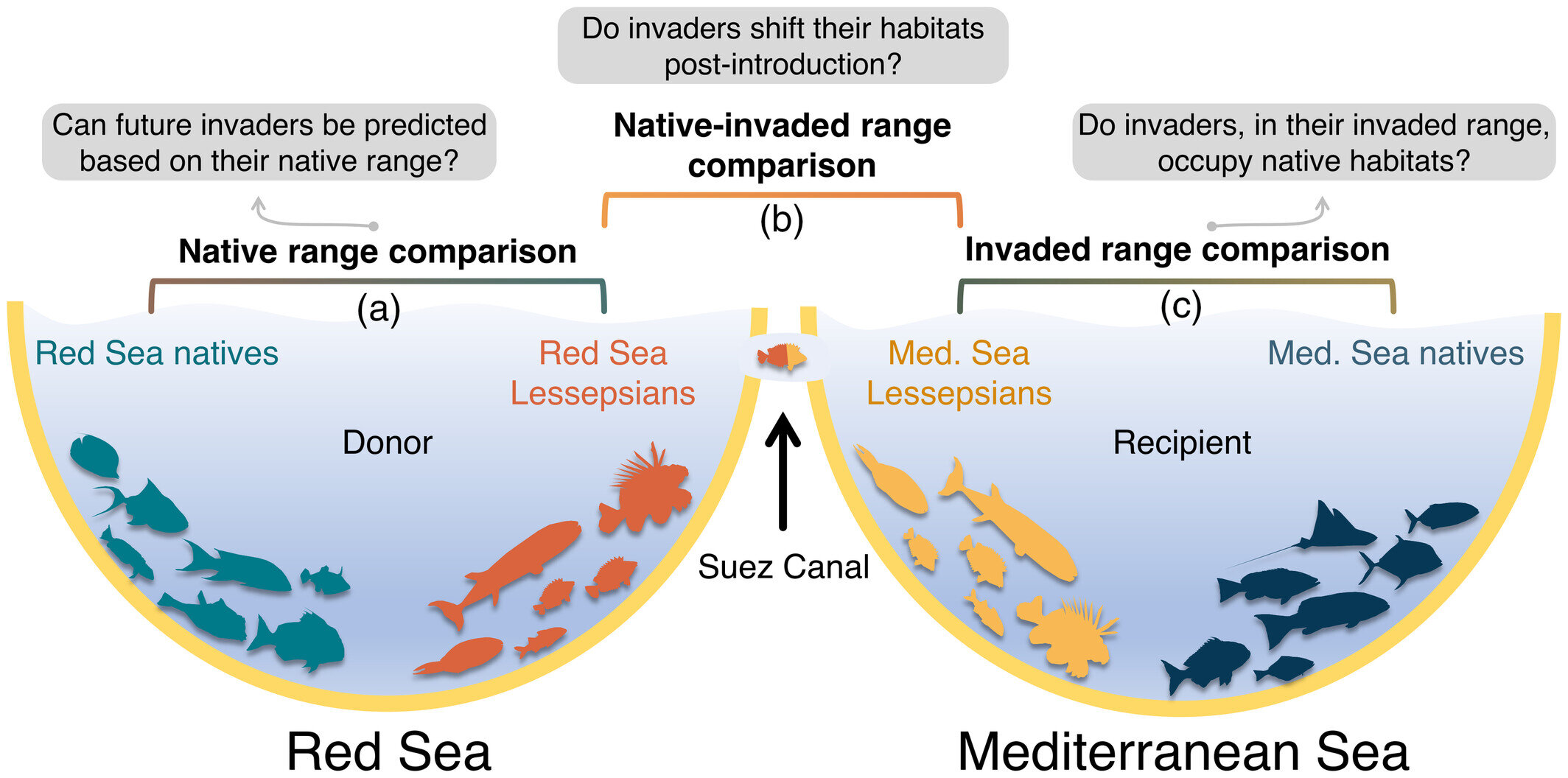
A new Red Sea fish invasion model from Tel Aviv University ranks which species are most likely to establish themselves in the Mediterranean. The work matters because more than 120 fish species have already moved from the Red Sea since the Suez Canal opened more than 150 years ago, according to the university.
The study, published in the Journal of Animal Ecology, points to several leading candidates for future arrivals. Tel Aviv University said the model identified the stellate pufferfish, cinnabar goatfish and yellowspotted trevally among the species with high predicted invasion potential.
The research was led by Dr. Shahar Chaikin during his doctoral work at Tel Aviv University, under the supervision of Prof. Jonathan Belmaker of the School of Zoology, the Wise Faculty of Life Sciences and the Steinhardt Museum of Natural History. The university listed Dr. Tal Gavriel, doctoral student Avery Deveto and Shahar Malamud as additional contributors.
What Red Sea fish are likely to invade the Mediterranean?
According to Tel Aviv University, the model’s top candidates include Arothron stellatus, known as the stellate pufferfish; Parupeneus heptacantha, the cinnabar goatfish; and Turrum fulvoguttatum, the yellowspotted trevally. The full ranking appears in the peer-reviewed study.
The researchers designed the model to look ahead rather than only explain past invasions, the university said. As Mediterranean waters warm, tropical species from the Red Sea may find it easier to survive there, making early detection and monitoring more urgent for conservation planning.
How the researchers built the model
The team used stereoscopic baited remote underwater video systems in the Gulf of Eilat and along Israel’s Mediterranean coast, Tel Aviv University said. The cameras were placed at depths from 5 to 150 meters, or about 16 to 492 feet.
Using hundreds of hours of footage, the researchers analyzed 179 fish populations. They compared Red Sea species that have already established in the Mediterranean with related species that have remained in the Red Sea.
The study’s design let the team examine traits in the original Red Sea populations before invasion occurred, according to the university. That approach differs from studies focused only on species after they had already arrived in the Mediterranean.
Why reef dependence matters
The strongest signal in the model was habitat use, according to the study summary from Tel Aviv University. Fish that depended less on coral reefs in the Red Sea were more likely to become successful invaders in the Mediterranean.
Chaikin said, according to the university, that the Suez Canal and the Mediterranean have few coral reefs like those in the Red Sea. Species that need reef habitats are therefore less likely to complete the move and settle successfully.
The researchers also found that successful invaders changed habitat use after arrival, according to Tel Aviv University. Rather than keeping the same habitat patterns seen in the Red Sea, they shifted toward the environments available in the Mediterranean.
The study also challenges the idea that invading fish mainly fill unused ecological roles. Tel Aviv University said the invaders often occupy habitats already used by native Mediterranean species, raising the possibility of stronger competition for food, shelter and space.
Belmaker said, according to the university, that studying species before their migration helps move research from explaining past invasions toward predicting future ones. The researchers said predictive tools like this model could help identify new arrivals earlier as the Mediterranean continues to warm.
This story draws on original reporting from Phys.org.