
Rare meteorite class tied to dinosaur-ending impact
Nickel isotope evidence points to a scarce CO chondrite as the object behind the Chicxulub extinction event, researchers report.
By Lucas Ferreira · Science & Environment Writer
3 min read
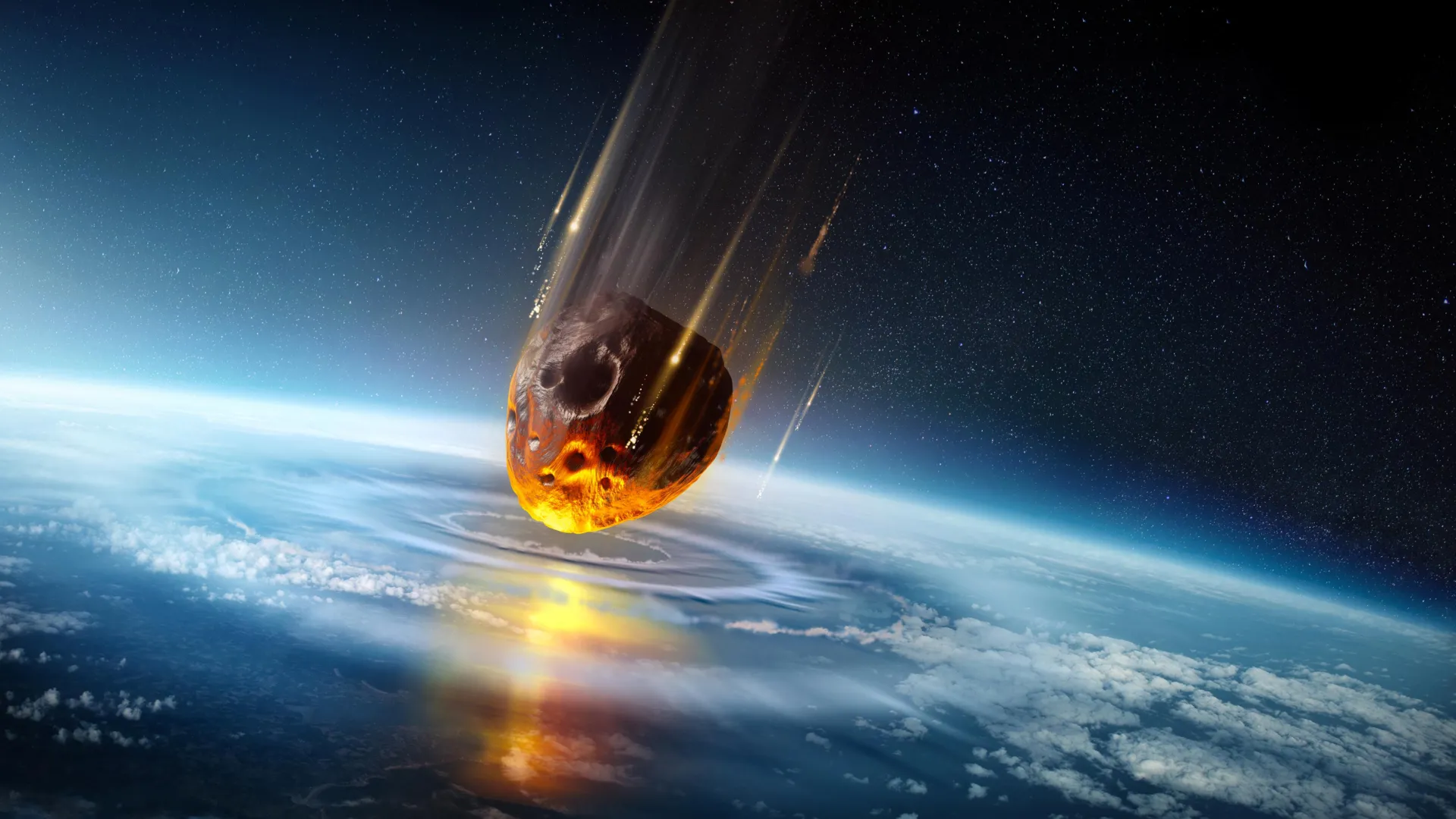
Scientists have narrowed the identity of the object that ended the age of non-avian dinosaurs to an unusually rare class of meteorite. The finding matters because the object's chemistry may shift attention toward planet-cooling dust and debris, rather than sulfur carried inside the impactor, as the main killer after the collision.
Researchers from the University of British Columbia, Paris, Brussels and Vienna reported in Science Advances that the impactor was likely a CO chondrite, also known as a carbonaceous chondrite of the Ornans class. UBC said the team reached that conclusion by studying nickel isotopes in material left behind by the Cretaceous-Paleogene impact 66 million years ago.
The impact is linked to the extinction of about 75% of species, including all non-avian dinosaurs, according to UBC. The object is estimated by UBC to have been 10 to 15 kilometers wide and to have hit Earth at about 64,000 kilometers per hour, forming the Chicxulub crater now buried beneath Mexico's Yucatán Peninsula.
Nickel traces in a global clay layer
UBC said scientists at the Institut de Physique du Globe and Université de Paris made high-precision nickel isotope measurements on samples collected over many years. The samples came from a thin clay layer deposited worldwide after the impact.
Dr. Philippe Claeys, who worked on the study as a visiting professor at UBC and is a professor at Vrije Universiteit Brussel, said the work is difficult because only a tiny share of the original projectile remains in the Cretaceous-Paleogene clay layer. According to UBC, the impactor itself vaporized when it struck Earth.
Despite that limited material, the nickel isotope pattern allowed the researchers to identify the likely class of the object, UBC said. The team concluded that it matched a rare carbonaceous meteorite rather than a more common meteorite type found on Earth.
A scarce object with unusual chemistry
Carbonaceous chondrites make up about 5% of meteorites sampled on Earth, according to UBC. CO chondrites are only a small part of that already limited group, and UBC described them as among the most primitive and least altered materials left from the solar system's formation.
Claeys said CO chondrites differ from the typical meteorites found in museum collections. He said they contain far lower amounts of volatile elements such as carbon, zinc, water and especially sulfur than other meteorite classes found on Earth.
That chemistry does not change the broad explanation for the extinction event, Claeys said, but it makes sulfur within the impactor a less likely main cause of the die-off. He said fine debris blasted into the atmosphere was more likely to have been the primary factor.
UBC said the impactor's birthplace is still uncertain. The university said it may have originated in a distant outer-solar-system region rich in rocky debris, or from the outer asteroid belt near Jupiter.
The study, titled “The origin of Cretaceous-Palaeogene impactor revealed by nickel isotopes,” was authored by Georgy V. Makhatadze, Frédéric Moynier, Leslie-Anne Brun, Steven Goderis, Philippe Claeys and Christian Koeberl. UBC said the research was published in Science Advances in 2026.
This story draws on original reporting from ScienceDaily.