
Purple corn food dye shows promise as stable natural colorant
University of Missouri researchers found purple corn pigments can survive heat and storage, raising prospects for cleaner-label foods and drinks.
By Lucas Ferreira · Science & Environment Writer
3 min read
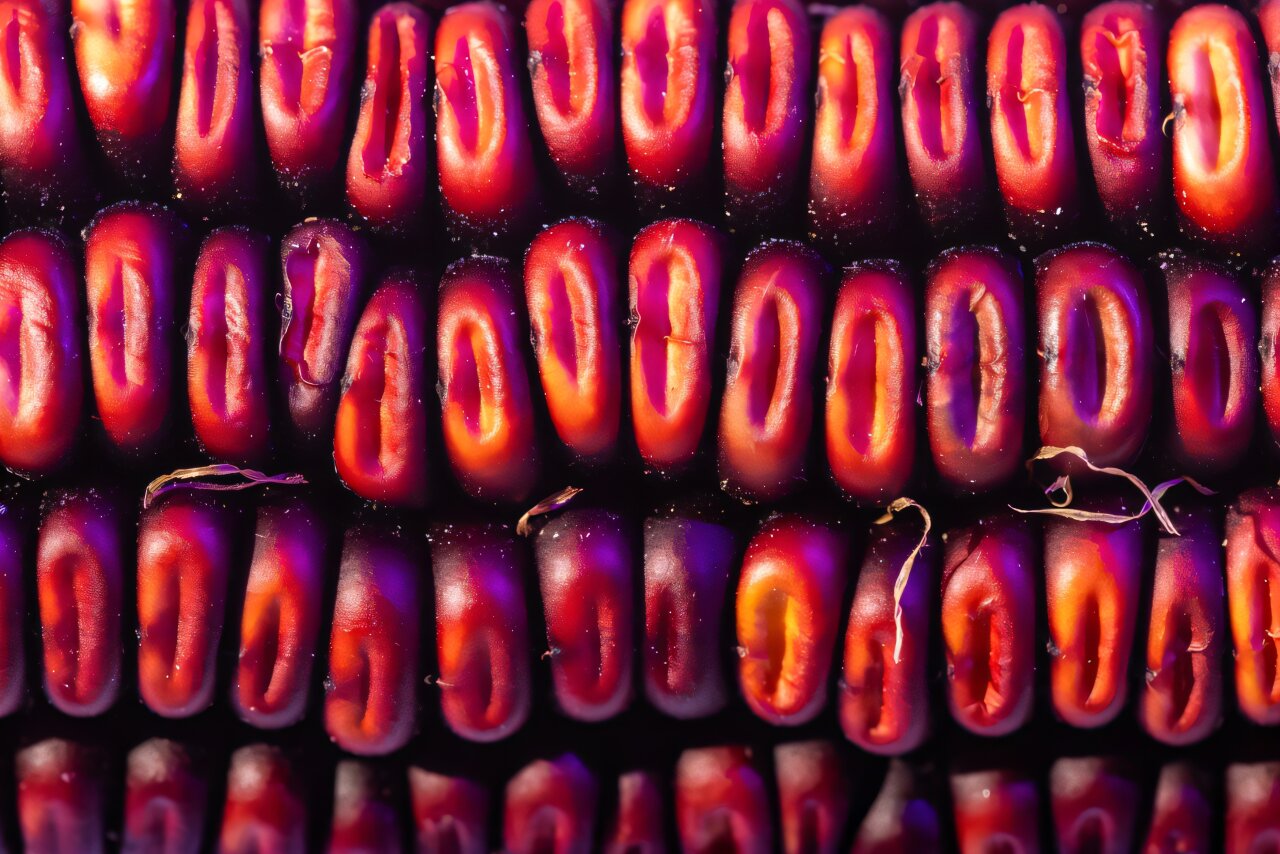
University of Missouri researchers say a purple corn food dye could give food makers a more durable natural alternative to petroleum-based synthetic colors. The work matters for companies trying to replace dyes such as Red No. 40 and Red No. 3 without losing color during processing or storage.
The team studied a purple corn variety traditionally grown in South America, according to the University of Missouri. Its color comes from anthocyanins, the same class of plant pigments that helps color blueberries, red cabbage and grapes.
In corn kernels, the university said, those pigments are concentrated in the pericarp, the thin outer covering of the kernel. Pavel Somavat, who has appointments in the university’s College of Agriculture, Food and Natural Resources and College of Engineering, described that layer as the part of the kernel that often gets caught in people’s teeth and said it holds the most valuable components in purple corn.
Can purple corn replace artificial food dyes?
The Missouri team’s findings suggest purple corn pigments may be able to handle conditions that often weaken natural colors. According to the researchers, many plant-based colorants lose strength when exposed to heat, light or oxygen, which has limited their use in commercial foods.
Food manufacturing can expose ingredients to temperatures as high as 250 degrees Fahrenheit, and finished products may sit on shelves for weeks or months. In tests described by the university, purple corn colorants kept about 75% of key color compounds after one hour at elevated temperatures used in food processing.
The researchers also tested a protective coating made from food-grade materials. With that treatment, some pigment compounds showed retention of nearly 97%, the university said. The process can also produce shelf-stable powders, which could make the colorants easier to ship and store.
Anthocyanins are naturally occurring pigments found in some fruits, vegetables and grains. The University of Missouri said they are rich in antioxidants associated with reducing inflammation and supporting heart health, while artificial dyes are petroleum-based and added for appearance.
How did the color perform in drinks?
The team tested the purple corn colorants in a model beverage system, which the university described as a difficult setting for natural dyes. Drinks can be acidic, stored for long periods and exposed to light, all of which can degrade plant-derived ingredients.
Somavat said the purple corn-based colorants performed well in both acidic and basic environments. He said that makes them a potential fit for fruit juices, flavored waters and sports drinks, and that refrigerated storage for seven weeks caused minimal color loss.
The findings were published in npj Science of Food. The paper is titled “Thermal and storage degradation kinetics of corn anthocyanin-based natural red colorants in a model beverage system, and their gastrointestinal behavior.”
Could farmers grow purple corn in the Corn Belt?
Missouri is a major producer of conventional yellow corn, and University of Missouri researchers have spent five years working to adapt purple corn for Corn Belt growing conditions. The goal, according to the university, is to expand production and create another revenue option for farmers.
The team is working with Sherry Flint-Garcia, a research geneticist with the U.S. Department of Agriculture’s Agricultural Research Service, to develop hybrid varieties that combine strong color with reliable field performance. Flint-Garcia said some of the most colorful types do not grow well in Missouri, so researchers are crossing them with corn types already suited to the region.
This story draws on original reporting from Phys.org.