
Primitive membranes study points to origins of life chemistry
Hebrew University researchers say fatty acids and hydroxy acids formed sturdier cell-like structures when chemically linked.
By Lucas Ferreira · Science & Environment Writer
3 min read
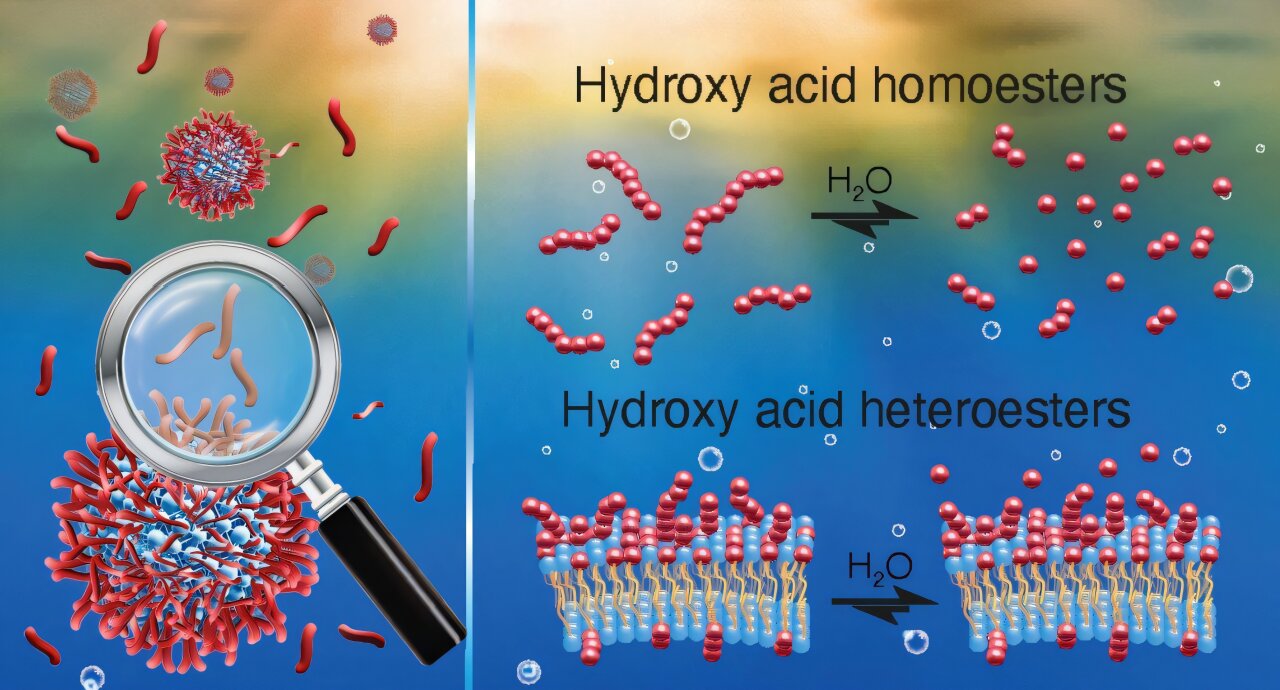
A Hebrew University-led study on primitive membranes origins of life research reports that two simple classes of molecules can make each other more stable when joined. The finding matters because it links two problems in early-life chemistry: how cell-like compartments formed and how short primitive polymers survived in water.
The work, led by Dr. Moran Frenkel-Pinter and postdoctoral researcher Dr. Rotem Edri, was published in Nature Communications, according to Hebrew University of Jerusalem. The researchers studied fatty acids, which are considered candidates for early membrane building blocks, and hydroxy acids, which can connect into short chains.
How could primitive membranes help explain the origins of life?
Modern cells rely on membranes to create enclosed spaces, while molecules such as proteins and DNA carry out core biological functions. Origins-of-life researchers study how simpler chemical systems could have organized themselves before those complex biological molecules existed.
According to Hebrew University, the study tested what happens when hydroxy acids are chemically attached to fatty acids under simple conditions that could fit early Earth scenarios. The resulting molecules assembled into small compartment-like structures more readily than fatty acids alone, the university said.
Those structures included vesicles, described in the report as microscopic bubble-like assemblies. Such compartments are of interest because early chemical reactions would have needed protected spaces where molecules could concentrate and interact.
What the researchers found
The Nature Communications paper reports that attaching hydroxy acid oligomers to fatty-acid-like amphiphiles improved structural stability and hydrolytic stability. An oligomer is a short chain of linked molecules; hydrolytic stability refers to how well a molecule resists breaking apart in water.
Hebrew University said hydroxy acid chains usually degrade relatively quickly in water. When bound to fatty acids, the chains persisted longer, while the modified fatty acids became better at forming organized assemblies.
Frenkel-Pinter said the results show a form of molecular cooperation. In her account, the polymers gained protection from the amphiphiles, while the amphiphiles gained a stronger tendency to organize into compartments after being modified by the polymers.
The team also reported that the effect was not limited to a single chemical pairing. According to Hebrew University, similar behavior appeared across several fatty acids and hydroxy acids, suggesting the mechanism could have been available in more than one early Earth chemical setting.
Why the result is relevant beyond early Earth
The study argues that early compartments and early polymers may not have emerged as separate chemical developments. By chemically coupling them, the researchers propose a path in which each system improved the other before life-like complexity appeared.
Hebrew University also said the chemistry could interest researchers working on sustainable materials. The molecules in the study were described as biodegradable and made through simple, solvent-free reactions, features that may be useful in green chemistry research.
The paper is titled “Hydroxy acid conjugation to lipids increases structural and hydrolytic stability” and appears in Nature Communications. The reported DOI is 10.1038/s41467-026-75192-5.
This story draws on original reporting from Phys.org.