
New World screwworm traps may improve with wound-odor research
Colorado State researchers are studying wound bacteria smells to build lures that better detect New World screwworm in livestock and wildlife.
By Lucas Ferreira · Science & Environment Writer
3 min read
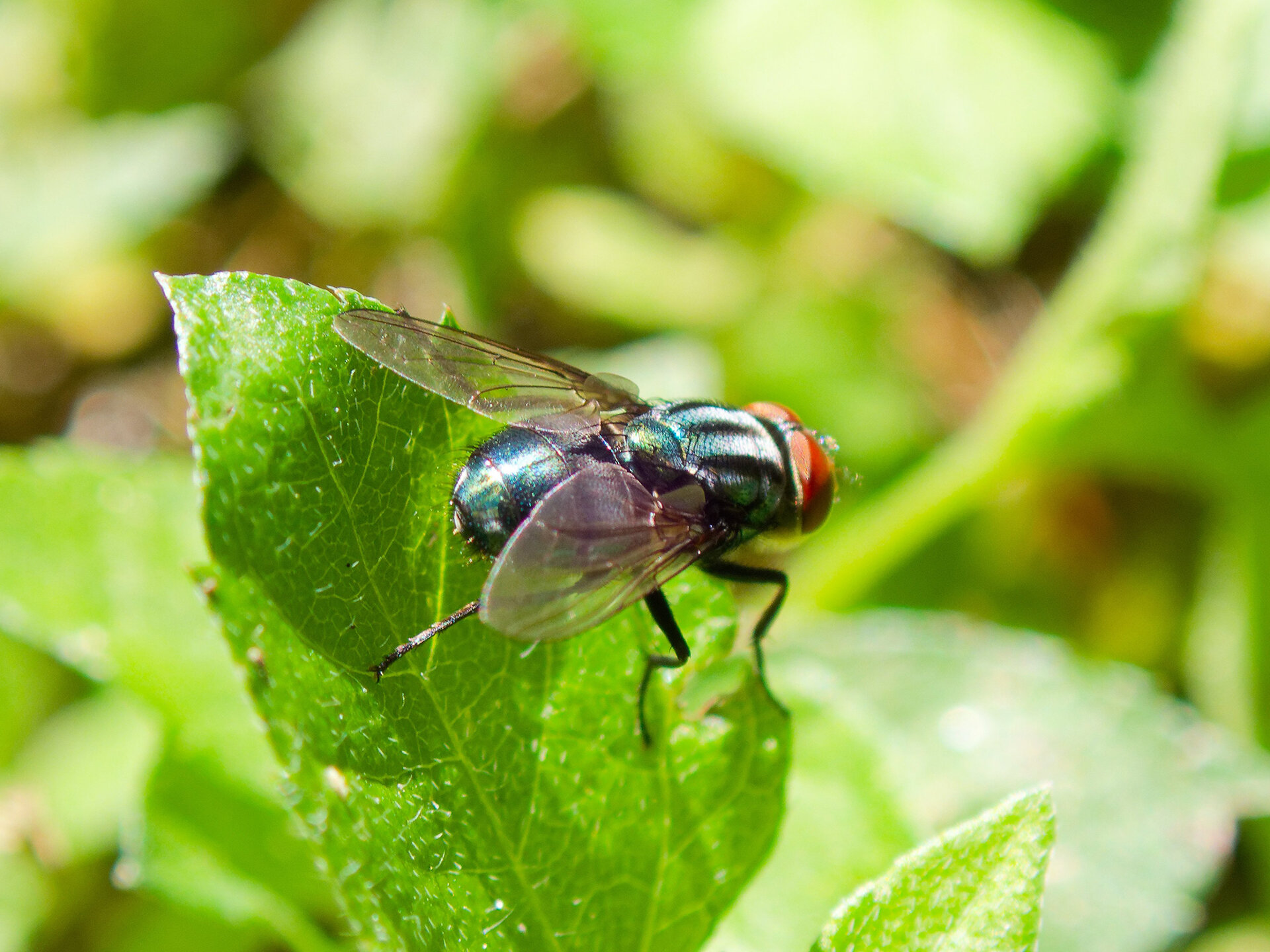
New World screwworm traps could become more precise if researchers can identify the wound odors that draw the flesh-eating fly to animals, Colorado State University said. The work follows the parasite’s detection in Texas in early June and could help officials find infestations before they spread.
Jessica Metcalf, a Colorado State University professor, is studying foul-smelling chemicals produced by bacteria in open wounds. CSU said her goal is to build better lures for monitoring a parasite that was eradicated in the United States more than 50 years ago but has recently been found again.
What is the New World screwworm?
CSU describes the New World screwworm as a type of blowfly that lays eggs in wounds and body openings. After hatching, its maggots feed on living tissue; CSU said infestations can affect warm-blooded animals, including livestock, wildlife, pets and people, and can be fatal without treatment.
The university said the risk to people and pets in the United States is low. As of July 23, CSU reported detections in cattle, sheep, goats and two dogs in Texas, along with one dog in New Mexico.
Why are wound smells useful for New World screwworm traps?
Metcalf’s team is focused on bacterial byproducts that give infected wounds their odor. CSU said those chemicals, known as volatile organic compounds, vaporize easily and can act as cues for insects searching for places to lay eggs.
One widely used lure relies on bacteria-produced odors from rotting meat, according to CSU. That creates a problem because it also attracts the secondary screwworm, a related blowfly that feeds on dead flesh, leaving traps crowded with the less harmful species and making the New World screwworm harder to spot.
CSU said the project will compare the volatile organic compounds that attract the New World screwworm with those that attract the secondary screwworm. Researchers also plan to study bacteria carried by both flies, because the university said blowflies use those microbial partners to signal suitable host sites to others of their kind.
How will the study collect samples?
CSU said the research team will ask livestock producers, veterinarians and wildlife biologists to swab animal wounds for laboratory testing. Metcalf’s lab in the Department of Animal Sciences will compare wound bacteria and odors with samples from dead animals, and participants will receive diagnostic results from the tests.
The project includes CSU faculty members Kayla Borton and Kelly Wrighton and uses genomic and chemical analysis tools through the Colorado State Microbiome Network, according to the university. CSU said statewide partners include producer associations, state agencies, CSU Extension, the Agricultural Experiment Station and Veterinary Diagnostic Laboratories, with similar outreach and sampling planned by collaborators in Texas, Arizona and New Mexico.
Tracey Goldstein, director of CSU’s One Health Institute, will coordinate outreach, training and sampling across the network, the university said. Goldstein said broad surveillance is needed because the fly can infest many kinds of animals, and wildlife infestations would be especially hard to control.
Julia Herman, a beef cattle specialist veterinarian with the National Cattlemen’s Beef Association, will help connect producers with the research, according to CSU. Herman said producers in infestation zones must check animals for wounds and ensure wounds have healed before moving livestock.
CSU said Metcalf’s background in decomposition research helped position her team for the project. Her lab has studied insects, bacteria and animal decomposition for 15 years, including forensic work using microbes on bodies to help estimate time since death.
This story draws on original reporting from Phys.org.