
New stomach bacteria identified in stranded pygmy sperm whales
Researchers found three previously undocumented Helicobacter genotypes in pygmy sperm whales that stranded along Florida’s east coast.
By Priya Raghavan · Science Reporter
3 min read
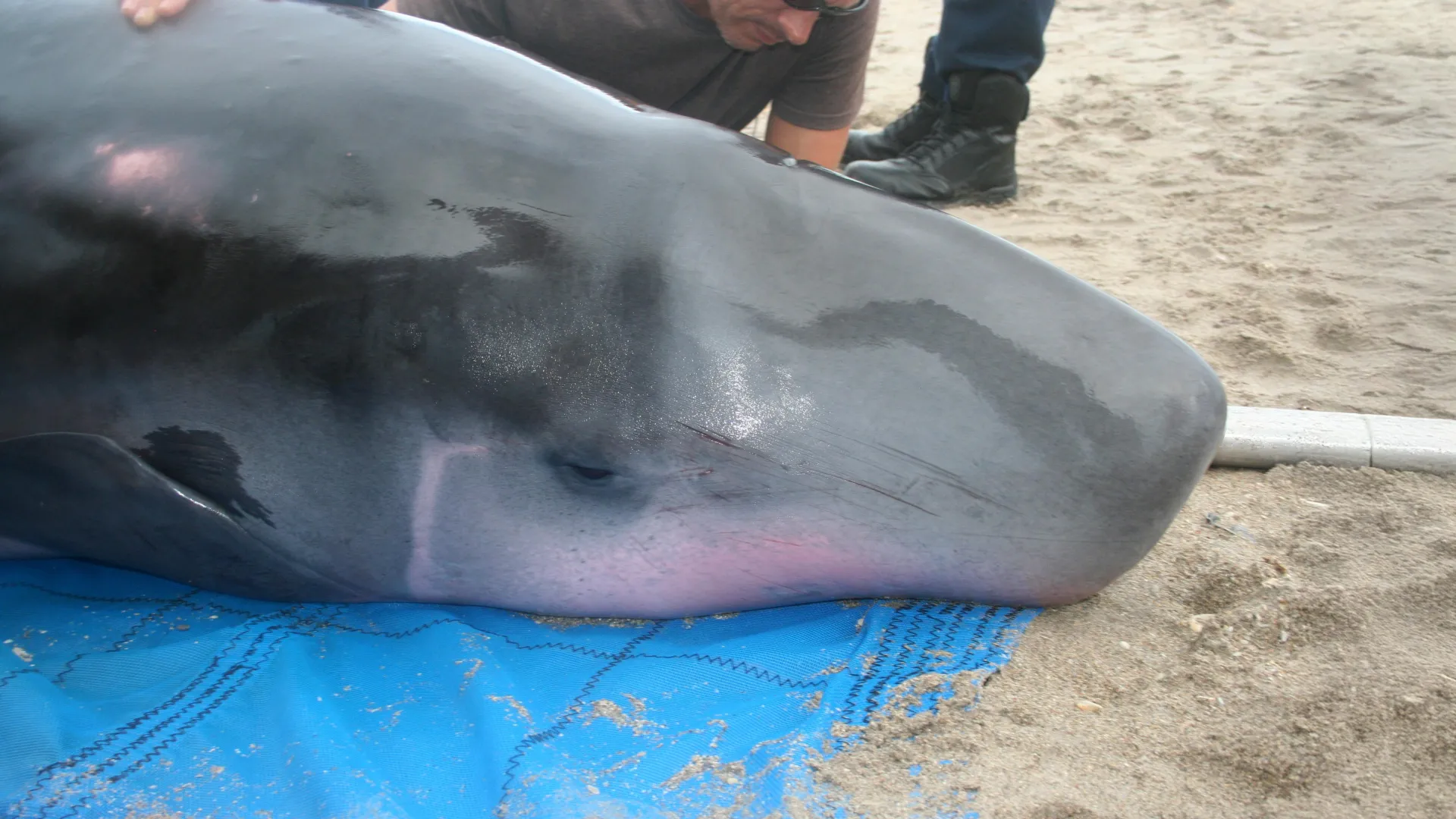
Researchers have identified three previously undocumented types of Helicobacter bacteria in stranded pygmy sperm whales, a finding that may help explain some digestive disease seen in one of the ocean’s least observed mammals. Florida Atlantic University said all four whales that carried the bacteria had serious stomach or intestinal damage, though the study did not find that the infections killed them.
The work, published in the Journal of Wildlife Diseases, drew on more than two decades of stranding records and tissue samples from pygmy sperm whales, known scientifically as Kogia breviceps. FAU Harbor Branch Oceanographic Institute said the bacteria were found in animals that stranded on Florida’s east coast.
Pygmy sperm whales are difficult to study because they spend much of their time offshore, usually in small groups, and dive deeply to feed on squid and fish, according to FAU. Researchers said much of the available knowledge about the species comes from post-mortem examinations after strandings.
Decades of strandings reviewed
FAU Harbor Branch said its teams responded to 59 pygmy sperm whale strandings from 1999 through 2020 and completed necropsies on 80% of those animals. In four whales, researchers found spiral-shaped bacteria in stomach tissue.
The team later used histopathology, molecular tests and DNA sequencing on preserved samples, according to FAU. That work identified three Helicobacter genotypes not previously reported, which the researchers named Kogia Helicobacter 1, Kogia Helicobacter 2 and Kogia Helicobacter 3.
Annie Page, senior author of the study and an associate research professor and clinical veterinarian at FAU Harbor Branch, said Helicobacter bacteria have been linked to gastrointestinal disease in people and other animals, including gastritis, ulcers and gastric cancer. Page said finding new strains in a deep-diving whale species was “intriguing.”
Wendy Marks, corresponding author and a research coordinator in FAU Harbor Branch’s marine wildlife veterinary medicine and research lab, said Kogia Helicobacter 1 and 2 are genetically similar to Helicobacter species previously detected in other cetaceans and humans. Marks said Kogia Helicobacter 3 comes from a more distant lineage, pointing to the likelihood of more undiscovered ocean bacteria.
Digestive disease found in infected whales
FAU said every whale that tested positive for Helicobacter also showed gastrointestinal disease. Page said researchers observed gastritis, stomach ulcers, fibrosis and nematode infestations, and one animal also had colitis.
The researchers did not list Helicobacter as the cause of death in any of the four whales, according to FAU. Page said the lesions raise questions about whether the bacteria may play a role in digestive disease.
FAU said Helicobacter was first reported in marine mammals in 2000 and has since been found in several cetacean species. In some animals, related infections have been associated with low energy, reduced appetite, regurgitation, ulcers and inflammation, according to the university.
Marks said chronic Helicobacter infections, if they prove harmful, could affect individual whales and possibly broader populations, particularly among vulnerable species. FAU said researchers still do not know how common the newly identified bacteria are in pygmy sperm whales or whether they contribute to illness, strandings or population-level health problems.
The study included researchers from FAU Harbor Branch, the University of Florida College of Veterinary Medicine, Colorado State University and Marine Mammal Pathology Services. FAU said the research was supported by Florida’s “Protect Florida Whales” specialty license plate grant, administered by the Harbor Branch Oceanographic Institute Foundation.
This story draws on original reporting from ScienceDaily.