
Moon science reserves gain support at lunar governance debate
At a Royal Astronomical Society debate, 76% of attendees backed preserving lunar areas for future astronomy and cosmology.
By Priya Raghavan · Science Reporter
3 min read
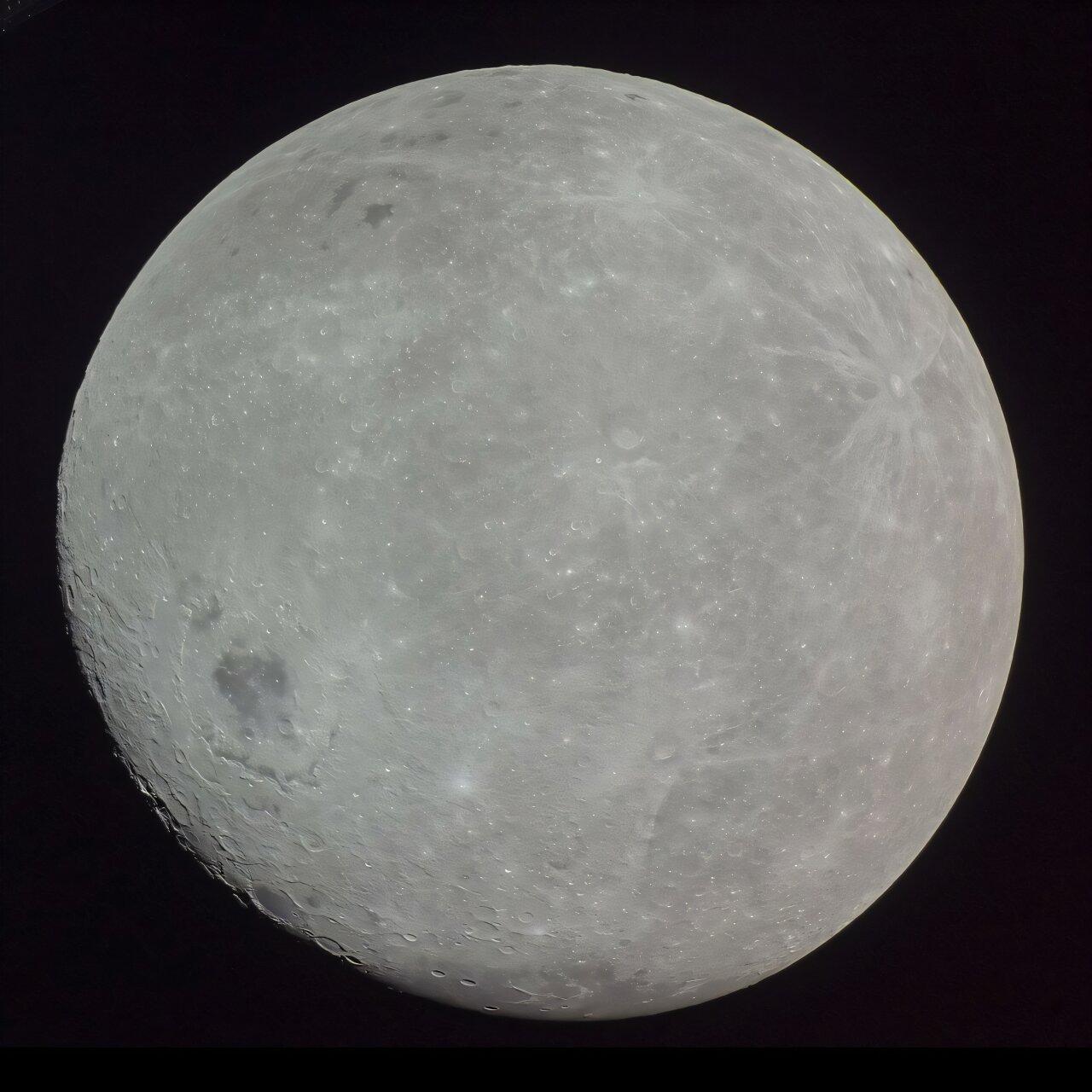
A proposal for moon science reserves drew strong support at a Royal Astronomical Society debate as scientists warned that development on the lunar far side could damage one of astronomy’s best future observing sites. The July 21 discussion in Birmingham, England, came as governments and private groups plan more lunar missions, habitats and resource projects.
The debate was part of a conference on lunar governance. Afterward, 76% of attendees indicated support for preserving parts of the moon for scientific use, according to Universe Today’s report on the event.
The panel included Dr. Jonathan McDowell, Professor Joe Silk, Professor Martin Ward, Dr. Nikita Chu and Dr. Manual Salvoldi. They addressed whether the lunar far side should be kept as a protected scientific environment or whether commercial activity should be allowed there alongside research.
Why protect the lunar far side?
The lunar far side is shielded from radio signals produced on Earth, making it valuable for radio telescopes that need an unusually quiet environment. It also lacks artificial light from human activity, which makes it attractive for optical astronomy during the long lunar night.
Those conditions could help astronomers study faint signals from the early universe and support instruments such as interferometers, observatories and gravitational wave detectors, according to McDowell and Silk. Gravitational wave detectors measure tiny distortions in space-time, which can give scientists clues about the universe’s origins.
Silk said at the debate that planning should begin before development reaches the areas scientists may need. “I think it's important to preserve the far side for the ultimate science, which will be decades in the future,” he said, adding that questions about life beyond Earth and the beginning of the universe are among the largest scientific questions humans have asked.
McDowell framed the issue as part of a wider choice about human activity beyond Earth. “Is the whole solar system up for grabs?” he asked, according to Universe Today. He raised the alternative of setting aside nature and science reserves rather than mining every asteroid or turning Mars into a tourist site.
How this differs from planetary protection
Space agencies already use planetary protection rules to limit biological contamination. NASA’s Office of Safety and Mission Assurance describes two main aims: preventing Earth organisms and organic material from interfering with the search for life elsewhere, and preventing returned samples from exposing Earth to possible extraterrestrial organisms or bioactive molecules.
The lunar debate focused on a different type of protection. The concern is that landing sites, communications satellites, artificial lighting and other infrastructure could interfere with observations from the far side, reducing the scientific value of an environment that is currently difficult to match on Earth.
Earth-based observatories already rely on dark-sky areas, but Universe Today noted that light pollution and satellite constellations such as Starlink, GPS, GLONASS and OneWeb are making pristine observing conditions harder to preserve. That pressure is one reason the moon has drawn attention as a possible home for future multi-messenger observatories.
McDowell said choices made in the next few years could influence not only lunar research, but the way humans treat scientific sites across the solar system. The debate left unresolved how protection would be enforced, but it showed broad support among attendees for setting aside lunar territory before development expands.
This story draws on original reporting from Phys.org.