
Montenegro snail species discoveries add weight to conservation push
Scientists named two tiny snails from Durmitor and Komarnica, sharpening calls to protect a canyon threatened by a hydropower project.
By Tom Brennan · Health & Medicine Correspondent
3 min read
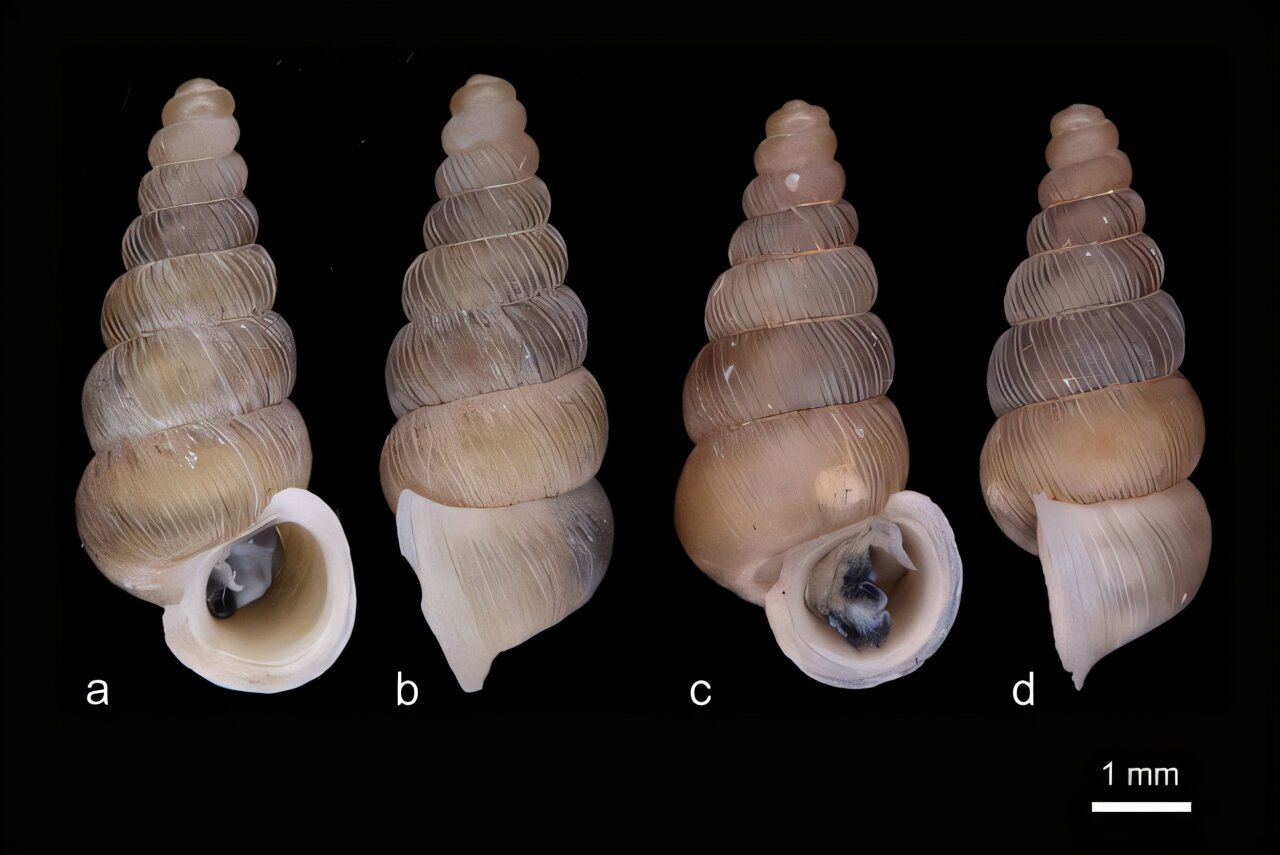
Two new Montenegro snail species have been described in a peer-reviewed paper, adding fresh evidence to a conservation fight over one of the country’s wild river canyons. Pensoft Publishers reported that the species include one found in Komarnica Canyon, where local conservationists say a planned hydropower dam and reservoir would flood important habitat.
The species, named Cochlostoma komarnica and Cochlostoma dobrido, were described in the open-access Biodiversity Data Journal. The paper, by Menno Schilthuizen and co-authors, identifies them as new additions to Europe’s snail fauna.
What are the new Montenegro snail species?
According to Pensoft Publishers, both snails are small land snails with cone-shaped shells measuring about 6 millimeters, or 0.2 inch. They live on limestone rocks and feed on algae and lichens.
The species do not yet have English names. Pensoft Publishers said they differ from many familiar land snails because their eyes sit on the sides of the head rather than at the tips of eyestalks, and their shells have a round disk attached to the animal’s tail that can shut the shell opening like a door.
The discoveries came through expeditions run by Taxon Expeditions, an organization that conducts scientific field trips open to public participants. Between 2018 and 2025, work in Montenegro was organized by Taxon Expeditions, the nonprofit Taxon Foundation and local partners from the Montenegrin Ecologists Society.
Field teams included international scientists, citizen scientists, local students and conservationists, according to Pensoft Publishers. They surveyed biodiversity in Durmitor National Park and Komarnica Canyon, finding the snails at several sites in mountainous terrain.
The teams did not confirm the animals as new species at the moment of collection. Pensoft Publishers said that became clear after researchers dissected specimens and carried out genetic analysis in a field laboratory.
How did the snails get their names?
The expedition team chose the names during a vote at camp, tying each species to the place where it was found. Cochlostoma dobrido refers to the Dobri Do Plateau, between peaks in Durmitor National Park, while Cochlostoma komarnica refers to Komarnica Canyon, south of Durmitor.
Janine Buisman, a musician from the Netherlands who joined one of the expeditions and co-authored the paper, said she was amazed that new animal species can still be discovered in Europe. Jovana Đokić, a biologist with the Montenegrin Ecologists Society and another author, said the biodiversity of the region’s canyons, mountains and gorges remains largely unexplored.
Why is Komarnica Canyon part of the debate?
Đokić said Komarnica Canyon is slated to be flooded by a hydropower dam and reservoir. She said that would destroy the river canyon and its biodiversity, including species that science has not yet documented.
Because of that threat, Pensoft Publishers said Komarnica Canyon has become a focus for structured biodiversity surveys intended to support conservation decisions. The Montenegrin Ecologists Society is calling for the canyon to be added to the UNESCO World Heritage site of Durmitor and for the hydropower project to be abandoned.
Đokić said hydropower should not be considered green or sustainable when it destroys a unique ecosystem. The new snail descriptions give conservationists another documented example of the canyon region’s still-emerging biological record.
This story draws on original reporting from Phys.org.