
Martian hydrology research finds Mars clues in Australian lakes
Researchers say Western Australian salt lakes may explain water-driven mineral deposits in Mars’ Terra Sirenum region.
By Priya Raghavan · Science Reporter
3 min read
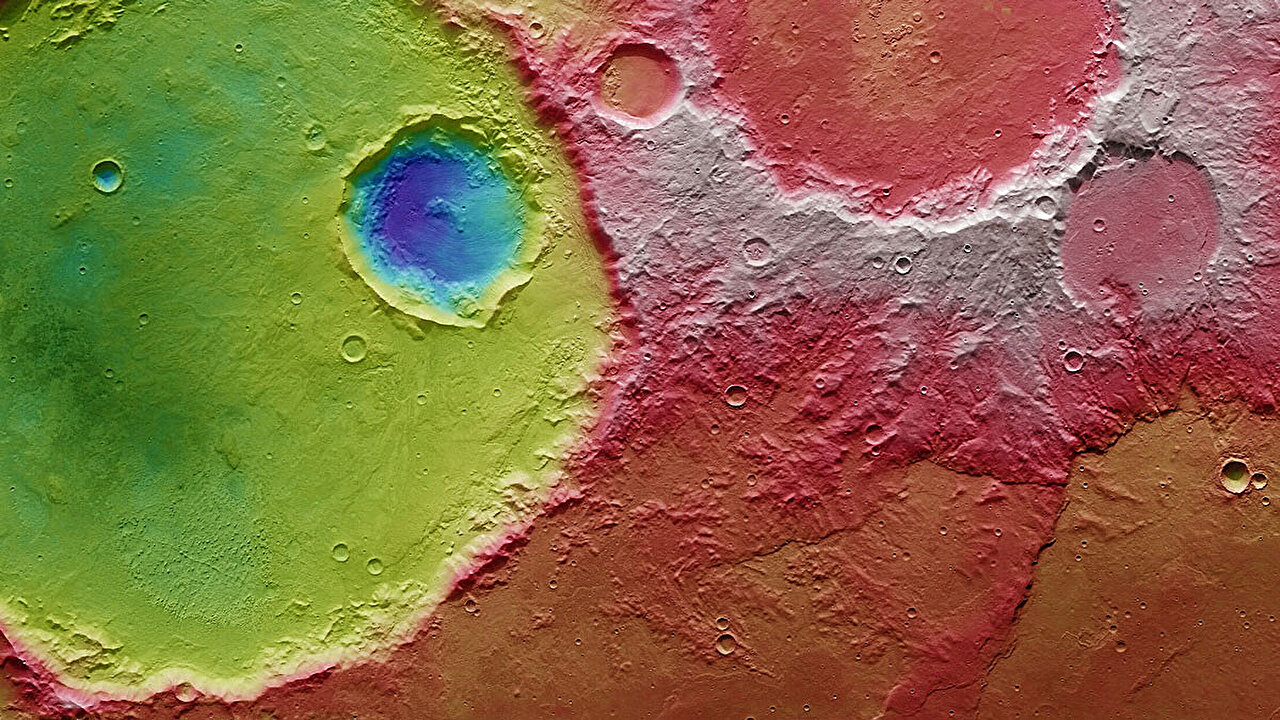
Martian hydrology research is drawing new evidence from Western Australia, where acidic salt lakes appear to preserve mineral patterns similar to those seen in part of Mars. In a study published in Earth and Space Science, T. A. Plattner and colleagues said the comparison could help explain the water history of Mars’ Terra Sirenum region and guide searches for signs of past habitability.
The work focuses on the Yilgarn Craton, a region of Western Australia known for red rock exposures and thousands of acidic, saline lakes. According to the American Geophysical Union, the area is more than a visual analogue for Mars: its lakes share geological traits with crater deposits in Terra Sirenum.
The researchers sampled 40 Yilgarn Craton lakes in both wet and dry seasons, according to the study. They used those samples to examine how repeated wet-dry cycles, groundwater, evaporation and surface processes change lake-bed chemistry over time.
What did Australian lakes show about Mars?
The Australian lakes showed that groundwater activity and recurring drying can leave a wide range of mineral signatures, the authors reported. Hydrology is the study of how water moves, stores and interacts with rocks and surfaces; on Mars, such evidence helps scientists infer where liquid water may once have persisted.
Plattner and colleagues found that some shallow lakes accumulated mainly salt, while others built up more varied mineral deposits. Those deposits included aluminum-rich clays and iron oxides, and the lakes also differed in acidity and salinity, the researchers reported.
The study links that variation to changing hydrologic conditions. According to the authors, the mineral record in the Australian lake beds reflects long-running groundwater activity and repeated wet-dry episodes, processes that may also have shaped late-stage lake systems on Mars.
Why Terra Sirenum matters
Terra Sirenum is a plain on Mars where crater deposits have raised questions about the planet’s water history. The study authors said some Yilgarn Craton lake deposits resemble materials observed in Terra Sirenum craters, suggesting that similar water-rock interactions may have operated there.
The findings also challenge some existing interpretations of the Martian surface. In some cases, the authors said, mineral patterns in Terra Sirenum that have been attributed to magmatic activity could instead be consistent with hydrologic processes like those documented in Western Australia.
The researchers did not say the Australian lakes prove that life existed on Mars. They did note that the Yilgarn Craton lakes support diverse microbial life despite their acidic and saline conditions, according to the American Geophysical Union.
That point makes Terra Sirenum a notable target in the search for evidence of potential life, the authors wrote. If Mars hosted similarly extreme lake environments, mineral deposits left behind by groundwater and drying cycles could preserve clues about whether those settings were once habitable.
The study, titled “Groundwater Connectivity and Buffering in Western Australian Hypersaline Lakes: Implications for Late‐Stage Martian Lacustrine Systems,” was published in 2026 in Earth and Space Science.
This story draws on original reporting from Phys.org.