
Lignin bone repair study finds plant material can grow bone-like minerals
Hebrew University researchers found sorghum-derived lignin can seed hydroxyapatite, pointing to greener bone graft scaffolds.
By Tom Brennan · Health & Medicine Correspondent
3 min read
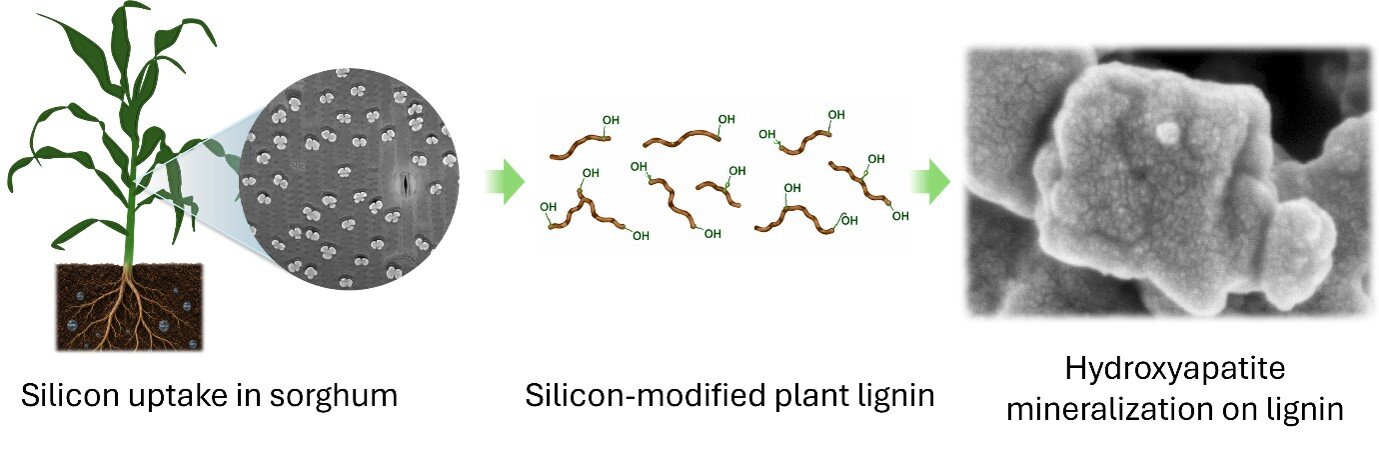
A lignin bone repair study led by researchers at the Hebrew University of Jerusalem found that a common plant material can be engineered to help form minerals similar to those in human bone. The finding matters because many bone graft materials now come from animal or synthetic sources, while lignin is renewable and widely available.
The work, led by postdoctoral researcher Srinath Palakurthy and Professor Rivka Elbaum, was published in ACS Biomaterials Science & Engineering. According to the researchers, lignin can support the formation of hydroxyapatite, the calcium phosphate mineral that gives bones and teeth much of their hardness.
How could lignin help bone repair?
Lignin is a structural polymer that helps plants stay rigid. In a bone-repair material, the goal would be to use it as a scaffold that supports mineral growth and can be replaced as new bone forms.
The Hebrew University team studied two different forms of lignin extracted from sorghum plants. They tested the materials alone and combined with silica, another natural material found in plant tissues.
One lignin form, described by the researchers as rich in phenolic hydroxyl groups, performed best as a template for hydroxyapatite. In the experiments, calcium began building up on the material after two weeks, followed by phosphorus deposition and the development of bone-like mineral crystals over four weeks.
The material also broke down gradually under physiological conditions, according to the study. That degradability is relevant because a repair scaffold should ideally give way as healing tissue replaces it.
What did the cell tests show?
The researchers also tested how bone-forming cells responded to the lignin-based materials. At suitable concentrations, lignin was biocompatible and increased the growth of pre-osteoblast cells, which are involved in making new bone.
Lignin-silica composites also remained compatible with the cells, according to the study, and showed improved degradability. The researchers said that combination could make the composites useful candidates for future biomaterials.
Palakurthy said plants have developed ways to build strong structures, and the research team wanted to see whether those natural designs could be adapted for regenerative medicine. He said the findings show lignin can support bone mineral formation and create conditions in which bone-forming cells grow.
Elbaum said the work drew on the natural relationship between lignin and silica in plant tissues. She said the study shows that plant-inspired materials can support mineral formation while remaining compatible with living cells.
Why lignin is being studied for medical materials
Lignin is produced in large quantities as a byproduct of agriculture and paper manufacturing. The Hebrew University researchers said using it in higher-value biomedical materials could reduce reliance on mined resources and animal-derived products.
The study remains an early proof of concept. The researchers said more work, including animal testing, will be needed before any clinical use is possible.
For now, the results suggest that lignin-based materials may do more than serve as inert supports. In laboratory tests, they helped guide the early mineral-forming steps that are central to rebuilding bone.
This story draws on original reporting from Phys.org.