
Lake fly larvae air sacs withstand pressure in deep dives
UBC researchers found Lake Malawi fly larvae use pH-controlled air sacs to dive beyond 200 meters and survive pressures expected to crush them.
By Priya Raghavan · Science Reporter
3 min read
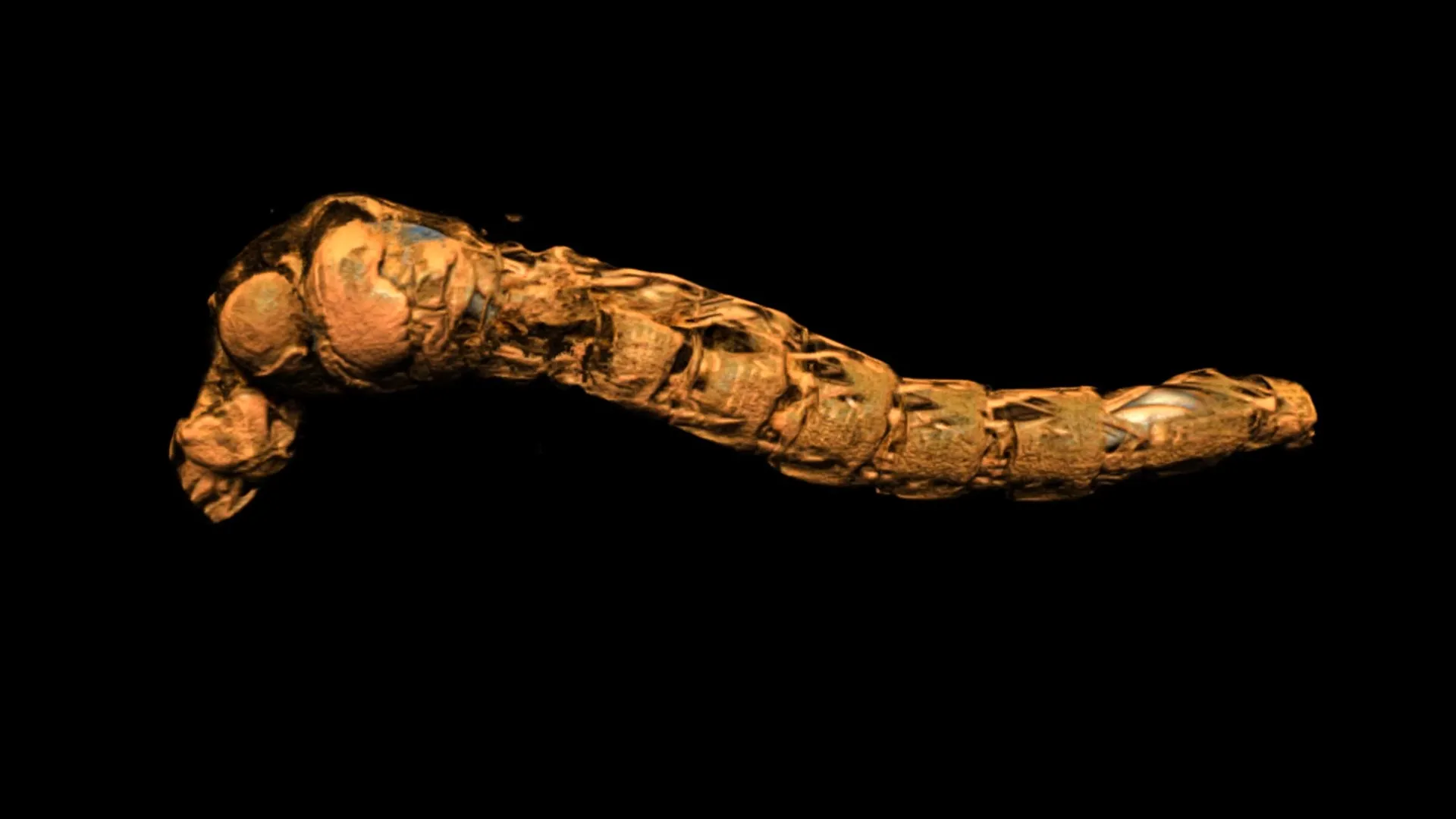
Lake fly larvae air sacs help billions of tiny insects in Lake Malawi make daily dives deeper than 200 meters, according to University of British Columbia researchers. The finding matters because the larvae’s pressure-resistant buoyancy system weakens one common explanation for why insects are scarce in the open ocean.
The larvae, identified as Chaoborus edulis, spend daylight hours in a low-oxygen deep zone of the East African lake, UBC said. That zone provides cover from predators that struggle to survive there, while the larvae return toward the surface after dark to feed and must pass fish that prey on them.
Drs. Philip Matthews and Evan McKenzie of UBC monitored the migration by placing sonar equipment on the lake floor, according to the university. Their study, published in Science, reports that the larvae move in large groups through the water column each day.
How do lake fly larvae air sacs work?
UBC researchers found that the larvae have converted part of their breathing anatomy into two pairs of small air sacs. The sacs function like a submarine’s ballast tanks: changing their volume alters buoyancy, allowing the larvae to rise or sink.
The air sac walls contain resilin, a highly elastic material found in many insects, according to UBC. The researchers reported that the larvae change the pH of the sac walls, causing the resilin to expand or contract and giving the animals control over depth.
Resilin is often described as a biological rubber because it can stretch and rebound repeatedly. UBC said other insects use the material in structures such as wing hinges and tendons, where flexibility and durability are essential.
What did the pressure tests show?
To test the sacs, the researchers put larvae in miniature pressure chambers, UBC said. The air sacs remained intact at pressures equivalent to depths greater than 400 meters, well beyond the larvae’s typical daily dives.
That result challenges a pressure-based idea about insect evolution in marine habitats. Insects thrive on land and in fresh water, but the open ocean has very few of them; one proposed reason is that deep-water pressure would collapse their air-filled breathing spaces.
The Lake Malawi larvae show that at least some insect air structures can survive far greater pressure than expected, according to UBC. The study does not say why insects failed to spread widely through the open ocean, but it suggests pressure by itself may be an incomplete answer.
Why could the discovery matter beyond Lake Malawi?
The mechanism could interest materials researchers as well as biologists, UBC said. Because the sacs change size when pH changes, the system may offer ideas for engineered materials that move in response to chemical triggers.
UBC said resilin-based designs could contribute to work on smart materials, including artificial muscle concepts. The research was partly supported by Natural Sciences and Engineering Research Council of Canada Discovery and Accelerator grants.
The Science paper lists Evan K. G. McKenzie, Maxon J. R. Ngochera, Joseph Chombo, Hayley McLennan, Roland Proud, Tahnee Ames and Philip G. D. Matthews as authors. Its title is “Crush-resistant air sacs allow insect larvae to exploit aquatic habitats at extreme depth.”
This story draws on original reporting from ScienceDaily.