
Kittiwake breeding survival trade-off found in Alaska seabird study
A Nagoya University-led experiment found hard breeding seasons can help kittiwakes raise more chicks later but reduce survival.
By Lucas Ferreira · Science & Environment Writer
3 min read
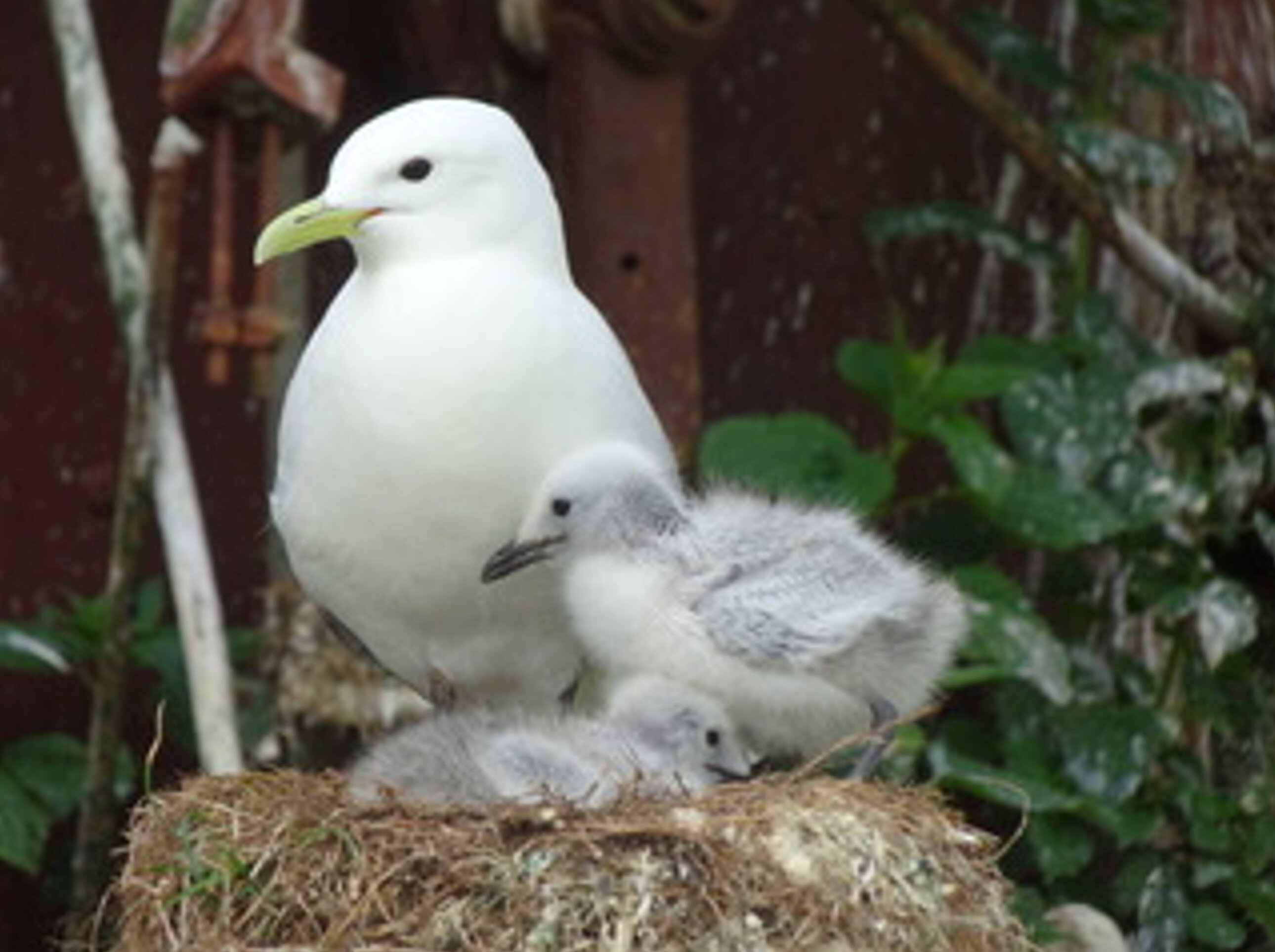
A kittiwake breeding survival study in Alaska found that seabirds pushed into a more energy-demanding breeding season later migrated farther and produced more chicks the next year, while fewer survived to return. Researchers led by Nagoya University reported the findings in Proceedings of the Royal Society B, describing a seasonal trade-off in how long-lived seabirds spend energy.
The team studied 251 black-legged kittiwakes on Middleton Island from 2021 to 2024. In 2021, researchers changed breeding costs for three groups: one received extra food, one had three wing feathers and two tail feathers clipped at the base after egg laying, and one was left untreated as a control group.
The feather clipping raised flight costs for the rest of that breeding season, according to Nagoya University; the feathers regrew at the next molt. Each bird carried a geolocator, and the team recovered 203 devices the following year to track movements through the nonbreeding season.
How do breeding costs affect kittiwake survival?
The high-cost birds fledged 10% of their chicks in the year of the experiment, compared with 44% for birds that received extra food and 43% for control birds, the researchers reported. They also left the colony about 10 days earlier than the other groups at the end of breeding season and began a long migration across the North Pacific.
Those early departures were linked to longer nonbreeding migrations. Birds that went farther during that period were more likely to breed successfully the next year, suggesting that longer journeys may have helped them recover from the strain of breeding, according to the study.
The benefit came with lower return rates. Nagoya University said 67% of the birds in the high-cost group came back the next year, compared with 83% of the control group and 90% of the fed group.
Akiko Shoji, a senior author and professor at Nagoya University’s Graduate School of Environmental Studies, said the results indicate that early departure was driven by the energy spent during reproduction, rather than by whether birds succeeded or failed at raising chicks. The study presents breeding failure as one outcome of high energy costs, not the sole trigger for leaving the colony early.
What is energetic flexibility?
The researchers use “energetic flexibility” to describe an animal’s capacity to shift energy among reproduction, migration and survival as conditions change. In this study, that flexibility appeared to link one season’s strain with the next season’s reproductive outcome and survival risk.
Nagoya University said previous work had documented survival costs from demanding breeding seasons in seabirds. The new study adds experimental evidence that the same birds can later improve breeding success through altered migration behavior.
The findings may matter as climate change changes ocean conditions and prey availability, the researchers said. If food becomes less predictable, seabird populations may differ in how well they can shift energy use across seasons.
The team plans to use miniature heart-rate loggers to measure kittiwakes’ energy use across the year and study the biological processes behind this flexibility. The paper, by Chinatsu Nakajima and colleagues, is titled “Energetic flexibility as a hidden axis of life-history trade-offs: experimental evidence from a long-lived seabird.”
This story draws on original reporting from Phys.org.