
K’gari lake sediments point to ancient dry spell in a rainy era
University of Adelaide-led research says some deep lakes on K’gari dried about 7,500 years ago, raising questions about future climate risk.
By Tom Brennan · Health & Medicine Correspondent
3 min read
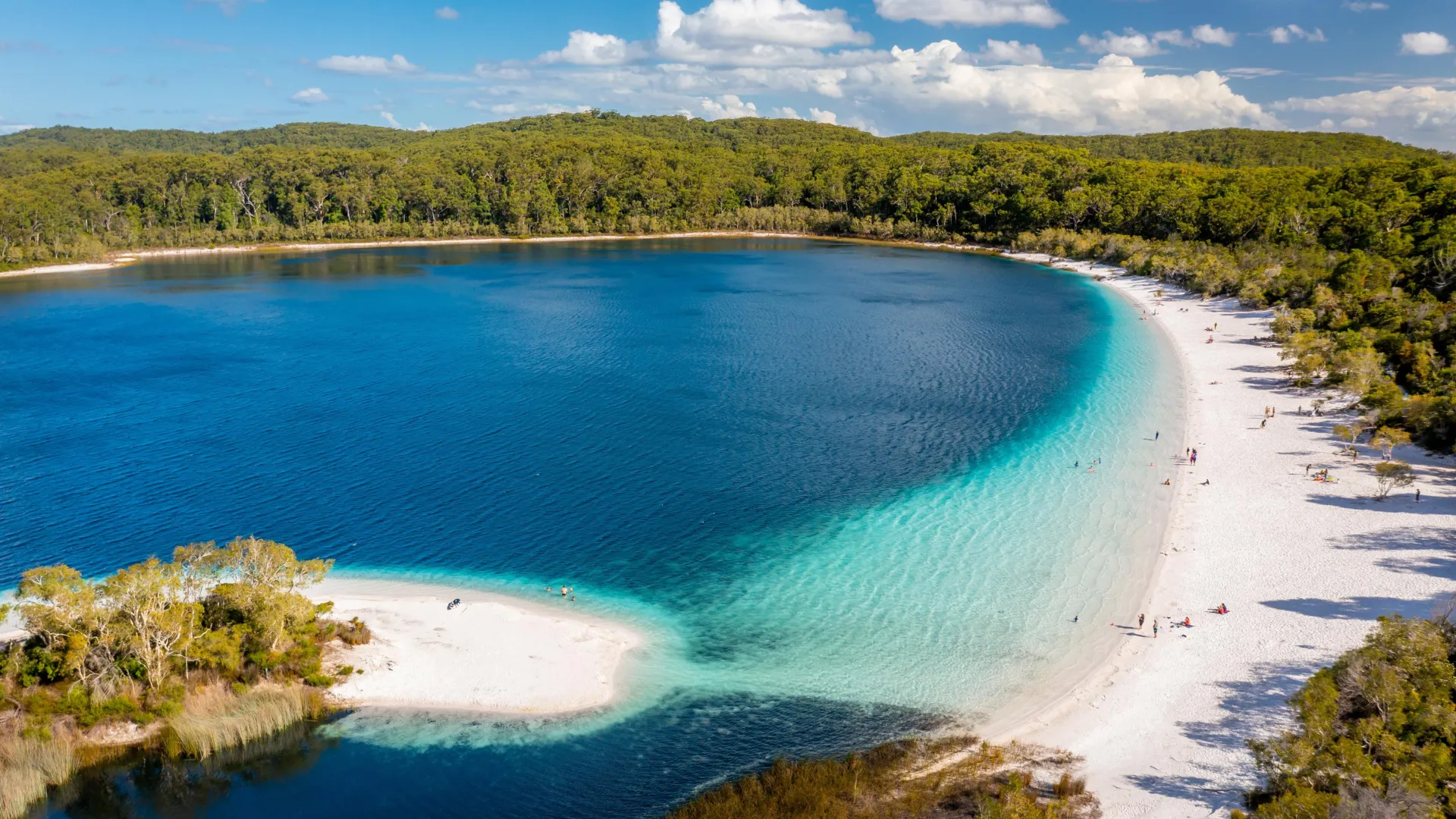
Some of K’gari’s deepest freshwater lakes disappeared about 7,500 years ago even as the region was receiving unusually high rainfall, according to University of Adelaide-led research. The finding matters because it suggests the lakes on the world’s largest sand island may depend not just on how much rain falls, but on where weather systems deliver it.
The study, published in the Journal of Quaternary Science, examined ancient sediment records from some of the island’s oldest lakes. The research team reported that gaps in those records indicate several lake basins were not covered by water for a period between roughly 7,500 and 5,500 years ago.
Associate Professor John Tibby of the University of Adelaide, the study’s lead researcher, said the drying occurred during the middle Holocene, long after the last Ice Age and during a wetter climate phase. He said the lakes examined in the study have existed for between 35,000 and 55,000 years.
Lake drying is well known in Australia during dry periods, Tibby said, citing the Millennium Drought as an example of low rainfall leaving many lakes without enough water. The K’gari result was unexpected, he said, because the evidence points to drying during a time of heavy rainfall.
Wind direction may have changed which lakes got rain
The researchers said the result points to a more complicated relationship between rainfall and lake survival. They said wind patterns and the paths taken by rain-bearing systems may determine whether water reaches individual lake catchments.
Dr Harald Hofmann, a co-author from the Commonwealth Scientific and Industrial Research Organisation, said south-east trade winds may have helped explain the pattern. According to Hofmann, earlier research shows nearby Minjerribah had heavy rainfall events at the same time, while rain arriving from the south fed lakes there rather than those on K’gari.
Trade winds can shape where clouds form and where rain falls, the researchers said. That means a wetter regional climate does not guarantee that a particular lake system receives enough water to remain full.
Hofmann said the finding underlines the need to learn more about K’gari’s lakes as climate conditions change. He said a climate expected to become drier while producing more intense rainfall leaves uncertainty over whether the lakes could face renewed drying risk.
Missing layers in lake beds provided the evidence
The team used sediment cores to reconstruct what happened in and around the lakes. Sediment builds up over time from materials including pollen, sand, plant remains and organic matter, creating a layered record of environmental change.
Tibby compared lake sediment to a journal that records events in the lake and its surroundings. He said pollen can reveal local vegetation, while larger amounts of sand can point to increased erosion into a lake.
In the K’gari cores, the researchers found missing sediment from some of the oldest lakes across the 7,500-to-5,500-year interval. Tibby said that absence showed the relevant lake areas were not underwater, so normal lake-bed deposits were not accumulating.
Cultural importance adds to conservation concerns
The University of Adelaide said the lakes hold cultural and spiritual importance for the Butchulla people, the Traditional Owners of K’gari. They are known as the Eyes of K’gari.
Study co-author Conway Burns, a Butchulla man, said K’gari is the name of the dreaming spirit who formed the island and described the lakes as “windows to eternity.” He said the waters are sacred and must be protected so future generations can maintain their connection and respect.
The study was authored by researchers including Tibby, Hofmann and colleagues from several institutions. The journal paper is titled “Mid-Holocene drying of K’gari lakes (subtropical eastern Australia) necessitates re-evaluation of the El Niño–Southern Oscillation climate links and future drying risk.”
This story draws on original reporting from ScienceDaily.