
Jimothy raccoon condition is short spine syndrome, rare in mammals
A viral Seattle raccoon named Jimothy has short spine syndrome, a rare congenital deformity also documented in dogs and calves.
By Tom Brennan · Health & Medicine Correspondent
3 min read
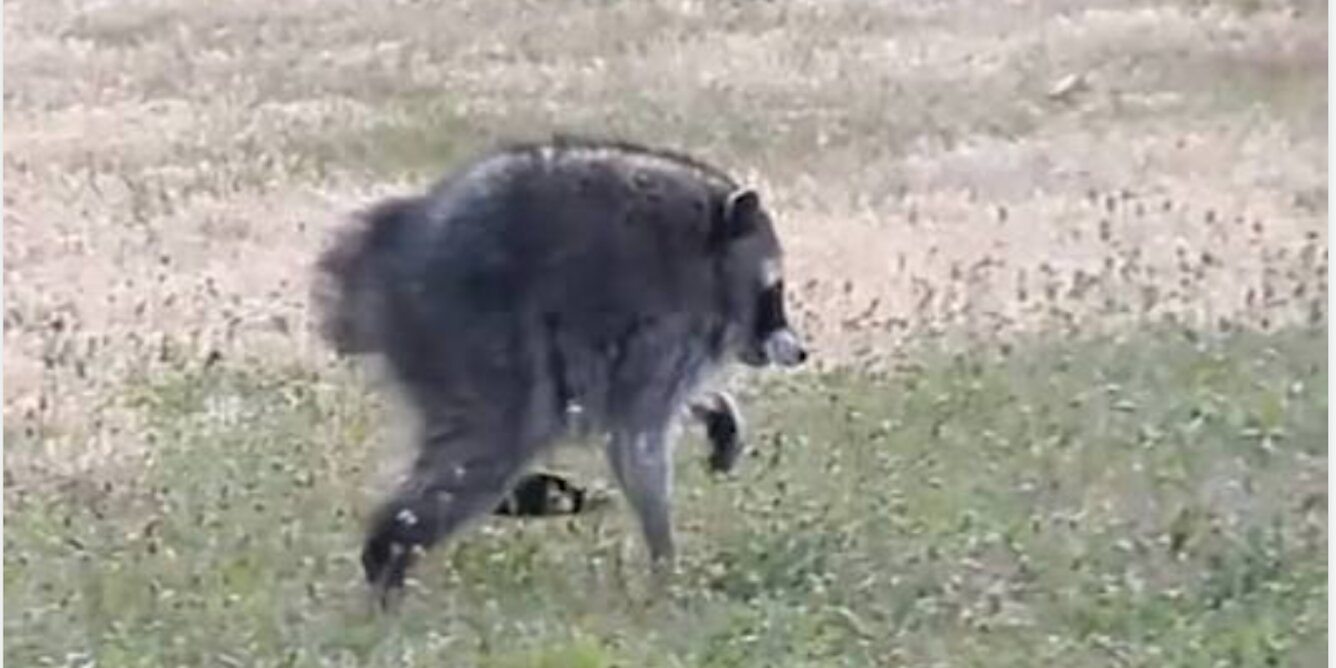
The Jimothy raccoon condition drawing attention online is short spine syndrome, a rare congenital deformity that changes how the spine develops before birth. Chris Tan, writing for The Conversation, said the Seattle raccoon seen hopping in footage filmed by local resident Kiana Hall has an unusually short spine while retaining normal-length limbs.
The condition has become a point of public interest because Jimothy’s rounded shape is striking, and because the disorder is so uncommon. Tan wrote that short spine syndrome can occur in dogs, calves and other mammals, but said that after treating thousands of small animals, he has not encountered a clinical case in person.
What is short spine syndrome?
Short spine syndrome is a congenital malformation in which the spine does not form properly in utero, according to Tan. Animals with the condition can have legs of typical length, while the body appears compact, with little visible neck and a rounded outline.
The cause is difficult to pin down because reported cases are rare, Tan wrote. When the condition is found in wild or rescue animals, researchers may have limited information about ancestry, breeding history or prenatal development.
Can short spine syndrome affect dogs?
Yes. Tan said the disorder has been documented in dogs, although only a small number of animals are known to live with it.
One modern example cited by Tan is Tilly, an Instagram-known dog sometimes called “Tilly the Friendly Loaf.” Like Jimothy, Tilly has become known in part because her body shape makes the condition visible to the public.
Survival appears to depend on how severe the malformation is and whether the spinal cord is affected, Tan wrote. Some animals with the condition may not survive gestation, birth or the first months of life, while others can adapt and continue living.
Tan said surgical correction would be extremely difficult because the deformity affects the structure of the spine. The available discussion in The Conversation did not describe a treatment for Jimothy.
How far back has the condition been recorded?
Short spine syndrome has drawn attention for centuries. Tan pointed to a 1968 paper that discussed two dogs painted in the 1600s by Swedish artist David Klöcker Ehrenstrahl, including one work titled “Deformed Dog.”
The paper described those paintings as early historical evidence of the malformation, according to Tan. He also cited a Japanese case report from the 1960s that described the appearance of short-spine dogs as highly distinctive.
Jimothy’s case adds a wild animal to the public conversation around the syndrome. Tan wrote that the raccoon’s ability to move through its environment, along with the apparent support of its mother, shows how some animals with severe developmental differences can still adapt and survive.
This story draws on original reporting from Phys.org.