
Habitable Worlds Observatory plan sets NASA’s next telescope tests
NASA’s HWO team outlined technology goals needed before a mission review that could decide the space telescope’s future.
By Lucas Ferreira · Science & Environment Writer
3 min read
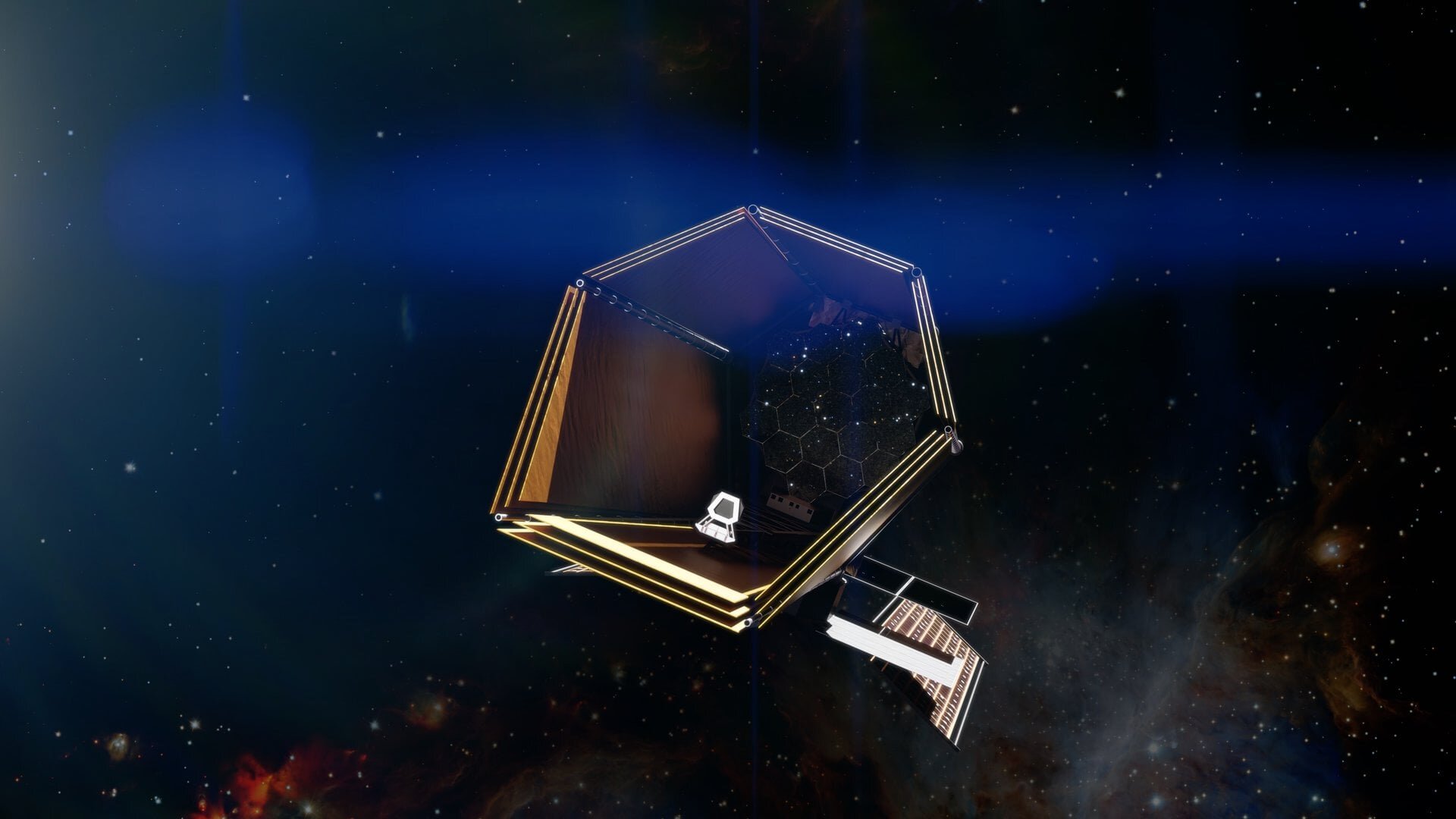
NASA’s habitable worlds observatory plan is moving from broad ambition toward specific engineering tests, according to a technology development plan posted to arXiv by Matthew Bolcar and co-authors. The work matters because the proposed Great Observatory is meant to directly study potentially habitable exoplanets, a task that demands extreme control of starlight, telescope stability and detector performance.
NASA created the Habitable Worlds Observatory Technology Maturation Project Office in August 2024 to coordinate the mission’s scientific and technical development, Universe Today reported. The new plan lays out what the office says must happen before the mission reaches its Mission Concept Review near the end of the decade.
What is the Habitable Worlds Observatory?
The Habitable Worlds Observatory, or HWO, is NASA’s proposed next Great Observatory, designed to observe and characterize planets around other stars that may be able to support life. The plan also treats HWO as a broad astrophysics observatory, with instruments expected to work from near-infrared wavelengths through the far ultraviolet.
The development plan is organized around raising three technology tracks to Technology Readiness Level 5 before the Mission Concept Review. NASA uses TRLs to measure how mature a technology is; TRL 5 means hardware or systems have been validated in a relevant environment.
The coronagraph must block starlight precisely
The first track is the telescope’s coronagraph, the instrument meant to suppress light from a bright star so the much fainter light from nearby planets can be measured. According to the plan, the coronagraph is intended to reduce starlight by a factor of 10 to the minus 10, even close to the star.
To do that, the concept uses deformable mirrors controlled by a 96-by-96 array of linear actuators. The plan says those actuators must hold picometer-scale precision, remain reliable and survive the radiation environment in space without damage to their driver electronics.
Light that passes through the coronagraph would be measured by very sensitive photon-counting detectors, including electron-multiplying charge-coupled devices or possibly superconducting quantum sensors. The plan says these detectors are being considered because they offer high quantum efficiency and very low background noise.
Why telescope stability is a central challenge
The second track covers the observatory’s ability to hold position for long observations. Universe Today reported that HWO observations could last hours or days, which means the telescope must stay stable enough for the coronagraph to work.
The plan identifies thermal expansion as a major problem because telescope components can shift as temperatures change. Proposed responses include active thermal control, materials with low coefficients of thermal expansion such as Corning ULE or Schott Zerodur, microthrusters, vibration isolation and separate mirrors used to help keep the observatory pointed correctly.
Detectors and testbeds come next
The third track covers the sensors and related optical technology needed for HWO’s science goals. The plan says the mission will require new mirror coatings that can be applied evenly across the observatory’s mirrors, as well as large-format ultraviolet detectors, Next Generation Microshutter Arrays and Digital Micromirror Devices.
The authors describe a staged “crawl-walk-run” approach and point to lessons from the James Webb Space Telescope and the Nancy Grace Roman Space Telescope. To reach TRL 5, HWO engineers plan to use testbeds including the Exoplanet Imaging Coronagraph, known as EPIC-5, and the Habitable Worlds Observatory Systems Testbed, or HOST, which is meant to test linked observatory systems.
NASA and its partners could cancel the project at the Mission Concept Review if required milestones are not met, Universe Today reported. The project is also beginning its international collaboration work, with a conference planned later this year focused on HWO technologies.
This story draws on original reporting from Phys.org.