
Great white sharks left nursery during Storm Hilary, study says
Acoustic tags showed young white sharks left a San Diego nursery as Hilary hit, giving researchers rare data on shark storm behavior.
By Tom Brennan · Health & Medicine Correspondent
3 min read
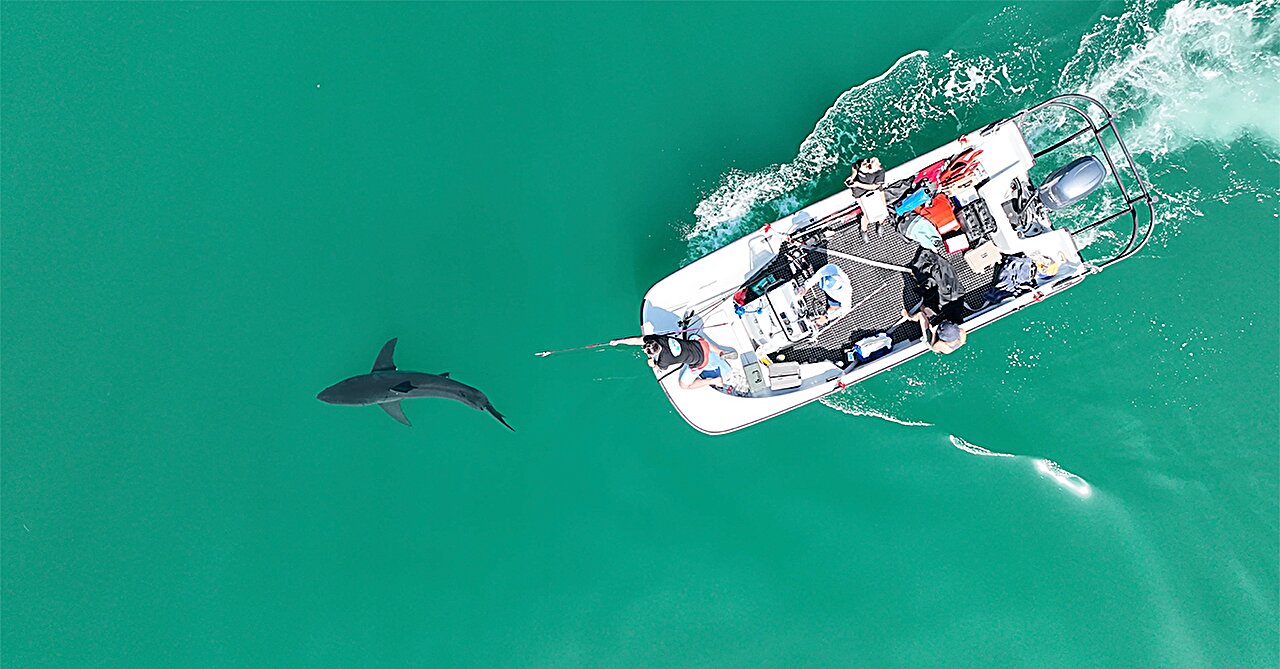
Juvenile great white sharks responded to Storm Hilary by leaving a San Diego-area nursery as the 2023 storm brought rough water and rapid cooling, according to a study by researchers at UC San Diego's Scripps Institution of Oceanography and the Shark Lab at California State University, Long Beach. The findings matter because they offer what the authors describe as the first direct evidence of how white sharks react to an extreme weather event.
The study, published in Movement Ecology, tracked young white sharks with acoustic tags before, during and after Tropical Storm Hilary. The storm was the first tropical storm to directly affect Southern California this century, according to the researchers, after weakening from a Category 4 hurricane before landfall.
How did great white sharks respond to Tropical Storm Hilary?
The research team reported that many of the tagged sharks temporarily left a known nursery off Torrey Pines and Del Mar as conditions worsened, then came back after the storm passed. Before Hilary arrived, underwater receivers typically detected 16 to 19 tagged sharks in the nursery each hour; during the storm, that count fell by about half, to as few as eight.
Most of the sharks returned within days, according to the study. Nearly all returned within three weeks, while one shark that left as the storm arrived was not detected again in San Diego that year.
A shark nursery is a coastal area where young sharks spend early life stages. The researchers said juvenile white sharks in Southern California use shallow, relatively warm and calm waters that offer prey such as stingrays and small fish, along with some protection from larger predators.
Where did the sharks go?
The team could not identify every temporary destination, but it recorded more detections around La Jolla Cove during the disruption. The researchers said the cove is near a submarine canyon, offers access to deeper water and was more protected from the storm's strong southerly winds.
One tagged shark with a pressure sensor was detected in La Jolla Canyon at 132 meters, or 433 feet, on Aug. 20, 2023, when Hilary hit San Diego. The study said that was the deepest dive recorded in the project and may have reflected an effort to avoid turbulent surface water.
Chris Lowe, who leads the CSULB Shark Lab and co-authored the paper, said the pattern suggested some sharks used the less wave-exposed La Jolla Cove as shelter. Jack Elstner, a Scripps Ph.D. student and the study's lead author, said the data show many sharks left the nursery as the storm arrived or shortly afterward.
Why did the sharks leave?
The authors pointed to a sharp temperature change as a likely driver. Sea-surface temperature in the nursery dropped from 20 degrees Celsius to 13.9 degrees Celsius, or 68 degrees Fahrenheit to 57 degrees Fahrenheit, in less than 24 hours during the storm, according to the study.
White sharks are regionally endothermic, meaning they can keep internal body temperatures above the surrounding water, according to the researchers. The study said juveniles are more sensitive than adults to cold water and fast temperature shifts, which may have pushed them to seek better conditions until the nursery warmed or calmed.
Hilary brought high winds, record rainfall, coastal flooding and more than $900 million in U.S. damage, according to the researchers. They said understanding shark responses to changing ocean conditions can help inform conservation and public use of California waters, where people and white sharks increasingly overlap.
This story draws on original reporting from Phys.org.