
Galapagos smooth hammerhead sharks study points to possible nursery
Texas A&M researchers are tracking juvenile smooth hammerheads after a rare Galapagos aggregation was confirmed in 2024.
By Tom Brennan · Health & Medicine Correspondent
3 min read
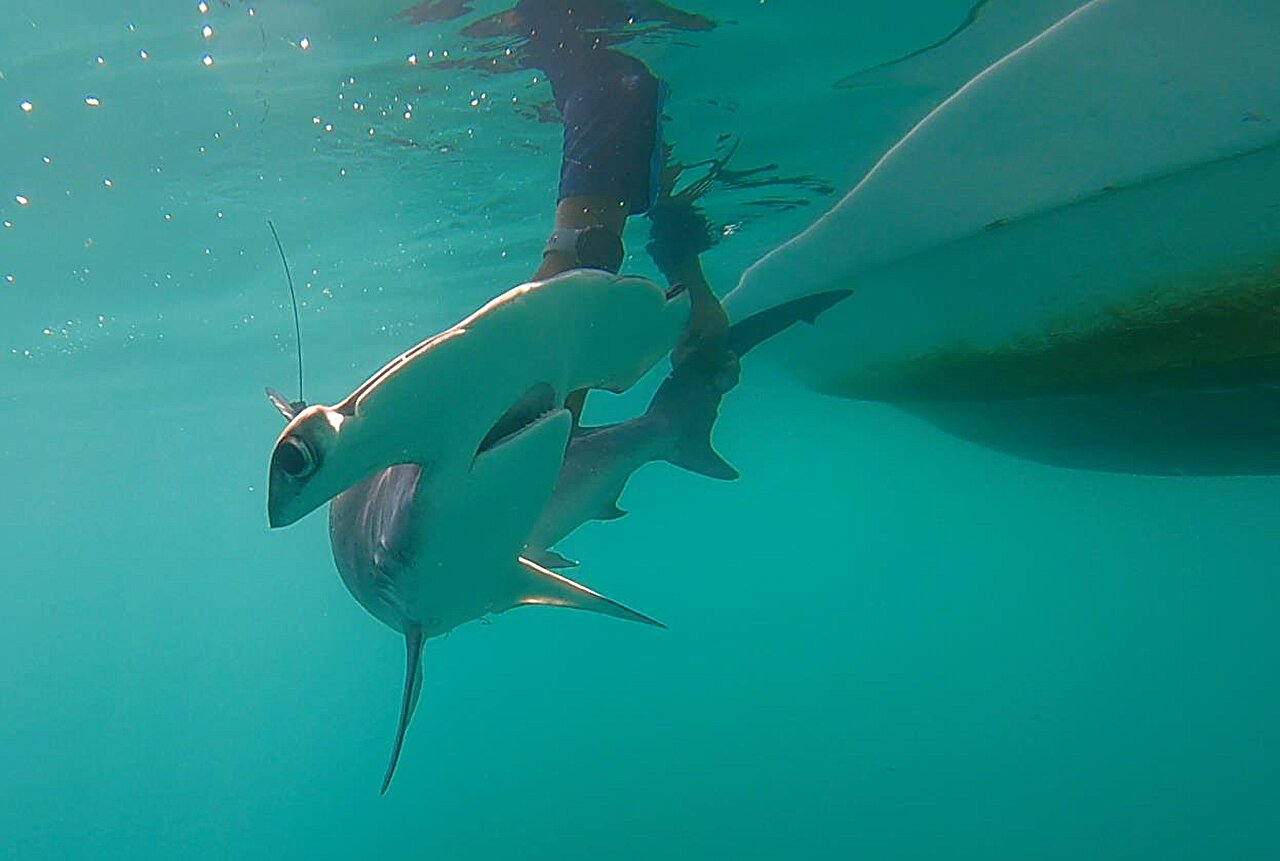
Researchers studying Galapagos smooth hammerhead sharks say a little-documented predator may be using part of the archipelago as a nursery, a finding that could shape future protections. Texas A&M University at Galveston said María Antonia Izurieta Burbano De Lara, a master’s student in David Wells’ Shark Biology and Fisheries Science Lab, is leading work on the species’ movements, feeding and conservation needs.
The smooth hammerhead shark, Sphyrna zygaena, had not been officially recorded in the Galapagos for more than 20 years, according to Izurieta Burbano De Lara. The islands are better known for large groups of scalloped hammerheads, while smooth hammerheads remain poorly studied in the Eastern Tropical Pacific.
In 2024, collaborators from Universidad San Francisco de Quito, led by Alex Hearn, found what Texas A&M described as believed to be the first documented aggregation of juvenile smooth hammerheads in the Galapagos. Genetic testing confirmed the sharks’ identity, and the discovery may point to a nursery area where young sharks spend early life stages before moving into open water.
What are researchers learning about Galapagos smooth hammerhead sharks?
The team is trying to determine why juvenile smooth hammerheads use the area, how long they remain there and whether sharks in the Galapagos are linked to other populations across the Eastern Tropical Pacific. A nursery is a habitat used by young animals during early development, and identifying one can help conservation officials protect places that matter most to survival.
Smooth and scalloped hammerheads can be hard to tell apart from above the water. Texas A&M said smooth hammerheads do not have the central notch on the front of the head that gives scalloped hammerheads their name, raising the possibility that the species had previously been missed or mistaken for another shark.
Researchers are using several tools to study the sharks. Juveniles are fitted with acoustic transmitters so scientists can track their movements inside the Galapagos Marine Reserve, while underwater video systems, diet studies and genetic analyses are being used to build a broader picture of their ecology.
Izurieta Burbano De Lara said the team is comparing DNA from sharks in the region to test whether the Galapagos may connect northern and southern populations. Researchers are also studying fecal samples to learn what young smooth hammerheads eat, while efforts continue to study subadult and adult sharks, which Texas A&M said have been harder to capture.
Why does the research matter for conservation?
Texas A&M said smooth hammerheads, like other hammerhead species, face threats from overfishing across much of their range. Even sharks that spend time inside marine reserves can move into international waters, where fishing pressure may be higher.
The unanswered question is whether smooth hammerheads follow the same routes used by other migratory shark species in the region. If the team can identify nursery habitat, migration corridors and links between populations, the findings could give governments stronger evidence for protecting the sharks at different life stages.
The project builds on smooth hammerhead conservation work Izurieta Burbano De Lara helped begin in Ecuador. Texas A&M said the effort brings together Universidad San Francisco de Quito, the Galapagos National Park Directorate, MigraMar and other international partners.
For Izurieta Burbano De Lara, who is from Ecuador, the research also extends work in her home country. Texas A&M said the goal is to produce evidence that can guide conservation decisions in the Galapagos and across the Eastern Tropical Pacific.
This story draws on original reporting from Phys.org.