
Font-de-Gaume cave paintings age set with hidden charcoal
CNRS says charcoal in black pigment allowed direct dating of two Font-de-Gaume figures, including a bison painted about 13,000 years ago.
By Priya Raghavan · Science Reporter
3 min read
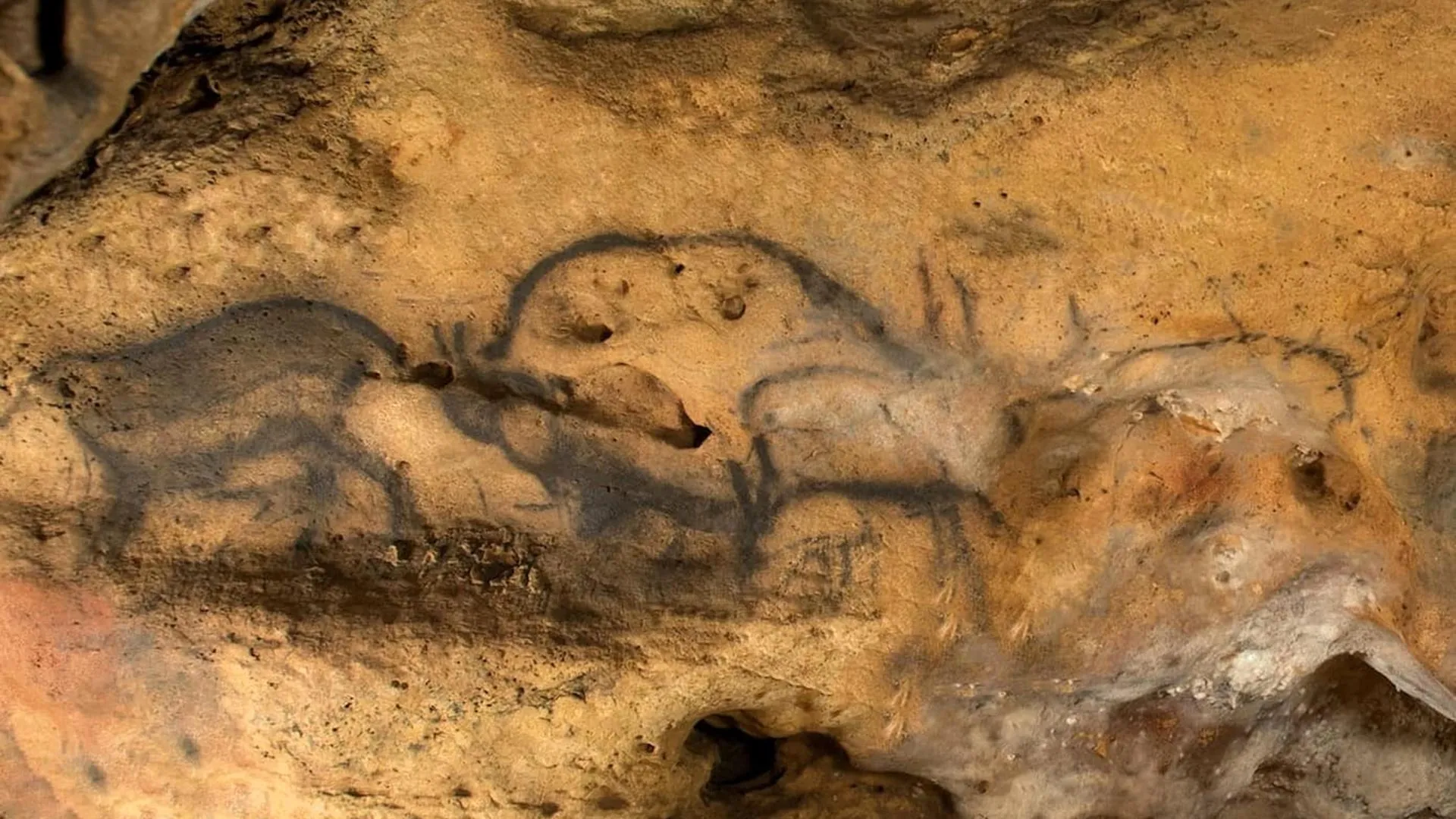
Scientists have set the Font-de-Gaume cave paintings age for two black figures after finding charcoal inside pigments once treated as mineral-only, CNRS said. The result matters because it gives archaeologists direct dates for artwork in one of France’s best-known decorated caves and may show that people returned to alter images across long spans of time.
The study, published in Proceedings of the National Academy of Sciences, examined a bison and a mask-like figure in Font-de-Gaume, near Les Eyzies in Dordogne. According to CNRS, researchers dated the bison to between 13,461 and 13,162 calBP, placing it in the Upper Paleolithic and slightly later than earlier estimates.
How were the Font-de-Gaume cave paintings dated?
Radiocarbon dating can measure carbon-14 in organic material such as charcoal, but many black cave pigments in Dordogne had been thought to come only from iron and manganese oxides, CNRS said. Those minerals do not provide the carbon needed for that method, which is why many images had been considered impossible to date directly.
The research team used Raman microspectrometry and hyperspectral imaging to test the black paint without visibly harming the figures, according to CNRS. Raman microspectrometry identifies materials through molecular signatures, while hyperspectral imaging records fine differences in reflected light that can point to specific compounds.
Both methods showed charcoal mixed through the black lines of the bison and the mask-like figure, CNRS said. The researchers viewed that distribution as evidence that the carbon belonged to the original pigment rather than later contamination from visitors, graffiti or other activity in the cave.
After confirming the charcoal, the team received exceptional authorization to remove very small samples for carbon-14 analysis, according to CNRS. The work required enough carbon for a reliable measurement while limiting damage to the ancient images.
What did the dates show?
The bison produced a date range of 13,461 to 13,162 calBP, CNRS said. CalBP means “calibrated before present,” with “present” defined as 1950; radiocarbon dates are calibrated because carbon-14 levels in the atmosphere have varied over time.
The mask-like figure yielded a more complicated set of results. CNRS reported three date ranges from separate parts of the image: 8,993 to 8,590 calBP, 15,981 to 15,121 calBP, and 15,297 to 14,246 calBP.
Those ranges suggest the figure may include additions or alterations made in widely separated periods, according to CNRS. If confirmed, the mask would not represent one episode of painting but a sequence of activity in which later people may have revisited and changed an existing image.
Why does the method matter?
Dordogne contains major prehistoric art sites, including Lascaux, but dating many figures has remained difficult because their pigments were not known to contain organic carbon. CNRS said the new work shows that some black pigments previously regarded as unsuitable for direct dating may contain usable charcoal.
The research involved specialists from French scientific and cultural institutions, including Chimie ParisTech-PSL, CNRS, the Ministry of Culture, the carbon-14 measurement laboratory affiliated with climate and environmental science institutions, the National Museum of Natural History, the Centre des monuments nationaux and the Centre de recherche et de restauration des musées de France.
CNRS said the combination of chemical imaging and sensitive radiocarbon measurement could be applied to other prehistoric figures once considered undatable. More direct dates could help researchers compare images, track changes in style and test whether decorated caves were revisited over generations.
This story draws on original reporting from ScienceDaily.