
Europa hidden ocean may be harder for missions to sample, study says
Rutgers-led simulations suggest Europa’s ice shell may block ocean water from reaching shallow reservoirs that spacecraft could study.
By Lucas Ferreira · Science & Environment Writer
3 min read
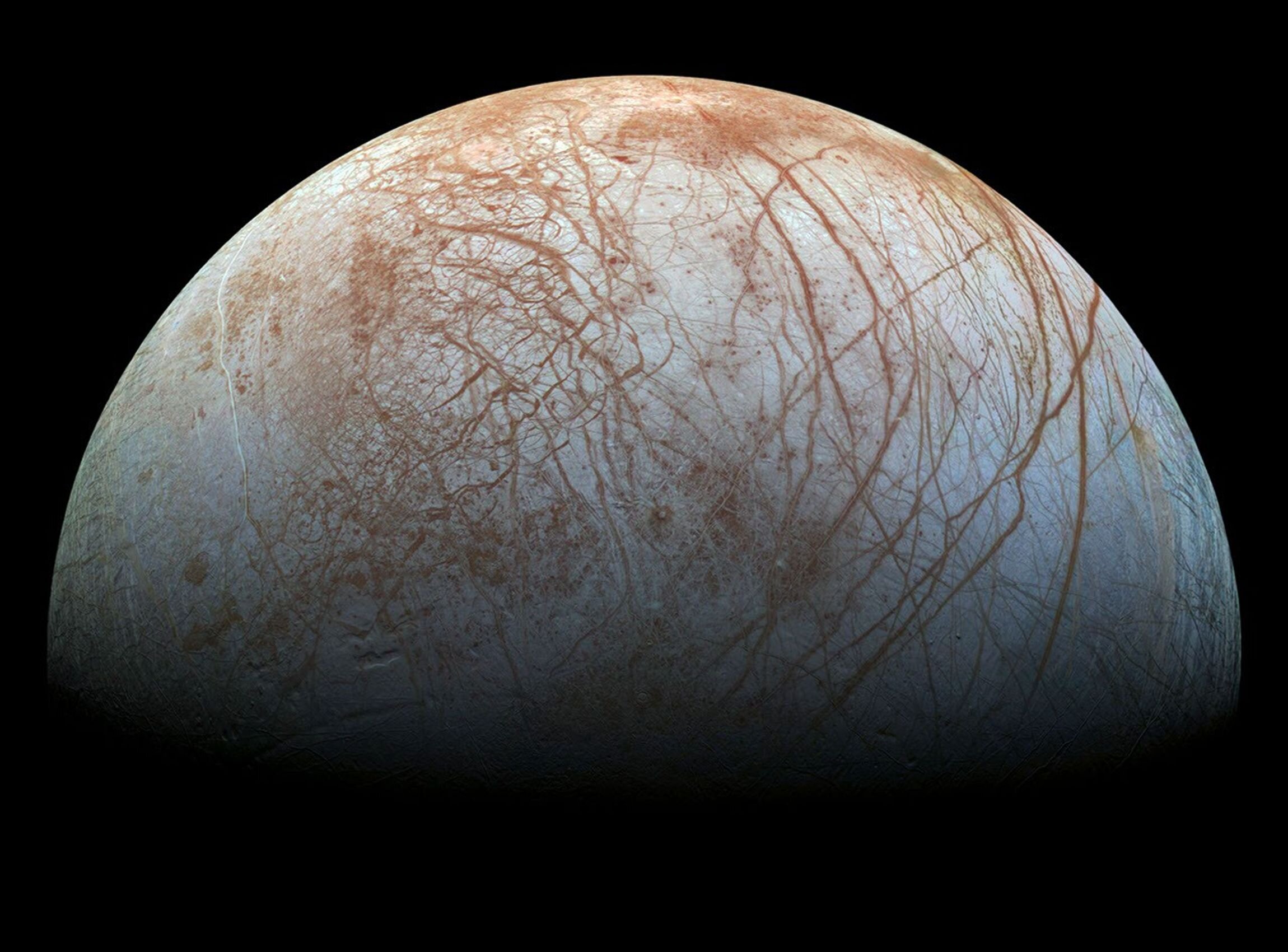
A new Rutgers-led study says Europa’s hidden ocean may be more cut off from the moon’s surface than many scientists have assumed, a finding that could complicate the search for habitable environments on Jupiter’s icy moon. The work, published in Nature Astronomy, tests whether ocean water can rise through cracks in Europa’s ice without freezing on the way.
Europa has drawn attention because scientists think a global ocean of liquid water lies beneath its frozen exterior. Rutgers University said Lujendra Ojha, an associate professor in its Department of Earth and Planetary Sciences, led simulations examining whether that water could move upward into shallow pockets closer to the surface.
Those shallow reservoirs matter because a spacecraft could study them more readily than an ocean buried below a thick ice shell. But the Rutgers-led team found that a direct path from the deep ocean to the shallow subsurface may be much less likely than earlier ideas suggested.
Can Europa’s hidden ocean reach the surface?
According to the study, Europa’s ice may act as a stronger divider between the deep ocean and near-surface water than previously thought. If future missions detect liquid water close to the surface, the researchers say it may have formed inside the ice shell rather than coming directly from the ocean below.
That distinction would affect how scientists interpret signs of habitability. A shallow pocket made by local melting could be scientifically valuable, but it may not provide a clean sample of the deeper ocean environment that has made Europa a prime target in astrobiology.
The study focuses on dikes, the narrow fractures that could serve as routes for water rising through ice. Rutgers compared the concept to magma moving through cracks on Earth, while noting that liquid water and ice behave differently from lava and rock.
Ojha told Rutgers that previous thinking may have missed key physics in that comparison. The simulations suggest water moving through Europa’s fractures would likely be turbulent, causing it to mix rapidly against cold crack walls and lose heat to the surrounding ice.
As that water cools, it can become supercooled, meaning it remains liquid below its usual freezing point. Under those conditions, small ice crystals known as frazil ice can form, collect and block the fracture.
Rutgers said the models found narrow cracks could seal within hours. Wider openings could carry more water in ideal cases, but the team reported that turbulence makes sustained upward flow less favorable, and that producing enough water for some surface features would require fractures that are unrealistically long or numerous.
What does this mean for Europa missions?
The findings arrive before two major missions reach the Jupiter system. NASA’s Europa Clipper, launched in October 2024, is scheduled to arrive at Jupiter in April 2030 and make 49 close flybys of Europa, according to Rutgers.
The European Space Agency’s Jupiter Icy Moons Explorer, or JUICE, launched in April 2023 and is due to arrive at Jupiter in July 2031. Rutgers said the missions are expected to improve scientists’ understanding of Europa’s ice shell, surface material and possible subsurface water.
Europa Clipper’s radar could help scientists assess whether shallow reservoirs exist and what their structures look like. The new study suggests mission teams may need to be cautious about treating such reservoirs as direct windows into the deep ocean.
According to Rutgers, the research points to another possible origin for shallow water: localized heating and melting within Europa’s ice. That would leave Europa’s ocean scientifically compelling, while making the route from surface observations to ocean chemistry harder to read.
This story draws on original reporting from Phys.org.