
Model says dying sun-like stars can nudge themselves through space
Caltech research suggests uneven gas ejections can give aging stars thousands of small pushes before they become white dwarfs.
By Lucas Ferreira · Science & Environment Writer
3 min read
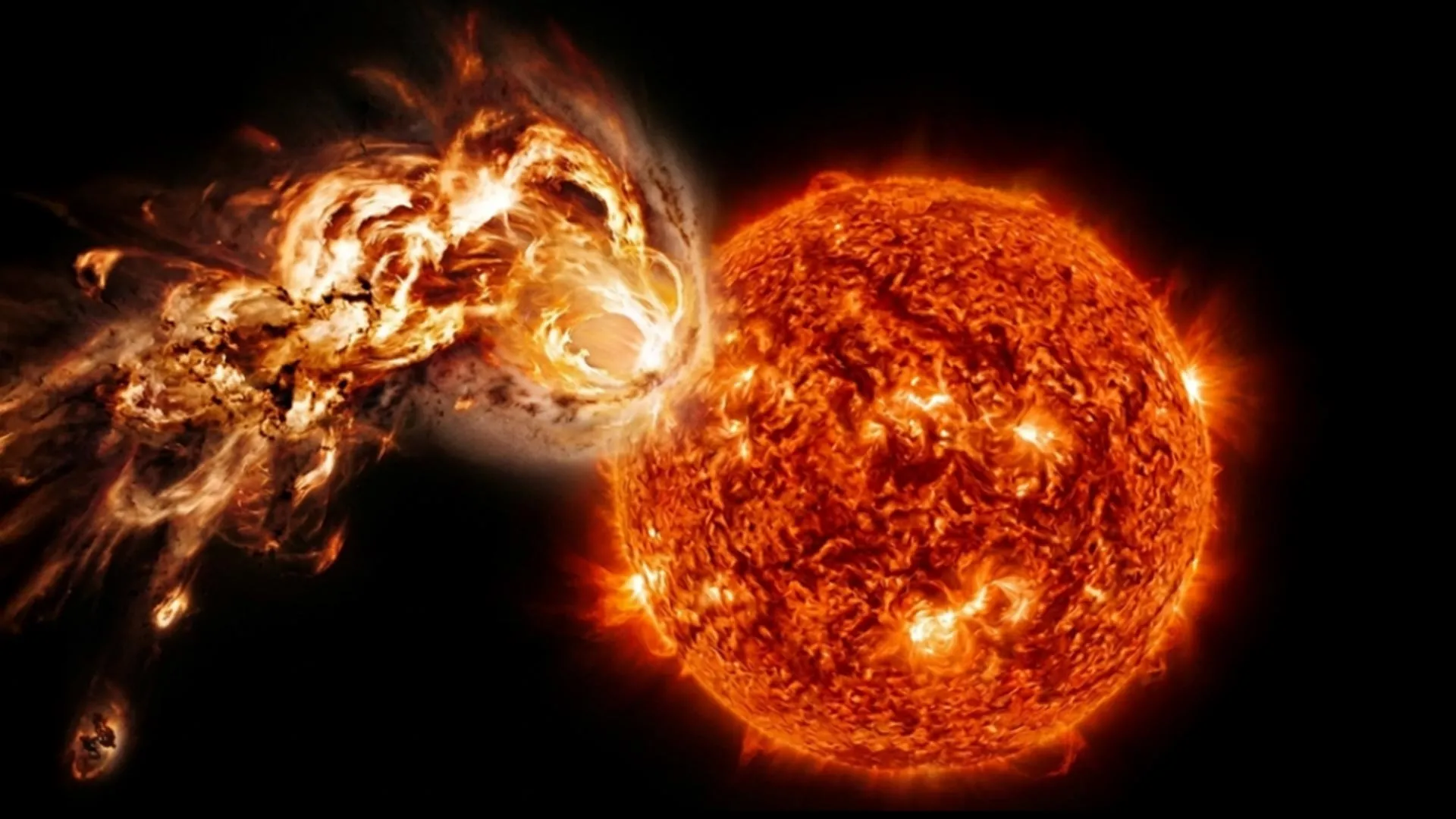
A Caltech model suggests aging stars similar to the Sun can push themselves through space as they shed their outer layers. If the model is right, those small motions could help explain why some wide pairs of stars fall apart and why rare stellar collisions may occur.
The work comes from Jim Fuller, a theoretical astrophysicist at Caltech, who presented the findings at the 248th meeting of the American Astronomical Society in Pasadena, according to Caltech. The study, titled “White Dwarf Kicks via Episodic Mass Ejection from Red Giant Stars,” has been submitted to the Publications of the Astronomical Society of the Pacific, Caltech said.
Uneven gas loss creates small pushes
Stars like the Sun are expected to swell into red giants late in life. During that phase, their outer material moves outward into space, while the remaining core contracts into a white dwarf, one of the universe’s common types of stellar remnant, according to Caltech.
Fuller’s model focuses on how that material leaves the star. Caltech said the calculations describe blobs of gas escaping from a bloated red giant in an uneven pattern, with each ejection giving the star a recoil in the opposite direction.
The individual pushes would be weak. Fuller’s calculations indicate that a dying star could receive about 10,000 of them across several hundred thousand years, with each kick changing its motion by only a few meters per second, according to Caltech.
Because the ejections point in random directions, many of the kicks partly offset one another. Fuller’s model still finds that the accumulated effect can leave the future white dwarf moving at roughly 1 kilometer per second in a random direction, Caltech said.
Clue from wide binary stars
The idea addresses an observational puzzle involving binary stars, or pairs bound by gravity. Caltech said Kareem El-Badry, an assistant professor of astronomy at the institute, had found that very widely separated binary systems are less common after one star in the pair becomes a white dwarf.
Fuller’s model offers a mechanism for breaking some of those pairs apart. If a white dwarf’s final kick speed exceeds the orbital speed of a loosely bound binary system, the pair can become gravitationally unbound, according to Fuller’s explanation as described by Caltech.
Caltech said Fuller built the model using El-Badry’s observations and computer simulations of convection in old red giant stars. Those simulations show that surface material can escape in uneven episodes rather than in a smooth, balanced outflow.
The proposed kicks are far weaker than the motion produced when a massive star explodes as a supernova. Caltech said astronomers have suspected that white dwarfs can receive kicks too, but through a gentler process because Sun-like stars do not end their lives in supernova explosions.
Possible test in stellar mergers
The model also predicts that some binary systems could meet a more violent fate. Caltech said repeated kicks to a dying red giant might alter its orbit enough to make it collide with a companion star, an event that could lead to an explosion.
Astronomers may be able to test the model by looking for evidence of such mergers, according to Caltech. The research was funded by Caltech, the institute said.
This story draws on original reporting from ScienceDaily.