
DNA study maps kinship and sacrifice at ancient Shimao city
Ancient genomes from the 4,000-year-old Chinese settlement point to local roots, far-flung contacts and gendered ritual killings.
By Lucas Ferreira · Science & Environment Writer
3 min read
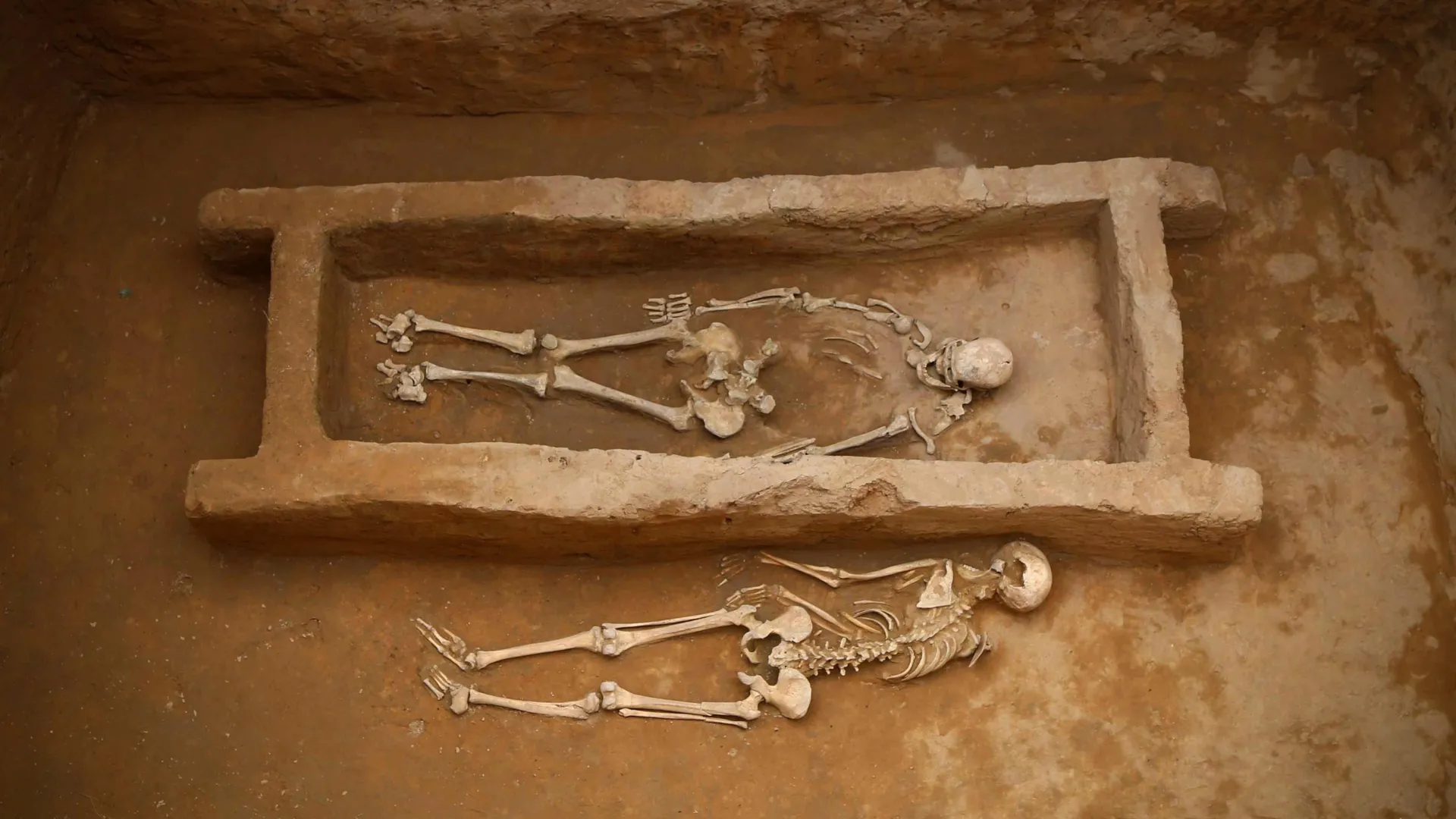
Ancient DNA from Shimao, a large late Neolithic settlement in northern China, is giving researchers a clearer view of how one of East Asia’s early complex societies organized family, status and ritual. The Chinese Academy of Sciences said the work also revises earlier ideas about human sacrifice at the site, with genetic evidence showing that examined victims near the East Gate were mostly male.
The study, published in Nature, was led by Qiaomei Fu of the Institute of Vertebrate Paleontology and Paleoanthropology at the Chinese Academy of Sciences, with researchers from the Shaanxi Provincial Academy of Archaeology and other institutions. The team analyzed nuclear DNA from 169 ancient human samples, including 144 unrelated individuals, collected over 13 years from Shimao, nearby sites and locations in southern Shanxi.
A fortified settlement with social ranks
Shimao dates to about 4,200 to 3,700 years before the present and lies in northern Shaanxi Province, according to the Chinese Academy of Sciences. The stone-walled settlement covered roughly four square kilometers and was divided into separate functional areas.
Archaeological evidence cited by the academy indicates that Shimao had a stratified society, organized political and social systems, and extensive ritual activity. The site has also yielded evidence of human sacrifice, including a large group of skulls found near the East Gate.
Local ancestry, wider contacts
By comparing the new genomes with previously published ancient DNA from across China, the researchers found that most Shimao residents descended from local populations that had lived in the region about 1,000 years earlier, the Chinese Academy of Sciences said. The analysis also found genetic and cultural links to the Yangshao Culture, a major Neolithic tradition associated with the Loess Plateau near the Yellow River.
The academy said the Shimao population also showed connections to groups associated with Taosi Culture in southern Shanxi, steppe Yumin-related populations and southern rice-farming communities. Researchers interpreted those links as evidence of broad contact among farming and pastoral communities across prehistoric northern, central and southern China.
Kinship and ritual patterns
The DNA results allowed researchers to reconstruct family relationships spanning as many as four generations, according to the Chinese Academy of Sciences. The team said the findings point to patrilineal descent, in which ancestry and status were traced through fathers, and patrilocal residence, in which women generally moved to live with or near the families of male partners.
The academy said those patterns provide direct genetic evidence for studying inheritance, ruling families and social class formation at Shimao. Researchers said such evidence may help explain family systems and political structures linked to the rise of early states in East Asia.
The study also changed the interpretation of sacrificial remains near the East Gate. Earlier views held that most of those victims were female, but the Chinese Academy of Sciences said DNA showed nine of 10 burials examined there were male.
Researchers found a spatial divide in the sacrificial evidence, according to the academy. Male victims were concentrated near the East Gate, while female sacrificial remains appeared in elite cemeteries such as Huangchengtai and Hanjiagedan, suggesting that people may have been selected for different rituals depending on ceremony and location.
This story draws on original reporting from ScienceDaily.