
DESI quasar lenses AI search finds seven new candidates
Researchers used a neural network to sift 800,000 DESI quasars, identifying seven possible gravitational lenses for follow-up.
By Tom Brennan · Health & Medicine Correspondent
3 min read
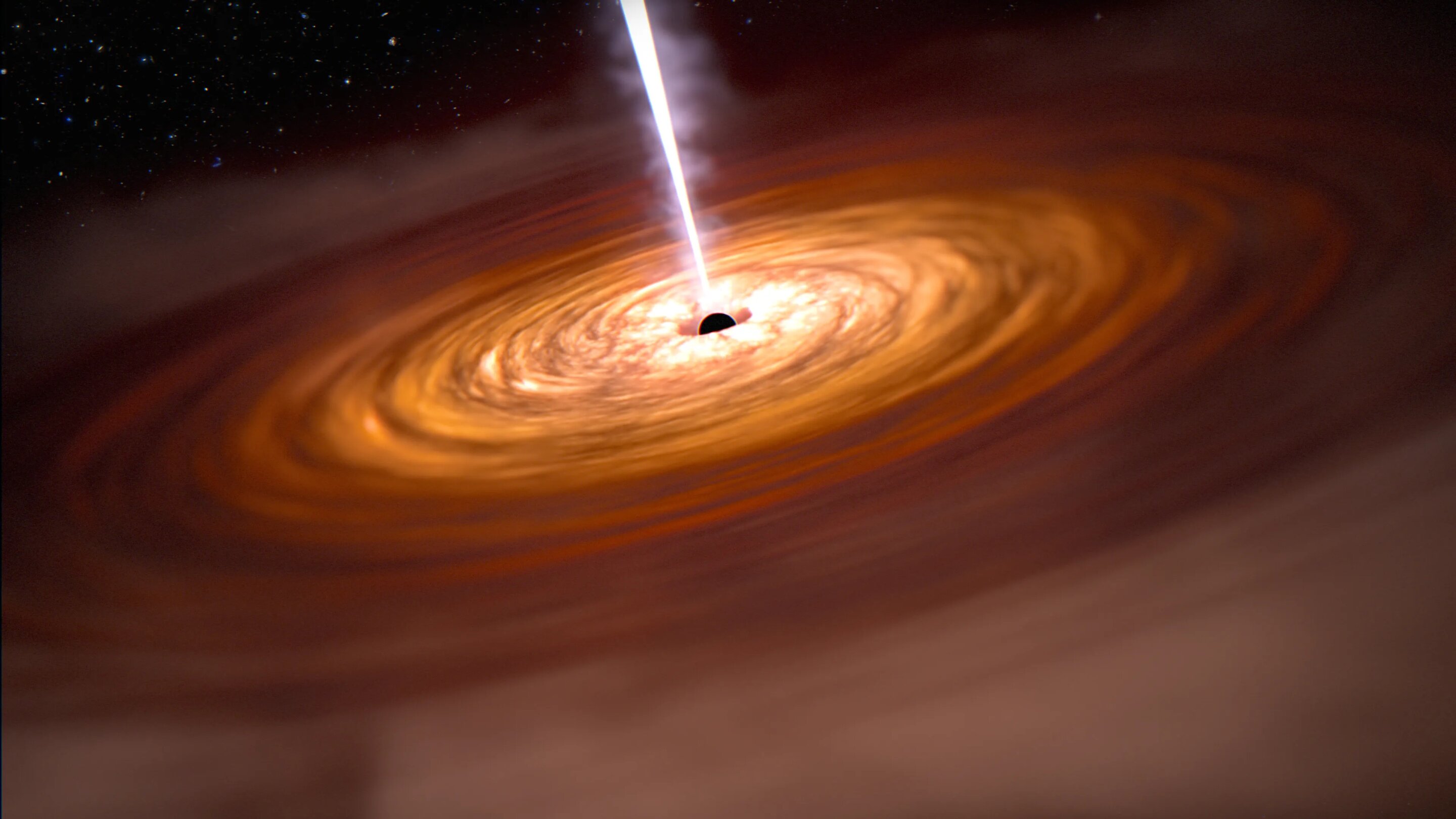
An international astronomy team has found seven possible gravitationally lensed quasars after a DESI quasar lenses AI search across 800,000 objects from the Dark Energy Spectroscopic Instrument survey. The candidates matter because quasars can help researchers study how galaxies and supermassive black holes grew in the early universe, but quasars that also act as lenses are uncommon.
The work, led by Everett McArthur, a graduate student in astronomy at The Ohio State University, was published in The Astrophysical Journal. Ohio State said the seven candidates roughly double the number of such quasars identified in earlier surveys.
Quasars are bright galaxy cores powered by supermassive black holes. Their intense light makes them valuable targets for astronomy, but it can also make the surrounding host galaxies harder to measure.
What are quasar lenses?
A gravitational lens is an object whose gravity bends and magnifies light from something farther away. In this case, researchers are looking for quasars whose gravity can distort light from background galaxies, creating signatures that reveal both the quasar system and the more distant object behind it.
McArthur said quasars are useful because they offer early views of supermassive black holes. According to Ohio State, studying the link between galaxies and black holes may also help explain why the Milky Way developed as it did and why its central black hole is sometimes inactive.
How the AI search worked
The team used a neural network because confirmed examples of quasars acting as strong lenses are scarce. To train the system, the researchers used mock lens examples built from real quasar spectra and background galaxy spectra, giving the model simulated cases to learn from.
Ohio State said the model looked for emission-line patterns that could indicate a quasar lens system. After the software reduced the original DESI list of 800,000 possible quasars to 200 objects, researchers reviewed those cases by hand and selected seven final candidates.
The candidates are all at least 5 billion to 6 billion light-years from Earth, according to Ohio State. That distance means astronomers are seeing the systems as they existed billions of years ago, when the universe was younger.
McArthur said the result showed the model could sort through many different quasar spectra and pick out unusual cases. The study’s publication lists the paper as “Quasars Acting as Strong Lenses Found in DESI DR1.”
What happens next?
The objects remain candidates, so the team still needs stronger observations to confirm whether they are true quasar lens systems. Ohio State said the researchers plan to use space-based instruments such as the Hubble Space Telescope for follow-up work.
If confirmed, the systems would add rare targets for studying the relationship between supermassive black holes and the galaxies around them. McArthur also said the same kind of machine-learning approach could be expanded to search spectra for other unusual astronomical objects.
This story draws on original reporting from Phys.org.