
Droplet Lab releases contact angle goniometer guide for lab buyers
Droplet Lab’s new buyer framework compares instrument classes for R&D, QA/QC and teaching labs by scope, validation, workflow and cost.
By Lucas Ferreira · Science & Environment Writer
3 min read
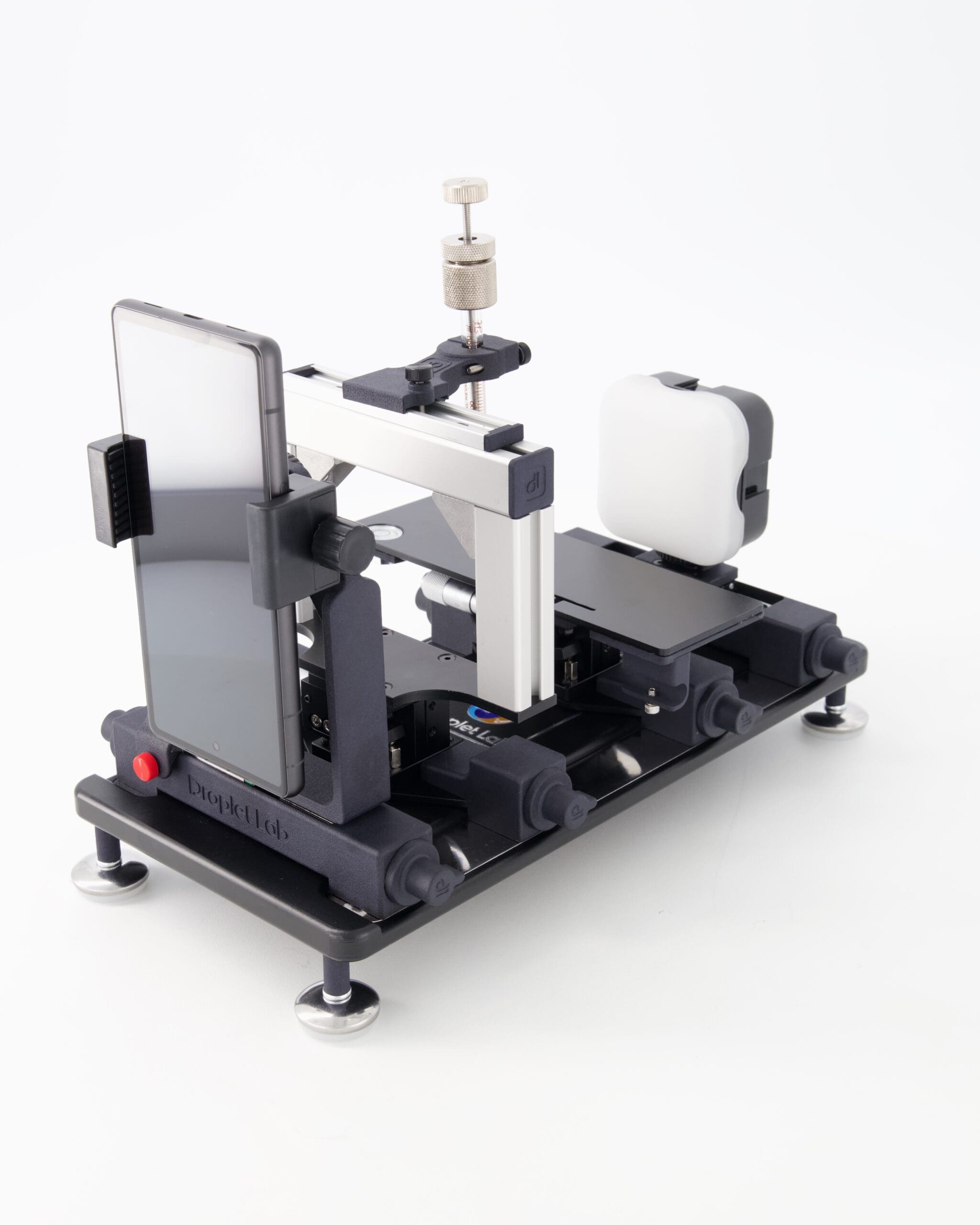
Droplet Lab has released a contact angle goniometer guide aimed at helping R&D, QA/QC and teaching labs match surface-analysis instruments to the work they actually need to do. The framework matters because contact-angle buyers can waste budget in two directions: choosing a high-end benchtop system they do not use fully, or relying on a low-cost setup that cannot meet measurement, reporting or workflow demands.
A contact-angle goniometer, also called a drop-shape analyzer, measures the angle and shape of a liquid droplet on a surface. Labs use that measurement to assess how a surface wets, which can affect testing, development and quality checks.
How do labs choose a contact angle goniometer?
The guide organizes the buying decision around 11 criteria. They include measurement scope, optics and software, automation and throughput, calibration and traceability, environmental control, portability, data handling and total cost of ownership.
It also maps the market by instrument class, from dyne pens and do-it-yourself ImageJ-based rigs to entry benchtop systems, portable offline systems and premium benchtop models. That structure gives buyers a way to compare whether they need a quick screening tool, a teaching setup, a portable instrument or a system built for more controlled or documented work.
Droplet Lab said the framework includes published scoring methods, use-case rankings, pricing notes, source review notes and a correction process for specification changes. The company said it plans to update the methodology as product details change and invites corrections when needed.
Dr. Alidad Amirfazli, Droplet Lab’s scientific adviser and co-founder, said buyers often start by asking which brand is best before defining what they need to measure. He said a lab doing fast treatment checks, a teaching lab and a regulated R&D group may need different instrument classes, and the framework is meant to make those trade-offs clear before budgets and reporting expectations are set.
The release places the guide in a practical category of lab procurement: narrowing the instrument field before requesting quotes or building validation plans. For many labs, the key question is less whether a system can produce a contact-angle number and more whether it can do so at the required repeatability, documentation level and pace.
The contact angle goniometer buyer framework also addresses validation. Droplet Lab says its public validation materials summarize two peer-reviewed studies comparing the accuracy of its instrument with an established commercial benchtop system, with methodology and results published for review.
The guide includes a disclosure that Droplet Lab manufactures one of the systems being compared. It says comparisons are based on publicly available standards, vendor datasheets and published validation where available.
The buyer framework is now available on the company’s website. It is positioned for technical teams that need to weigh measurement scope, validation requirements, daily workflow and budget before selecting a contact-angle instrument.