
Citrus huanglongbing atlas maps how greening disease damages trees
University of Florida researchers used microscopy to track how citrus greening disease spreads damage across tree tissues over time.
By Tom Brennan · Health & Medicine Correspondent
3 min read
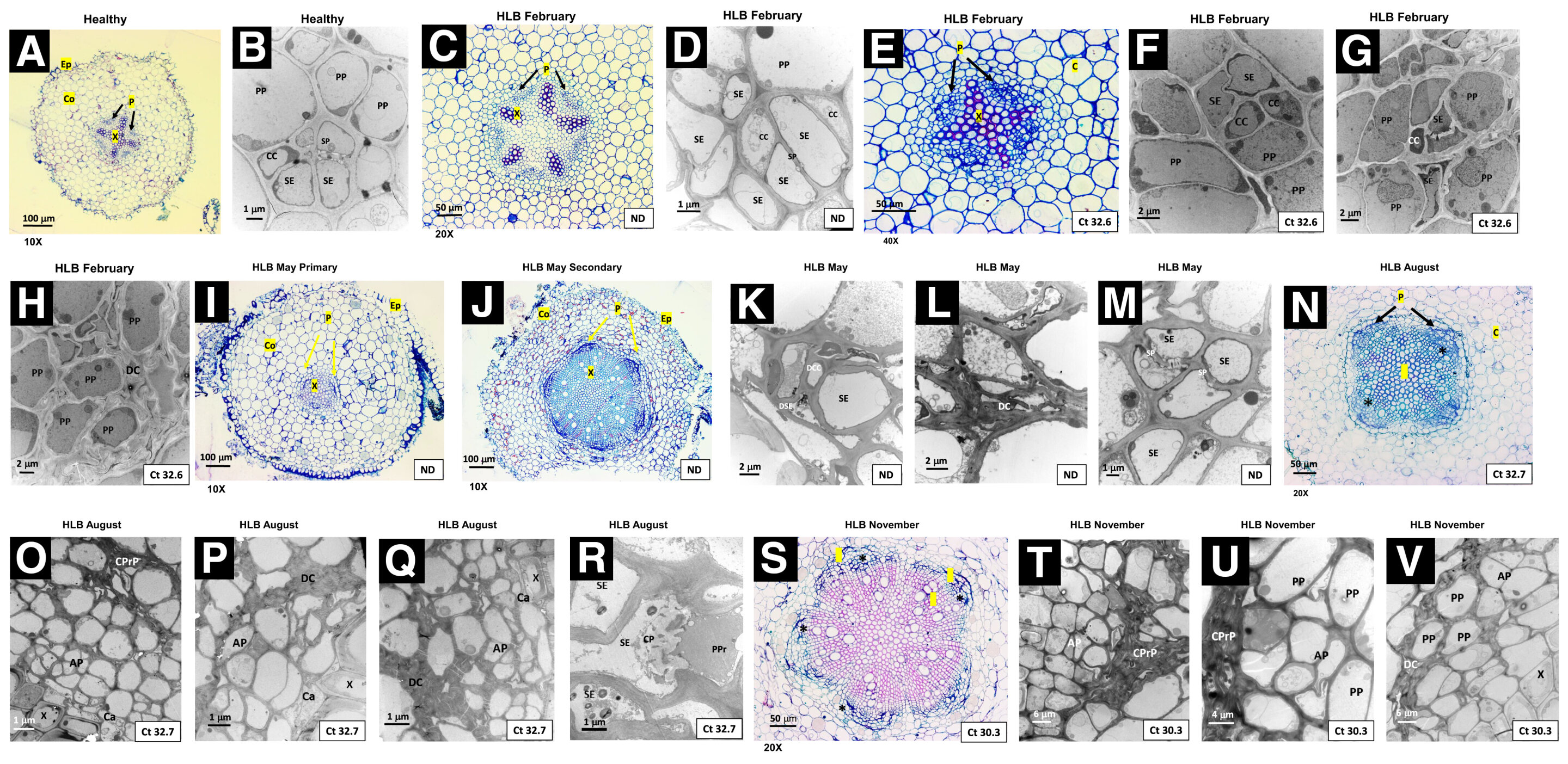
A new citrus huanglongbing atlas gives researchers a tissue-by-tissue view of how citrus greening disease weakens trees before visible decline takes hold. The work matters because huanglongbing, or HLB, damages nutrient transport in citrus and is tied to root loss, leaf yellowing, poorer fruit quality and tree death, according to the American Phytopathological Society.
The atlas was created by University of Florida Citrus Research and Education Center researchers Diann S. Achor, Camila Ribeiro, Jinyun Li and Nian Wang. Their study, “Microscopic Atlas of Citrus Huanglongbing Unravels Its Sequential Disease Development Mechanism,” was published in Phytopathology.
What is citrus huanglongbing disease?
Huanglongbing is a citrus disease caused by 'Candidatus Liberibacter asiaticus,' known as CLas, according to the American Phytopathological Society. The bacterium infects phloem, the tissue that carries nutrients through the tree.
HLB affects organs that contain phloem, but the society said scientists have had a limited understanding of how the disease develops in different tissues. The new study addresses that gap by comparing infected and healthy citrus tissues under high-powered microscopes.
How the atlas was made
The University of Florida team examined tissues from citrus trees grown in groves and greenhouse conditions, according to the American Phytopathological Society. Samples came from infected and healthy trees and were collected at four times over one year.
The researchers used transmission electron microscopy and light microscopy to study leaves, roots, stem bark, trunk bark, fruit albedo, pedicels, columella tissues and seed coats. The resulting image set shows how HLB-related changes appear in different parts of the tree as the disease develops.
The study found that CLas infection increased phloem cell death and callose buildup in leaves, fruit tissues and bark from branches and trunks, according to the society. Callose is a plant response that can obstruct nutrient movement through phloem.
Roots and seed coat tissues showed little or no comparable damage, the society said. That contrast led the researchers to conclude that the pathogen does not harm all tissues in the same way.
What the findings show about tree decline
The researchers described a sequence in which CLas infection leads to phloem cell death and callose deposition, limiting nutrient transport. The American Phytopathological Society said that blockage is associated with starch buildup in leaves and branch bark.
That starch accumulation contributes to chloroplast breakdown and the blotchy mottling and yellowing associated with HLB, according to the society. In roots, the study found starch depletion instead, suggesting that a lack of carbon supply helps drive root decay.
The society said the root decline can worsen nutrient shortages and contribute to the broader weakening of infected trees. The study links those tissue-level changes to the disease symptoms that growers see later in the field.
Wang said the team was most struck by how differently HLB damaged separate tissues, according to the American Phytopathological Society. The authors said the atlas may also help researchers identify sieve elements in citrus phloem at the ultrastructural level.
The study does not report a treatment for HLB. Its contribution is a clearer biological map of how the disease unfolds across citrus tissues, which researchers can use to study one of the citrus industry’s major disease problems.
This story draws on original reporting from Phys.org.