
Bronze Age collapse droughts tied to overlapping climate cycles
A Stockholm University study says Eastern Mediterranean drought peaked when long-term drying and Atlantic climate swings reinforced each other.
By Tom Brennan · Health & Medicine Correspondent
3 min read
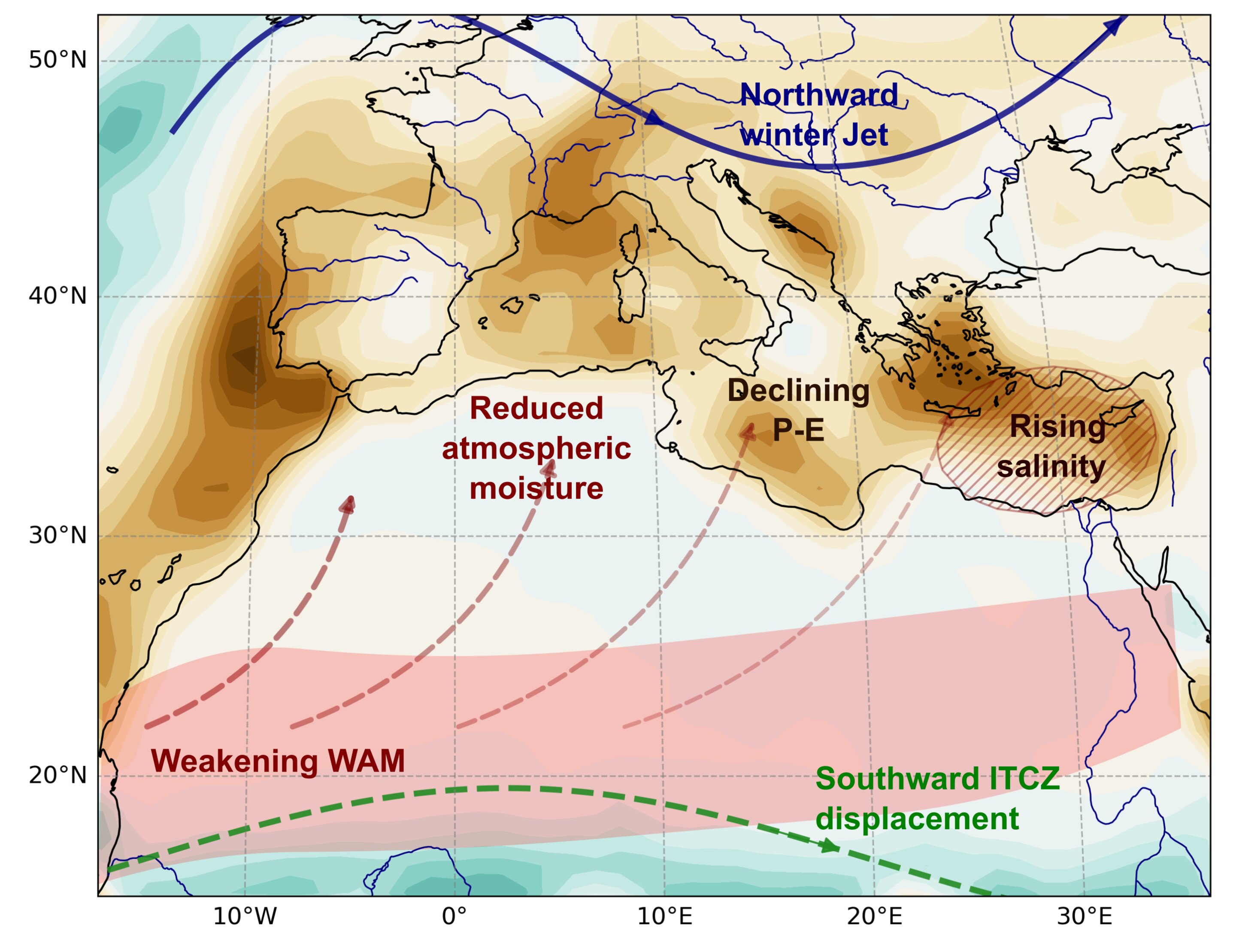
A new study on Bronze Age collapse drought links the harshest dry spells in the ancient Eastern Mediterranean to several natural climate cycles lining up at the same time. The finding matters because it points to a mechanism that can intensify drought beyond a slow drying trend, according to Stockholm University researchers writing in Science Advances.
The study examined climate conditions around the Late Bronze Age collapse, when societies across the region came under severe strain about 3,200 years ago. Stockholm University said the Mycenaeans, Minoans and Hittite Empire were among the civilizations that experienced widespread societal breakdown during that period.
Researchers have long connected severe drought with that era, but the processes behind the dry conditions have remained uncertain, according to the university. Katherine Power, a doctoral student in Stockholm University’s Department of Physical Geography and first author of the study, and co-author Qiong Zhang, a professor of paleoclimate modeling in the same department, used the EC-Earth climate model to reconstruct Mediterranean climate changes across the past 8,000 years.
What caused the Bronze Age collapse drought?
The researchers found that the Eastern Mediterranean became drier over thousands of years because of gradual shifts in Earth’s orbit, Stockholm University said. On top of that long-term change, shorter fluctuations in the Atlantic Ocean and atmosphere also affected the region’s climate.
The worst droughts emerged when those longer and shorter climate patterns temporarily reinforced one another, according to the study. Power said the result helps explain why droughts linked to the Late Bronze Age collapse were unusually severe, rather than the product of one isolated climate event.
The study also points to a broader climate transition in which the Eastern Mediterranean dried as weakening monsoons and changes in atmospheric circulation reduced moisture arriving from Africa and cut rainfall across the region, according to Stockholm University. Those combined effects lowered water availability and increased stress on farming and food security in societies that were already vulnerable, Power said.
Why the findings matter for future drought risk
The authors said the work changes how researchers may interpret ancient droughts because it shows how several climate processes can combine to amplify dry conditions. The lesson is not limited to the past, according to Power, because the Mediterranean is projected to become hotter and drier during the coming century.
Stockholm University said the study suggests future drought risk in the region may depend on more than human-driven warming alone. Natural variability in the Atlantic Ocean could interact with the warming trend and influence how severe droughts become.
The research, titled “Holocene ocean-atmosphere coupling and Mediterranean sensitivity to Atlantic circulation: Lessons from the Late Bronze Age collapse,” was published in Science Advances. Stockholm University said the modeling work was carried out with EC-Earth, a climate model used to study past and future climate behavior.
This story draws on original reporting from Phys.org.