
Blanco de Piura cacao yield can rival commercial varieties, study finds
A Peru farm study found native fine-flavor cacao can produce 1,200 to 1,500 kilograms of dry beans per hectare with strong management.
By Lucas Ferreira · Science & Environment Writer
3 min read
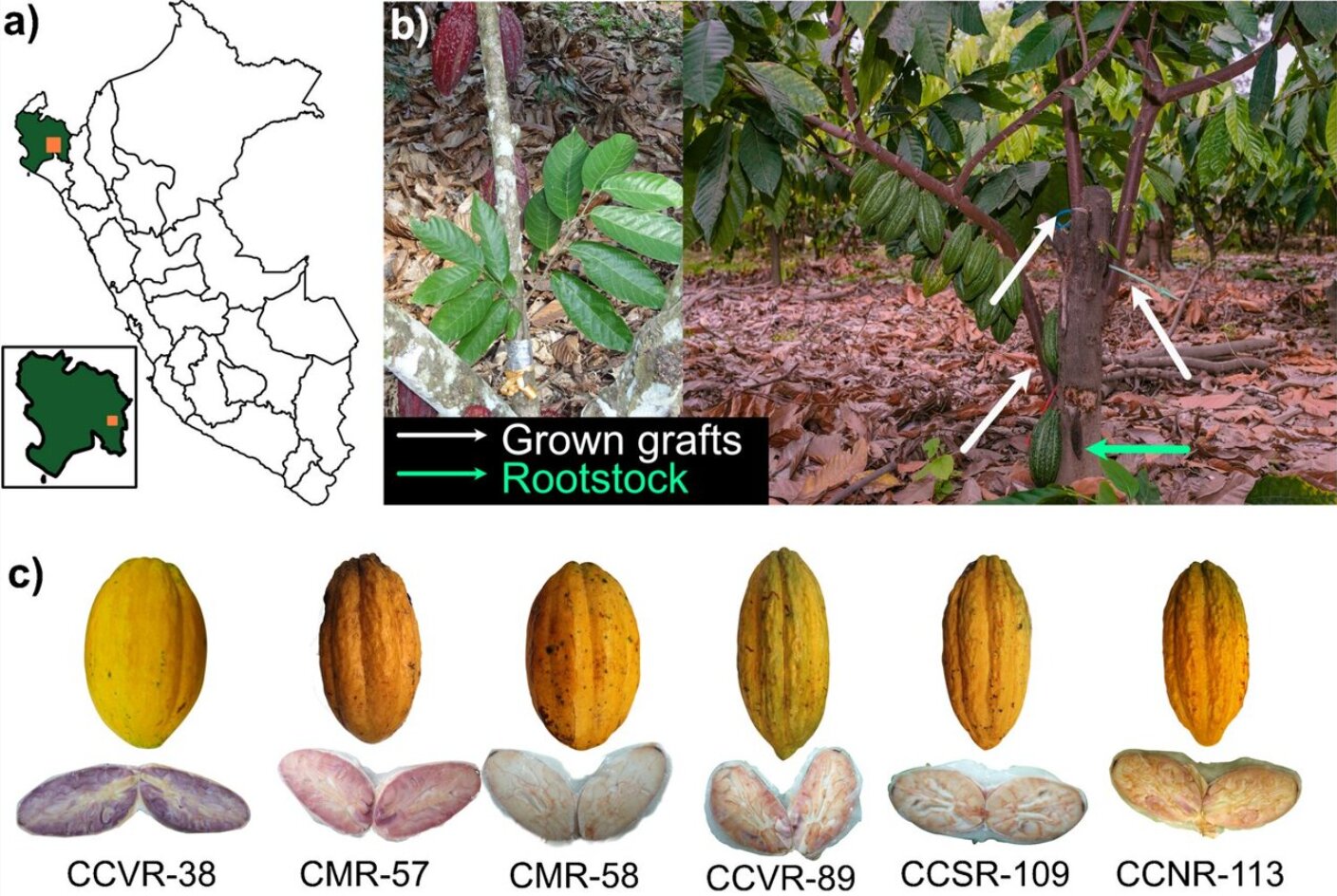
Blanco de Piura cacao yield can match widely grown commercial varieties in Latin America when farmers use selected native plant material and strong field management, according to a study led by the Alliance of Bioversity International and CIAT and the University of Göttingen. The finding matters for smallholder farmers in northern Peru because it challenges the idea that native fine-flavor cacao must be replaced to raise output.
The research, conducted with Cooperativa Agraria Norandino and published in Agronomy for Sustainable Development, found that Blanco de Piura can produce an average of 1,200 to 1,500 kilograms of dry beans per hectare. Those levels are comparable to, and in some cases higher than, yields from commercial clones such as CCN-51, which have been favored across Latin America for productivity.
Blanco de Piura is a native cacao known for flavor and aroma. Fine-flavor cacao makes up about 12% of the global market, and Latin America produces 90% of that segment, according to the researchers.
How much can Blanco de Piura cacao yield?
The study found that well-managed Blanco de Piura plantings can average 1,200 to 1,500 kilograms of dry beans per hectare. Eduardo Espinoza, cocoa value chain manager at Cooperativa Agraria Norandino, said many farmers currently produce about 500 kilograms per hectare, while the study showed that yields can rise substantially and can even reach 2,000 kilograms per hectare under well-managed conditions using the selected materials.
The work took place over three years on 12 cacao farms in Peru’s Piura region, all operated by members of Cooperativa Agraria Norandino. Researchers tested different clones, planting designs and levels of agronomic management to measure how each affected productivity.
One major result involved canopy renewal. The researchers reported that grafting mature trees with selected native plant material raised production by 59% in three years, regardless of clonal arrangement, and improved output faster than starting a new plantation.
Management intensity had the largest effect. Farms that pruned twice a year and managed the crop more frequently produced 118% more than farms with lower levels of management, according to the study.
What did the study find about planting designs?
Carolina Ocampo Ariza, one of the study’s authors, said the team confirmed that some Blanco de Piura genotypes can self-pollinate, which supports field production and planting. The researchers said that finding ran against earlier assumptions.
The study also found that polyclonal planting designs helped compensate for weaker management on farms with less intensive practices. Plantings based on a single clone or genotype reached their best output when paired with intensive agronomic management.
Evert Thomas, also an author of the study, said the findings show farmers can conserve agrobiodiversity while also improving income when they use selected native material and good management practices. The researchers said the approach could make native cacao an economically viable option instead of pushing farmers toward replacement with commercial hybrids.
The findings build on genetic selection work that Cooperativa Agraria Norandino and the Asociación Peruana de Productores de Cacao began in 2007. The researchers said the advance supports efforts to protect Peru’s cacao diversity and reduce the risk that local resources are displaced by hybrids.
This story draws on original reporting from Phys.org.