
AMOC slowdown could intensify California storms, study finds
A weaker Atlantic overturning current could feed wetter atmospheric rivers on California and reduce Greenland snowfall, UC Riverside researchers report.
By Priya Raghavan · Science Reporter
3 min read
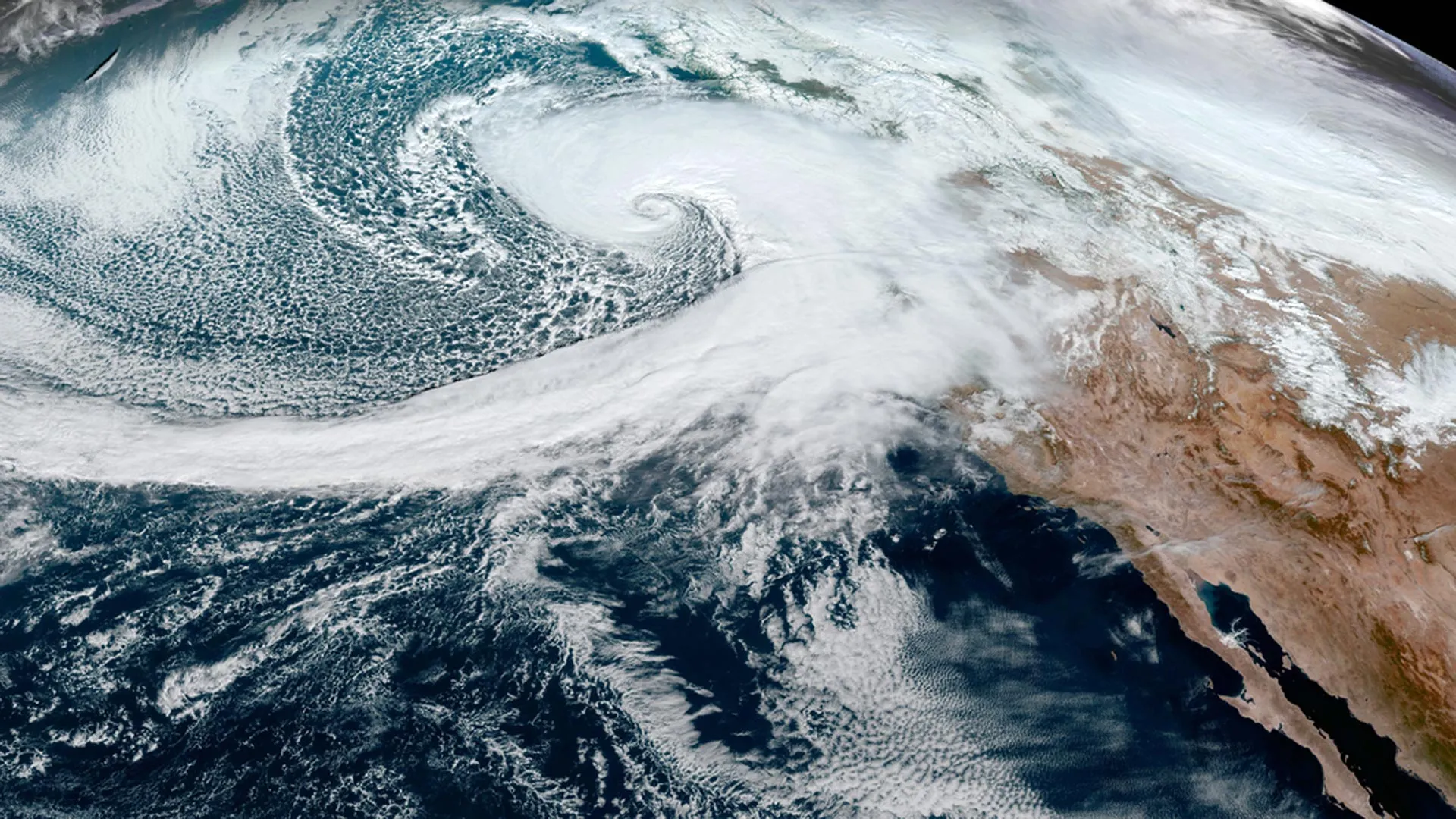
A slowing Atlantic Ocean circulation could make AMOC California storms a bigger flood threat by strengthening moisture-heavy atmospheric rivers, according to research from the University of California, Riverside. The same shift could leave Greenland with fewer snow-producing storms, with effects reaching well beyond the Atlantic.
The study, published in Nature Communications, examines the Atlantic Meridional Overturning Circulation, known as AMOC. UC Riverside said the modeling shows that continued weakening of the current under a high greenhouse gas emissions scenario could change ocean temperatures, upper-atmosphere winds and storm tracks across parts of the Northern Hemisphere.
How could AMOC affect California storms?
AMOC is a large system of ocean currents that moves warm tropical water north and sends colder, denser water back south at depth. UC Riverside described it as a climate-regulating circulation that helps shape temperatures and weather patterns far from the Atlantic basin.
According to the researchers, a weaker AMOC could alter sea-surface temperature patterns in ways that allow the atmosphere to carry more water vapor. It could also strengthen high-altitude winds that steer storms, pushing more moisture toward the U.S. West Coast.
That combination would increase the intensity of atmospheric rivers reaching California, the study found. Atmospheric rivers are narrow corridors of water vapor that can deliver large amounts of rain or snow; they are important to California’s water supply but can also trigger flooding and damage infrastructure.
What the study projects
Mohima Sultana Mimi, a UC Riverside doctoral student in climate dynamics and lead author of the paper, said the work addresses how AMOC changes may affect moisture transport and storms outside the Atlantic region. UC Riverside said the projections point to stronger storms in parts of North America, with California’s coast standing out.
The modeling also indicates more atmospheric rivers along the east coast of South America and near Antarctica, according to the university. Greenland and parts of the Arctic would see fewer storms, which would mean less snowfall and slower ice buildup.
The paper’s authors are Mohima Sultana Mimi, Wei Liu, Weiming Ma and Gang Chen. Liu, a UC Riverside associate professor of climate change and the study’s senior author, said cuts in greenhouse gas emissions could reduce the pressure on AMOC and limit future changes in precipitation patterns, according to the university.
Why emissions matter
Scientists have observed signs that AMOC is slowing as human-driven climate change warms the planet, UC Riverside said. Climate models cited by the university suggest further weakening is likely if greenhouse gas emissions remain high.
Those emissions come mainly from burning coal, oil and natural gas, with additional contributions from methane from livestock, deforestation, industrial activity and waste sources such as landfills, according to UC Riverside.
For California, stronger atmospheric rivers would bring a mixed outlook. UC Riverside said they could increase flood and infrastructure risks, while also creating chances to capture more water if communities improve forecasting and storage capacity.
The research underscores how a change in a major ocean current can reshape weather thousands of miles away. According to UC Riverside, understanding those links can help communities prepare for future shifts in water resources and extreme weather.
This story draws on original reporting from ScienceDaily.