
Altermagnetism prize honors discovery of a third magnetic class
The 2026 Europhysics Prize will go to Jairo Sinova, Libor Šmejkal and Tomas Jungwirth for establishing altermagnetism.
By Tom Brennan · Health & Medicine Correspondent
3 min read
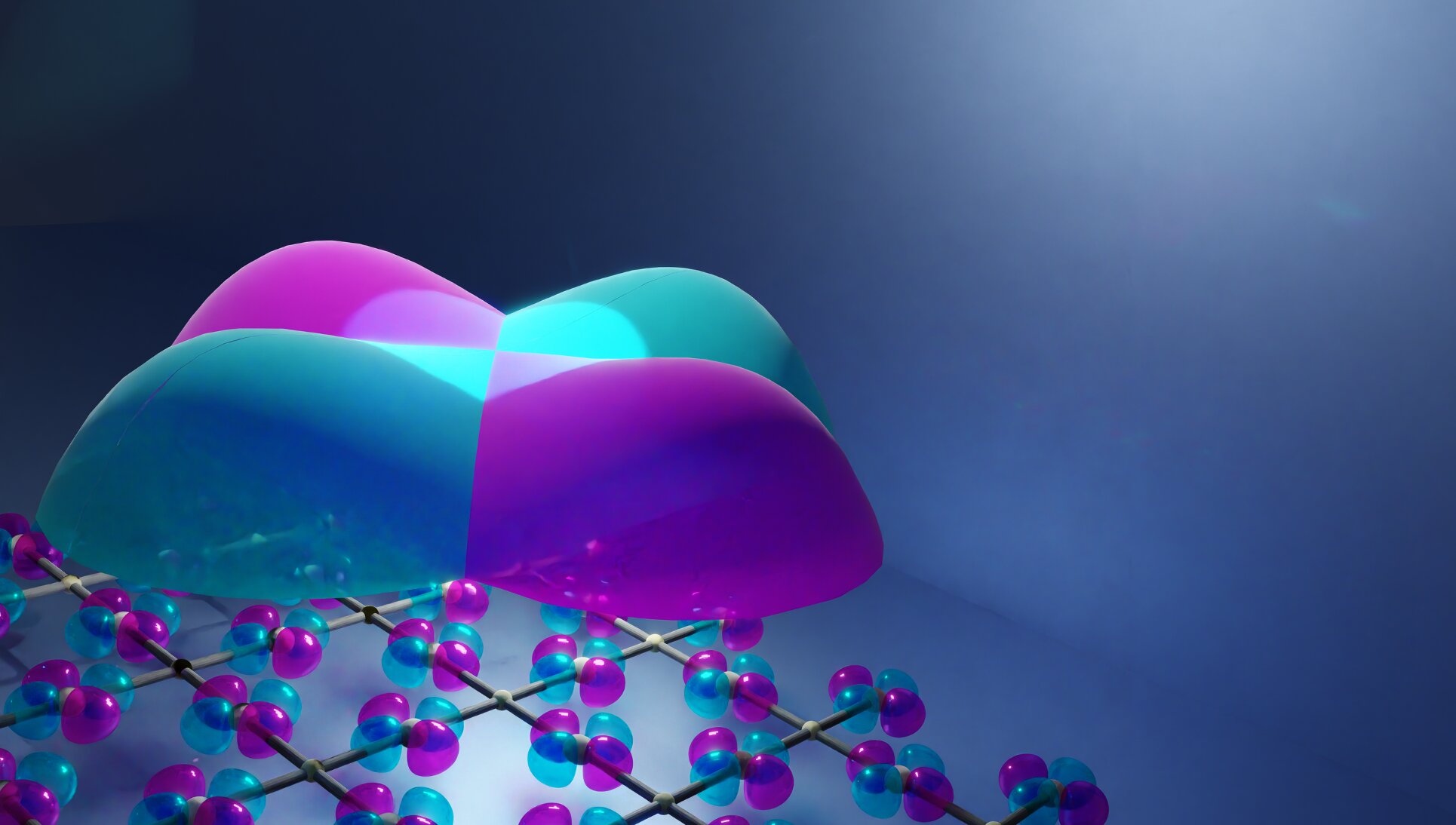
The 2026 altermagnetism prize from the European Physical Society’s Condensed Matter Division will recognize three physicists for identifying a third basic class of collinear magnetism. Johannes Gutenberg University Mainz said the Europhysics Prize will go to Jairo Sinova of Mainz, Libor Šmejkal and Tomas Jungwirth for work that changed how researchers classify magnetic order.
The award matters because magnetism has long been taught mainly through two collinear categories: ferromagnetism and antiferromagnetism. Mainz University said the team showed that altermagnetism forms a separate class, with properties that link features previously associated with those two older categories.
What is altermagnetism?
Altermagnetism is a type of magnetic order in which a material has no overall magnetization, as in antiferromagnets, while showing electronic behavior that had been associated with ferromagnets. According to Mainz University, that mix can support highly spin-polarized electrical currents and very fast magnetic behavior.
Ferromagnets have a net magnetization and underpin modern magnetic memory technologies, Mainz University said. Conventional antiferromagnets are magnetically compensated and have different electronic characteristics. The altermagnetic case adds a third option to that long-running framework.
Mainz University said the discovery creates a new symmetry class of matter and has drawn attention from researchers working on quantum materials, condensed matter physics and information technology. The university also said the field has links to topological physics, unconventional superconductivity and strongly correlated quantum materials.
How the discovery developed
The work grew out of a long collaboration between Sinova’s group at Johannes Gutenberg University Mainz and Jungwirth’s group at the Institute of Physics of the Czech Academy of Sciences in Prague, according to Mainz University. Šmejkal, who also had ties to Prague, worked in Mainz from 2016 to 2024 as a doctoral researcher and then as a postdoctoral scientist in Sinova’s group.
During that period, Mainz University said, Šmejkal led development of many theoretical ideas that fed into the identification of altermagnetism. The team used modern symmetry theory together with spintronics to describe a form of magnetic order that had not been recognized as a separate class.
The earlier steps included theoretical work on unusual magnetic transport effects, including the predicted crystal anomalous Hall effect, Mainz University said. Researchers later concluded that the behavior did not reflect only isolated material traits, but instead pointed to a broader magnetic phase governed by spin symmetries that had been missed.
In 2022, the researchers presented a full symmetry classification for altermagnetism and identified hundreds of possible altermagnetic materials, according to Mainz University. Experimental groups later reported evidence using methods including angle-resolved photoemission spectroscopy and electrical transport measurements.
Why researchers are interested
Mainz University said altermagnets are being studied as possible materials for next-generation spintronic devices. Spintronics uses electron spin, not only electric charge, to process or store information, making spin-polarized currents a central goal in the field.
The university said experimental confirmations have come from groups around the world and that altermagnetism has become a fast-growing subject in condensed matter physics. Research programs now span Europe, North America and Asia, and the topic has appeared widely at international conferences, according to Mainz University.
The European Physical Society’s Condensed Matter Division will present the 2026 Europhysics Prize at its 32nd General Conference in Graz, Austria, in September 2026, Mainz University said.
This story draws on original reporting from Phys.org.