
Algal blooms may speed plastic weathering tied to microplastics
KAIST researchers found bloom conditions made plastic bag material oxidize and crack faster in a six-week pond-water experiment.
By Tom Brennan · Health & Medicine Correspondent
3 min read
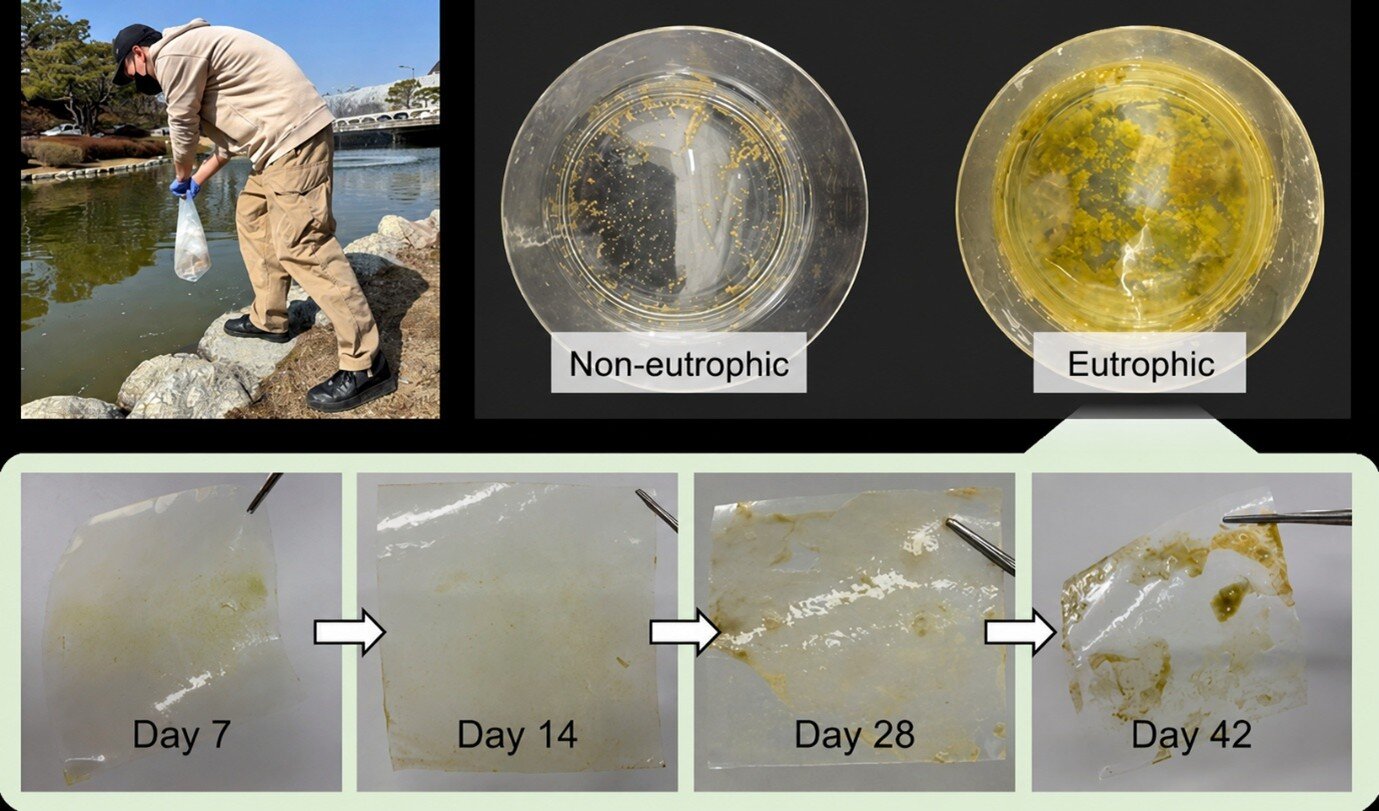
Algal blooms may help drive microplastics formation by making discarded plastic more likely to crack and break down, according to a KAIST research team. The finding matters for polluted lakes and rivers because it links nutrient-driven water pollution with the early weathering of plastic waste.
The team, led by Professor Jaewook Myung of the Department of Civil and Environmental Engineering at the Korea Advanced Institute of Science and Technology, tested low-density polyethylene, or LDPE, a common material used in plastic bags. KAIST said the researchers used water collected from Duck Pond on its campus to build laboratory microcosms that recreated bloom-like conditions.
The study, published online May 25, 2026, in Water Research, found that eutrophic water changed the microbial community living on the plastic surface. Eutrophication is the buildup of excess nutrients in water, a condition that can feed algal blooms.
Do algal blooms create microplastics?
The KAIST study did not report that algal blooms directly produced microplastics in the experiment. It found that bloom conditions sped up early plastic weathering, including oxidation and microscopic cracking, changes that can make plastic more vulnerable to later fragmentation.
Researchers set up small experimental systems and induced algal blooms by adjusting light exposure and nutrient levels, according to KAIST. Over six weeks, they examined biofilms on LDPE, tracked changes in microbial communities and studied shifts in functional gene profiles.
A biofilm is a layer of microorganisms that attaches to a surface. On plastic debris in water, that surface community is often called the plastisphere, and KAIST said it can affect how plastics move and how microbes, including potential pathogens, spread.
Under eutrophic conditions, cyanobacteria and other bacteria became more abundant on the LDPE, KAIST reported. The researchers also found more organisms capable of producing extracellular polymeric substances, or EPS, a sticky material that helps microbes bind together and cling to plastic.
That thicker microbial layer coincided with signs of faster plastic weathering. KAIST said microbes carrying genes for enzymes linked to plastic oxidation and early-stage degradation increased under bloom conditions.
The team used Fourier-transform infrared spectroscopy and scanning electron microscopy to check the plastic surface directly. According to KAIST, the tests showed more oxygen-containing chemical groups associated with oxidation, including carbonyl and hydroxyl groups, and more fine cracks on the plastic.
The researchers concluded that the changes appeared to come from the combined activity of a microbial ecosystem rather than a single species. KAIST said the result points to interactions between plastic pollution and the nutrient pollution that fuels blooms in natural waters.
What did the researchers say it means for pollution control?
Myung said, according to KAIST, that more frequent algal blooms linked to climate change make the work relevant to environmental management. He said the findings support handling water quality and plastic waste together.
The paper was led by first author Youngju Kim, a doctoral student in KAIST’s Department of Civil and Environmental Engineering. The publication is titled “Eutrophication drives taxonomic and functional trajectories in plastic-associated biofilms,” with DOI 10.1016/j.watres.2026.126183.
This story draws on original reporting from Phys.org.