
White House science report calls for new funding models and less peer review
The OSTP report argues U.S. science needs broad reforms, drawing criticism over funding cuts, grant terminations and political grievances.
By James Whitfield · Staff Writer
4 min read
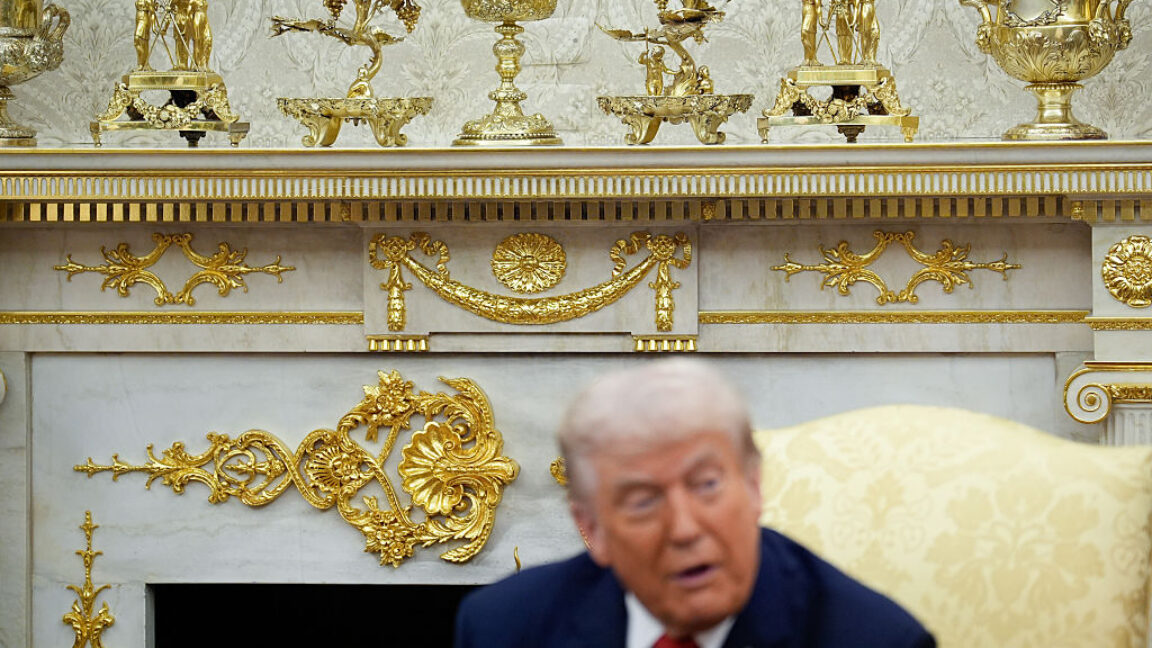
The White House Office of Science and Technology Policy released a report Tuesday arguing that the Trump administration can reshape federal science policy for what it calls “a new golden age.” The document matters because it sets out a case for changing how the government funds and evaluates research while the administration has also pursued research budget cuts and grant cancellations, according to Ars Technica.
The report, titled “Science: A New Golden Age,” presents itself as a successor to “Science, the Endless Frontier,” the post-World War II policy document that helped make the case for federal support of basic research. OSTP says the earlier framework remains valuable, but argues that new conditions, including artificial intelligence, require major changes in how federal science programs operate.
Ars Technica senior science editor John Timmer wrote that the report combines some concerns already recognized in the research community with political complaints, weakly supported arguments and ideas shaped by Silicon Valley’s view of innovation. Timmer said the document also omits or minimizes Trump administration actions that he said have damaged scientific work, including proposed reductions to science agency budgets, efforts to let political appointees end grants and delays in releasing congressionally approved research money.
Grant process and peer review targeted
OSTP identifies the time researchers spend preparing grant applications and handling administrative work as a problem, and says it wants to simplify rules and speed up grant applications. Timmer wrote that the report does not name specific regulations it would change.
The report also criticizes existing peer review practices. It says review panels can discourage “transformative ideas” by favoring consensus, and it proposes funding systems that may rely on decisions by individual reviewers, including people who may not be trained scientists, according to Ars Technica.
Timmer wrote that reducing peer review could broaden the range of funded ideas, but may also increase support for fringe proposals. He also noted a tension in the report: peer review remains part of what the administration has described elsewhere as “gold standard science.”
Innovation, industry and AI
OSTP argues that federal science should do more to promote innovation and move discoveries into commercial use. The report rejects a one-way model in which the government funds basic science and companies later commercialize it, favoring a more interactive relationship between scientific research and technology development.
Ars Technica said that view captures some real examples but is incomplete. Timmer cited real-time RT-PCR testing during the pandemic as an example of science and commercial tools reinforcing one another, while noting that quantum mechanics took decades to become commercially important through lasers and semiconductors.
The report also puts major weight on AI. OSTP describes a future in which automated agents, online laboratories and market-style bounties help direct scientific work. Timmer wrote that the report accepts an expansive view of AI’s scientific potential even though researchers are still determining where AI systems will be most useful.
Training and political disputes
OSTP argues that science should be reconnected with hands-on technical skill, saying engineering and graduate programs often reward theory and citations more than practical output. The report proposes fellowships for skilled craftspeople, “practitioner-in-residence” programs for machinists and technicians, and portable credentials in advanced manufacturing and laboratory techniques.
Timmer wrote that the report does not clearly explain how such workers would fit into research settings, and said the idea may apply better to some fields than others. He also said the report points to Detroit’s manufacturing peak as an example without identifying a clear scientific research center tied to that period.
The report criticizes diversity, equity and inclusion programs while also saying Americans with aptitude should have access to science training. It also says foreign students have taken Ph.D. slots from Americans, according to Ars Technica, while Timmer wrote that the administration’s own funding actions have led some schools to reduce admissions.
OSTP says grant selection should rest on merit rather than political trends. Timmer wrote that this claim conflicts with the administration’s termination of grants over political disagreements with their subjects.
Michael Kratsios, the OSTP director, wrote that in a decade American researchers should be able to say they are free to pursue questions they previously could not. Ars Technica’s assessment was that the report offers many proposals but does not show how they add up to a coherent federal science strategy.
This story draws on original reporting from Ars Technica.