
Thelazia callipaeda eye worms removed from South Korean farmer
Doctors removed 11 eye worms from a South Korean farmer, and a report says his symptoms cleared without antiparasitic medication.
By Maya Lindqvist · Senior Technology Correspondent
2 min read
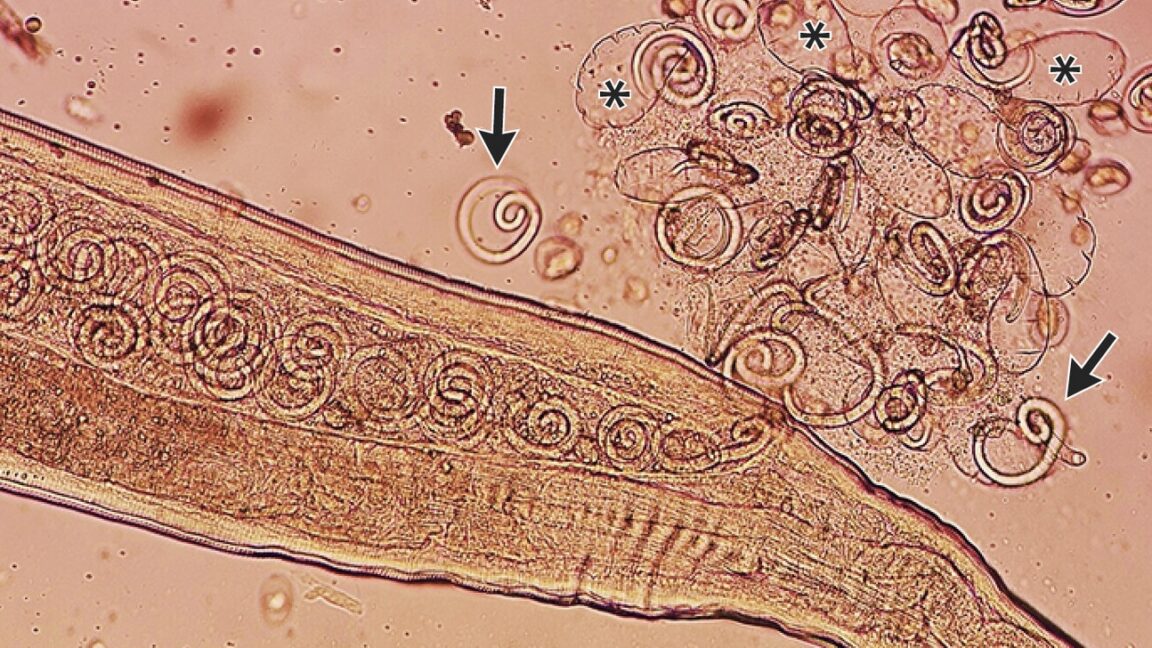
Thelazia callipaeda eye worms were removed from both eyes of a 71-year-old crop farmer in South Korea after he had two months of discomfort, redness and blurred vision, Ars Technica reported. The account, which cites a New England Journal of Medicine case report, said doctors extracted 11 live adult worms and that the patient was free of symptoms at a follow-up visit two months later.
The farmer told clinicians he felt as if something were lodged in each eye. Ophthalmologists found moving whitish roundworms, enlarged blood vessels in the conjunctiva and erosion of cells on the cornea, according to Ars Technica.
What are Thelazia callipaeda eye worms?
Thelazia callipaeda is a parasitic roundworm that mainly infects the eyes of cats and dogs but can also infect people, the report said. Flies that feed on tears and other eye secretions can take up early-stage larvae from an infected animal and later pass developed larvae to another host while feeding around its eyes.
After reaching an eye, the larvae develop into adults. Adult worms can live and reproduce there, while the parasite's next stage depends on a fly feeding on the eye secretions of an infected host, according to the report.
How did doctors remove the worms?
Clinicians numbed the patient's eyes with a topical treatment and removed the worms individually using fine forceps, Ars Technica reported. The 11 adults measured between 11 and 22 millimeters.
Examination of the extracted worms identified them as T. callipaeda. Some of the females were pregnant, and eggs and tightly coiled first-stage larvae emerged from some of those worms after they had been removed, according to the account. The report does not say larvae were released in the patient's eyes.
No antiparasitic medication was required after the adult worms were taken out, Ars Technica reported. At the two-month follow-up, the farmer's eye symptoms had resolved and clinicians found no remaining worms.
A separate eyeworm case
This report concerns a different condition from a 2025 case in India involving a single Gnathostoma spinigerum worm in one patient's eye. In that case, covered by Gizmodo, doctors removed the worm through a pars plana vitrectomy, a procedure involving the eye's vitreous fluid; it was not a Thelazia infection or the South Korean patient's treatment.
This story draws on original reporting from Ars Technica.