
Vulcan rocket failure leaves 40 Amazon Leo satellites short of orbit
ULA says its Vulcan rocket suffered an anomaly 10 minutes into flight, prompting an investigation and raising questions over Amazon Leo launches.
By Hana Yoshida · Markets Reporter
2 min read
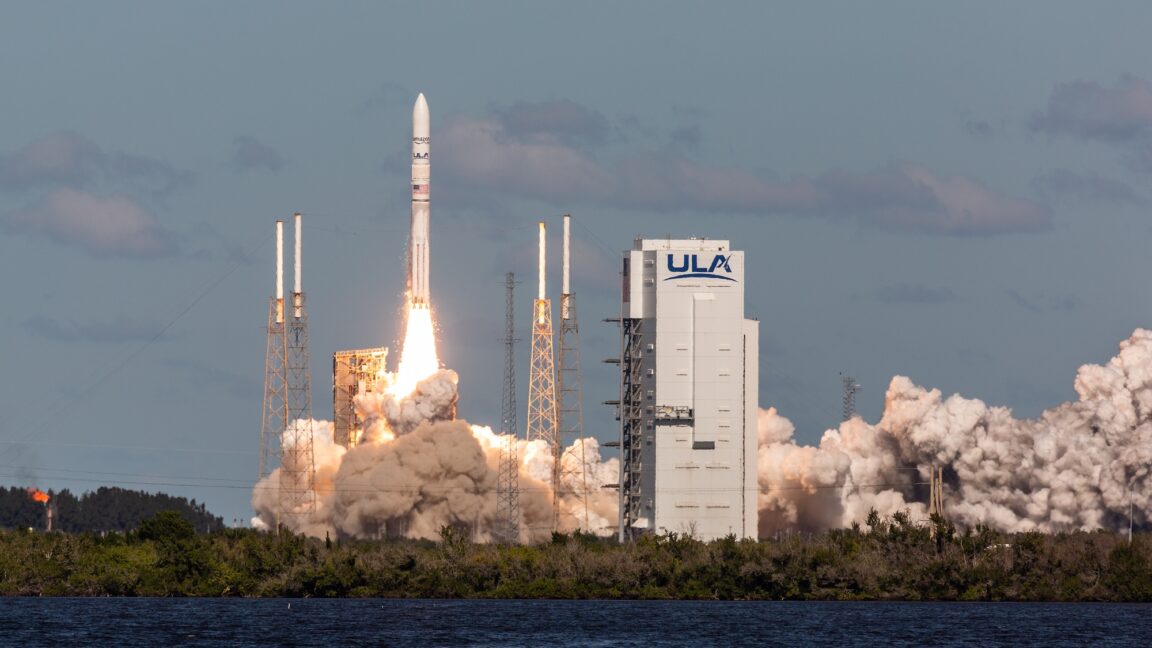
United Launch Alliance’s Vulcan rocket failure left 40 Amazon Leo broadband satellites undelivered to orbit after an anomaly about 10 minutes into Sunday’s flight. The loss interrupts the first mission in a 38-launch Vulcan order for Amazon’s planned satellite internet network, while ULA investigates the cause and provides no date for returning the rocket to service.
ULA said the vehicle lifted off from Space Launch Complex 41 at Cape Canaveral Space Force Station at 12:40 p.m. local time, then failed to complete the Amazon mission. The company said it did not yet have specific data explaining what happened and would identify the cause, decide on corrective action and return to flight as quickly as possible.
What caused the Vulcan rocket failure?
The cause and precise location of the failure remain unresolved. Ars Technica reported, citing unnamed sources, that the anomaly affected the booster stage rather than the Centaur V upper stage or the solid rocket boosters. Spaceflight Now, meanwhile, reported that ULA’s update indicated a problem during the Centaur firing.
Both outlets reported observations that do not establish a cause. The six solid boosters appeared to separate normally, and the BE-4-powered first stage appeared to fire longer than planned. ULA has not publicly identified a failed component or system.
The flight was Vulcan’s fifth and its first in about nine months, according to Spaceflight Now. The outlet and Ars Technica described it as ULA’s first total mission failure since the Boeing-Lockheed Martin joint venture was formed in 2006.
What does the loss mean for Amazon Leo?
Amazon Leo is Amazon’s planned low-Earth-orbit broadband network, intended to compete for consumer satellite internet customers with SpaceX’s Starlink. The failed flight was the first of 38 Vulcan launches Amazon bought from ULA, so the investigation could delay a significant part of its satellite deployment.
Ars Technica reported that Amazon Leo had 396 satellites in orbit toward a planned first-generation constellation of 3,292. Amazon said launches carry risk, particularly inaugural missions, and said it believed ULA would learn from the flight and meet its long-term Vulcan plans.
Amazon also has launch arrangements with Arianespace, Blue Origin and SpaceX, according to Spaceflight Now and Ars Technica. Those bookings give Amazon other routes to orbit, but neither Amazon nor ULA has said whether they will change Leo’s launch schedule following the Vulcan failure.
The available reporting supports a setback for ULA and for Amazon’s Vulcan-dependent campaign. It does not establish a specific schedule impact, a financial loss, or a measurable advantage for SpaceX and Starlink.
This story draws on original reporting from Ars Technica.