
Fortune reports Fed projections point to 2% inflation in 2029
Fortune reports that Fed projections put a return to 2% inflation in 2029, as the Iran war adds uncertainty over energy prices.
By Hana Yoshida · Markets Reporter
3 min read
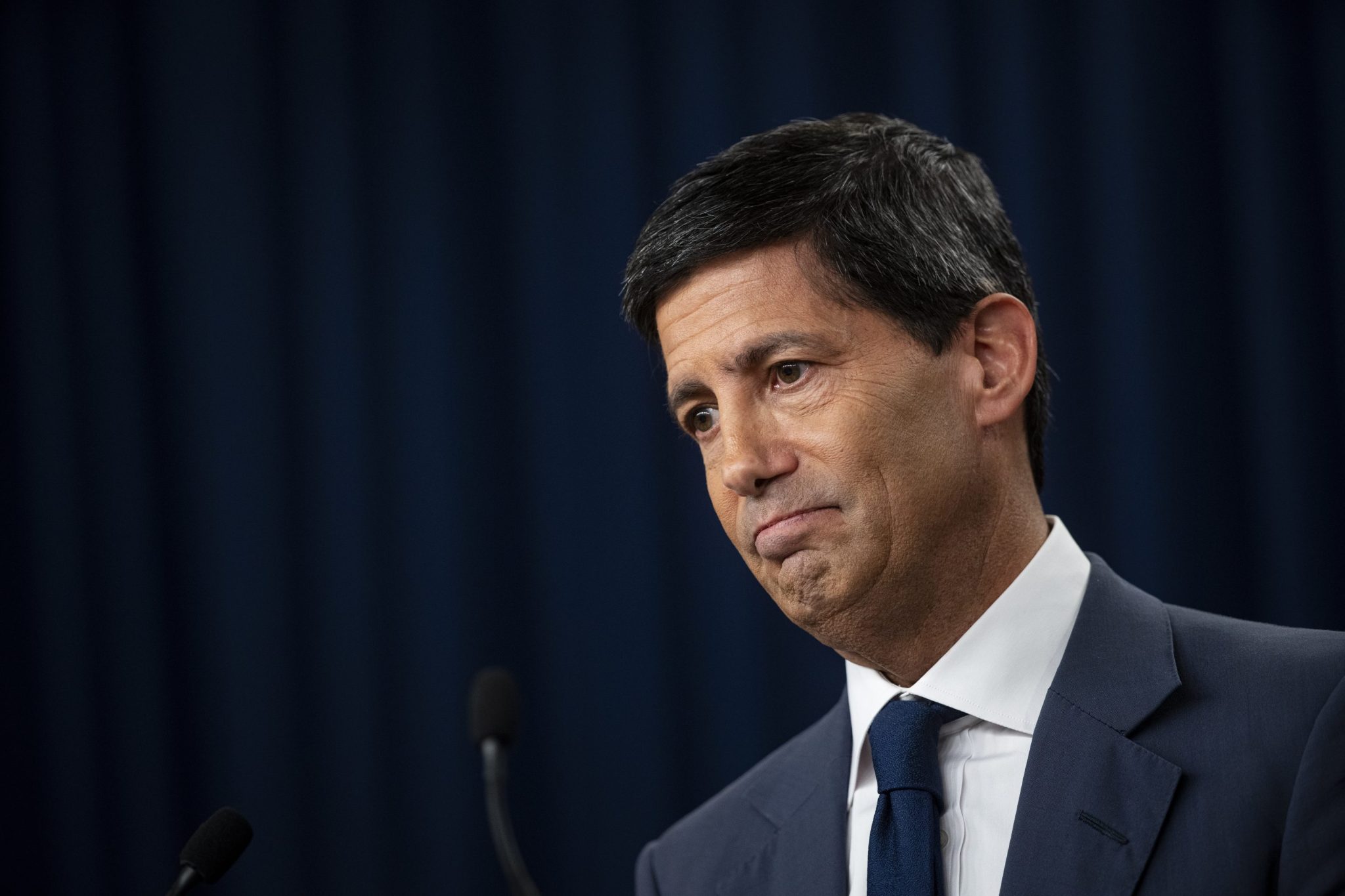
Fortune reports that the Fed inflation forecast 2029 points to the central bank’s 2% goal being reached that year rather than in 2028. The timing matters because a prolonged energy-price shock tied to the Iran war could complicate the path back to lower inflation, though the conflict’s economic effects remain uncertain.
In the Federal Reserve’s September Summary of Economic Projections, participants’ median outlook showed PCE inflation at 3.7% in 2026, 2.3% in 2027, 2.1% in 2028 and 2.0% in 2029. The June projections had put median PCE inflation at 2.0% in 2028. The Fed’s projections are conditional on each participant’s view of appropriate policy and assume no further shocks, rather than serving as a guarantee of what will occur.
Core PCE inflation, which excludes food and energy, was projected at 3.4% for 2026, 2.5% for 2027, 2.2% for 2028 and 2.0% for 2029. The same projections showed a median federal-funds-rate path of 4.1% at the end of both 2026 and 2027, then 3.9% in 2028 and 3.6% in 2029.
How could the Iran war affect the Fed’s inflation forecast?
A Dallas Fed working paper says the war, which began in February, disrupted oil trade and pushed up oil and retail gasoline prices. That is an example of a supply shock: a disruption that can raise costs and prices while also weighing on output.
The paper does not predict oil prices. Instead, it models a range of possible oil-supply shortfalls and their potential effects on headline and core PCE inflation, as well as household inflation expectations. Its authors said the duration of any Strait of Hormuz closure and the level of Persian Gulf exports were unclear, leaving the scale and persistence of the price effects uncertain.
The analysis also has limits. It does not incorporate possible effects from higher fertilizer, aluminum or natural-gas prices, or supply-chain disruptions in global shipping. The paper is a preliminary research draft, and its authors said its findings do not necessarily represent the views of the Dallas Fed or the Federal Reserve System.
Why does the duration of the shock matter to the Fed?
Federal Reserve officials have to judge whether higher energy costs will fade or develop into broader and more persistent price pressure. Reuters reported in March that New York Fed President John Williams said the scale and persistence of the conflict’s effects would be central to assessing price stability and the policy response.
Minneapolis Fed President Neel Kashkari said a sustained period of high headline inflation, after years of above-target inflation, required close attention because it could influence inflation expectations. Central banks often look past temporary swings in energy prices, but the calculation can change if price pressures last or spread more widely.
Fortune compared the possible length of the Fed’s shortfall on its inflation objective with Operation Iraqi Freedom. That is a duration analogy, not evidence that the Iran conflict will last through 2029 or that the Fed’s projected path is fixed. The September projections instead set out a conditional path that could change as energy markets, growth and inflation data develop.
This story draws on original reporting from Fortune.