
Venezuela earthquake snake robots aided searches in collapsed buildings
Carnegie Mellon prototypes entered rubble after Venezuela’s June 24 quakes, extending rescuers’ view into spaces too tight for people.
By Hana Yoshida · Markets Reporter
3 min read
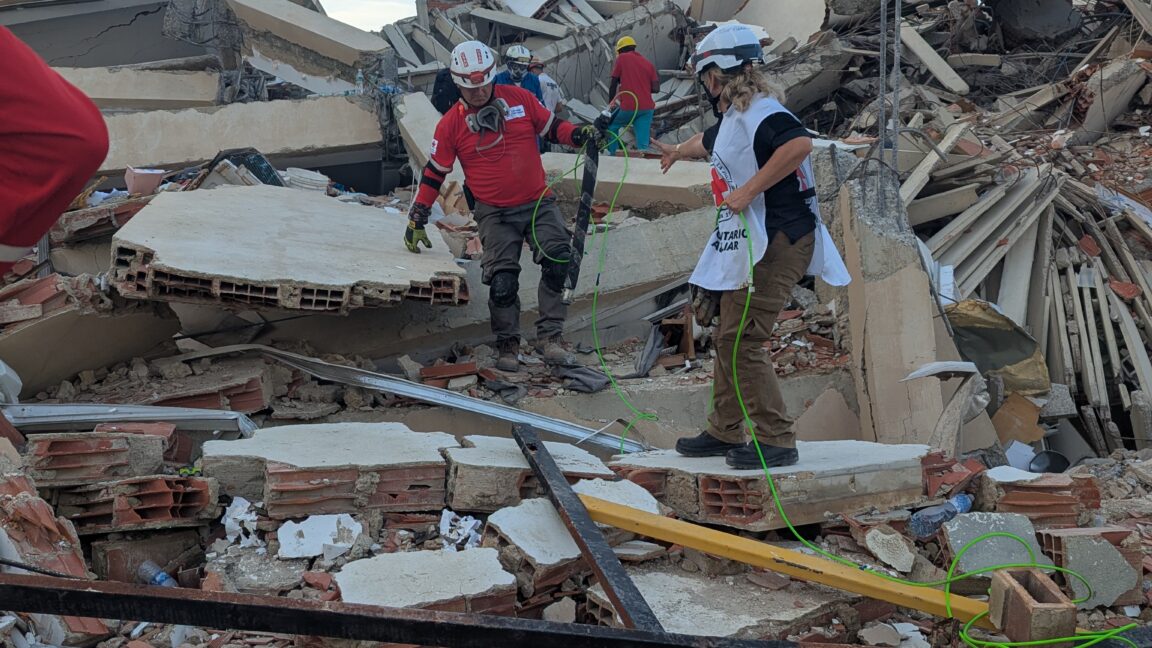
Carnegie Mellon University researchers used Venezuela earthquake snake robots to look inside collapsed buildings after two June 24 quakes killed more than 5,000 people and injured 16,740, according to Ars Technica and France 24. The deployment mattered because the robots could carry cameras into voids that rescuers, dogs and larger equipment could not safely reach.
Search teams from several countries used dogs, listening devices, pole-mounted cameras and thermal imaging as they searched for survivors, Ars Technica reported. The Carnegie Mellon machines added a narrow, flexible camera platform for probing deeper into debris.
How did the snake robots work in Venezuela?
Each robot was about 4 feet long and built from replaceable segments, according to Ars Technica. A human operator steered it with a video game controller and a laptop control case connected by tether, while onboard software coordinated the segments’ motion.
Howie Choset, who leads Carnegie Mellon’s Biorobotics Lab, told Ars Technica the robots help rescuers see into packed spaces without sending people into dangerous areas. He compared the approach to doing minimally invasive surgery on a damaged structure.
Choset’s lab has worked on snake robots for nearly 20 years, Carnegie Mellon says. The team previously tested them in disaster response after the September 2017 Mexico City earthquake, when they helped search a collapsed apartment building.
How the team reached the disaster zone
The Venezuela mission began after Beatriz Gonzalez, a Venezuelan living in Atlanta, asked the Grok chatbot about ways to support rescue work, The Tribune-Review reported. Grok pointed her to Carnegie Mellon’s earlier work in Mexico City, and she contacted Choset’s lab.
The researchers agreed to go while preparing for a robot demonstration at a June 27 concert in Pittsburgh, according to Ars Technica. They then packed overnight, repaired cameras, gathered extra batteries and flew toward Venezuela with three robots.
The team had a delay in Miami on June 28 while looking for a private aircraft operator willing to fly to Venezuela, Ars Technica reported. Gonzalez helped arrange a flight after some aircraft owners backed out because of Venezuelan government restrictions.
What happened during the searches?
After landing in Venezuela on June 30, the team was met by U.S. Marines and then transferred to the Venezuelan Red Cross, according to Ars Technica. The researchers worked in La Guaira and joined international crews at several collapsed-building sites from June 30 to July 3.
At one apartment building, a Jordanian dog team had found no sign of survivors, while a Colombian team’s infrared equipment suggested someone might still be inside, Ars Technica reported. Carnegie Mellon’s team sent a robot about 15 to 20 feet through a small opening as a Venezuelan father waited for news of his missing son.
The robot did not find anyone there, and the Carnegie Mellon team returned to the United States without locating a survivor. Choset told Ars Technica that local residents repeatedly offered the team meals, sports drinks and other food while they worked.
Nearly 6,500 people were rescued by search and rescue teams from around the world, according to Ars Technica. The United Nations has asked for nearly $300 million to assist more than 1.3 million people affected by the quakes, and the World Bank estimated building damage at $19.6 billion.
The Carnegie Mellon group is now considering upgrades for future deployments, including light-based sensors that could create 3D maps of spaces inside rubble, Ars Technica reported. Choset said the robots remain research prototypes, though the team’s training and repeated repair work helped prepare them for field use.
This story draws on original reporting from Ars Technica.