
Ukraine uses drones and robot boats to deliver ground robots to combat
Recent deployments show Ukraine testing ways to move armed ground robots past terrain and defenses while reducing risk to troops.
By Maya Lindqvist · Senior Technology Correspondent
3 min read
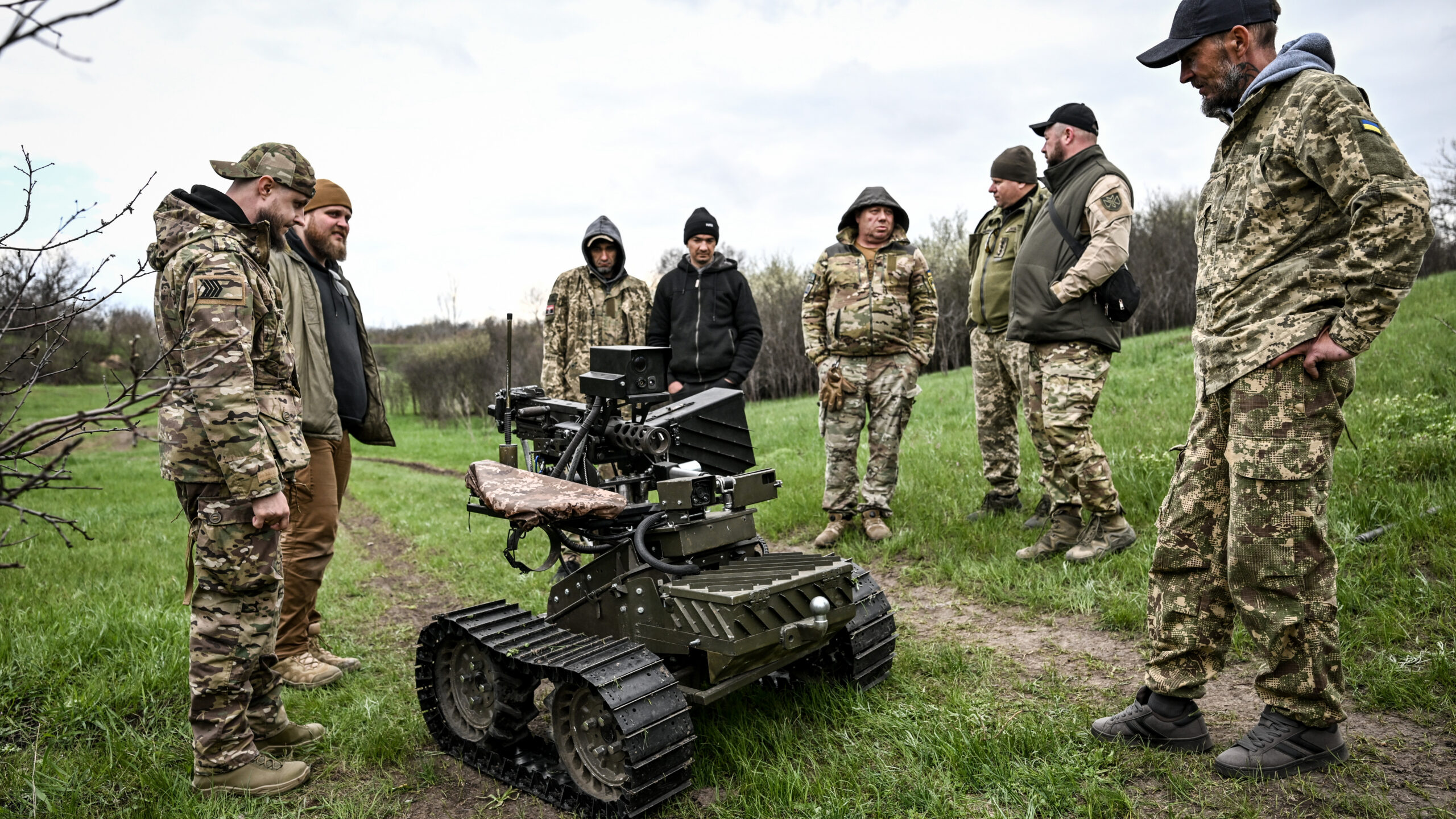
Ukraine has used flying drones and uncrewed boats to move armed ground robots into combat, according to reports and videos cited by Ukrainian and Russian sources. The deployments matter because they point to a faster way to get slow ground machines past rough terrain and Russian defenses while keeping Ukrainian soldiers out of some assault roles.
United24, a Ukrainian government-run media platform, said a Russian military Telegram channel posted video on July 19 showing a Ukrainian hexacopter carrying a ground robot beneath it on a cable. The channel described the aircraft as a heavy bomber drone that set down a four-wheeled ARK-1 robot equipped with explosive anti-tank mines.
United24 said the robot then continued toward Russian military positions. The outcome of that mission has not been established, and the available accounts do not say whether the robot reached or damaged its target.
The tactic could give ground robots a better chance of surviving long enough to reach Russian positions by reducing the time they spend crossing exposed ground. United24 has described the ARK-1 as capable of traveling at nearly 28 mph, though other battlefield robots move more slowly.
Robot landing on the Kinburn Spit
Ukraine also used a drone boat to deliver a ground robot during a June 25 operation on the Kinburn Spit, a narrow sandy peninsula jutting into the Black Sea from the Russian-occupied left bank of Kherson Oblast. A video shared by the Ukrainian government on July 13 showed the boat lowering a ramp and releasing the robot ashore.
The robot then fired its machine gun during what RAND Corporation defense researcher Michael Bohnert described on social media as relatively light fighting. Bohnert said the operation led to a Ukrainian flag-planting demonstration on the contested peninsula, while warning that the concept of amphibious robot assaults did not appear ready for heavy combat.
Russian forces seized the Kinburn Spit in June 2022 and used positions there to help control access to southern Ukrainian ports on the Black Sea. The Institute for the Study of War reported that Russian troops began pulling back from the peninsula in early June as Ukrainian mid- and long-range drone strikes put pressure on Russian supply lines.
Ukraine expands battlefield robot missions
The experiments come amid a broader increase in Ukraine’s use of unmanned ground systems. United24 reported that Ukrainian military robot missions rose from just under 7,500 in January to more than 16,600 in June.
Those missions have included carrying supplies, evacuating wounded troops, clearing or placing mines, and taking part in combat, according to United24. Ukrainian forces have turned to drones and robots as they look for ways to offset Russia’s manpower advantage and reduce direct exposure for soldiers in dangerous assaults.
Ukraine has also tested other carrier systems during the war. Reports cited by Ars Technica say Ukrainian forces have used large flying drones to transport explosive first-person-view drones, and have sent high-altitude balloons over Russia to release one-way attack drones and missiles near targets.
Russia has also used carrier drones, according to reporting cited by Ars Technica. In the Black Sea area, Ukraine has equipped drone boats to launch FPV drone swarms against Russian coastal positions, while Ukrainian drone strikes have disrupted Russian shipping of fuel, grain and other supplies through the Sea of Azov, Ars Technica reported.
The United States has been studying Ukraine’s battlefield drone experience while seeking new drone purchases, according to Ars Technica. The outlet also reported that the U.S. military used explosive drone boats in combat for the first time during the ongoing war with Iran, which has disrupted shipping lanes in the Strait of Hormuz.
This story draws on original reporting from Ars Technica.